
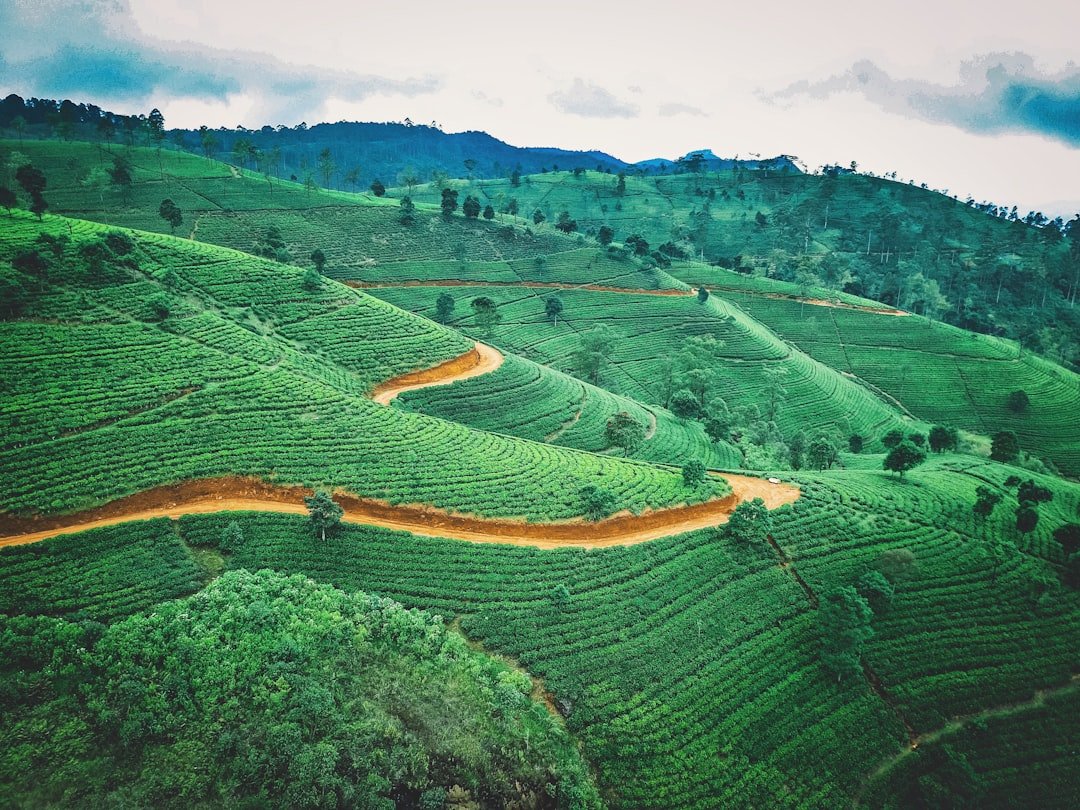
Coffee of origin sounds simple enough: a place name on a bag that tells you where your coffee came from. In practice, coffee of origin usually tells only part of the story, because geography alone does not explain traceability, farmer pay, or the coffee farming systems behind what ends up in your cup.
A country name on a coffee bag is not transparency. It is barely the trailer. Coffee buyers often read origin as if it were the full answer, but origin is often just partial storytelling: a place name without the pricing context, supply-chain proof, or production detail that explains what actually happened before that coffee reached the shelf.
That matters because origin has become a premium signal. “Honduras.” “Ethiopia.” “Colombia.” Those names carry emotional weight and flavor expectations. Yet the coffee industry is moving into a period where proof of origin matters more than origin-flavored marketing. If you care about flavor, arabica coffee beans, and the bigger farm story behind them, the label deserves a second look.
What does coffee of origin actually mean?
Coffee of origin means coffee identified by where it was grown, whether that is a country, region, cooperative, or farm. It does not automatically mean full traceability, better farmer pay, or a verified farm to cup coffee chain. It tells you place, but not the whole system behind the coffee.
That distinction matters because packaging often blurs several different levels of specificity into one tidy impression. A bag may suggest precision while actually offering only a broad geographic reference.
- Country of origin: the broadest level, such as Honduras, Brazil, or Ethiopia.
- Region of origin: a more specific area, such as Santa Bárbara or Yirgacheffe.
- Single farm: one named estate, finca, or producer.
- Fully traceable lot: the most precise level, with documented movement through the supply chain, often including plot, harvest, and exporter records.
Those categories are not interchangeable. A country name is not the same as a region. A region is not the same as a farm. And a farm is not automatically the same as a documented, verifiable lot. That is usually the first big misunderstanding once you look past the marketing language and into the mechanics of sourcing.
It also helps clear up a common confusion: species is not origin. If you are searching for coffea arabica coffee, arabica coffee, or arabica coffee beans, you are talking about the plant species Coffea arabica. If you are talking about coffee of origin, you are talking about geography. One tells you what kind of coffee plant it is. The other tells you where it was grown. You can have arabica from Honduras, Kenya, Peru, or many other producing countries, and each origin can express very different conditions and flavors.
Origin really can shape flavor through altitude, climate, soil, local varieties, and processing traditions. If you want a deeper look at how place changes taste in the cup, see how altitude shapes the coffee in your cup. But the romance of origin has moved faster than the rigor of origin verification. A beautiful place name on a bag can be true and still leave out most of what matters.
That gap is becoming more visible across the industry. A review covered by Daily Coffee News found that coffee sustainability research has grown significantly, but remains fragmented. Researchers reviewed 137 peer-reviewed publications from 2000 to 2024, with activity accelerating in the late 2010s as demand for traceable and single-origin coffees grew alongside interest in digital traceability tools and regulation. In plain terms, consumers want more clarity, but the systems behind that clarity are still catching up.
The new status symbol is proof, not just origin
For years, coffee branding treated origin like a personality trait. Bright. Floral. Volcanic. Exotic. Usually paired with elegant packaging and tasting notes that made a bag feel more informative than it really was. Regulators are now pushing the industry to treat origin less like a mood and more like an auditable dataset.
That shift matters. According to reporting in Daily Coffee News, once the European Union Deforestation Regulation, or EUDR, fully takes effect, coffee exporters will increasingly compete not only on quality or price, but on whether they can demonstrate where coffee was produced, how it was monitored, and whether institutions can support compliance throughout the supply chain.
The EUDR is part of a broader regulatory wave that ties market access to traceability, geolocation, and environmental compliance. Instead of accepting broad sustainability claims at face value, it asks producers and exporters to show their work. That changes the meaning of farm to cup coffee in a major way.
For a long time, “farm to cup” often functioned as warm storytelling. It suggested mountain air, careful harvesting, and a direct emotional line from producer to drinker. None of that is necessarily false. It is just incomplete. Under newer traceability expectations, farm to cup coffee is becoming less of a vibe and more of a documented chain that includes mapped plots, monitored production, compliance records, exporter systems, and institutional support.
That last part is easy to miss. Technology alone does not create trustworthy traceability. Producers and exporters also need governance, coordination, and support strong enough to turn regulation into daily operating reality. Without that, even good digital tools can become another layer of burden rather than a real solution.
If you want a wider view of this shift, coffee supply chain transparency is becoming one of the central questions in modern sourcing. The new flex is no longer just saying where a coffee came from. It is being able to prove it in a way that stands up to scrutiny.
Honduras shows why origin is meaningful and messy
Honduras is a useful case study because it shows both sides of the origin story at once. Honduran coffee can be excellent: often high-grown, rooted in serious arabica tradition, and increasingly valued by buyers who know what they are tasting. At the same time, the supply chain behind that origin label can be highly fragmented, which makes traceability and compliance much harder than a neat country stamp suggests.
According to Daily Coffee News reporting on Honduras and the EUDR, the country has about 98,000 registered coffee growers, most of whom own less than 3 hectares. Roughly half of Honduran coffee exports go to the European Union. Starting in 2027, coffee tied to land cleared after Dec. 31, 2020 faces exclusion under EUDR rules.
That is a major structural challenge. A country with tens of thousands of smallholders, many farming tiny plots, is now dealing with a system where access to a major export market depends on traceable land history, geolocation, and compliance. For a small producer selling through intermediaries, that is not a simple administrative task. It is a costly shift in how coffee must be documented and moved.
This is where the coffee of origin conversation becomes more honest. A Honduran label can represent beautiful quality and deep coffee farming knowledge. It can also represent a chain with multiple intermediaries, competing traceability platforms, weak institutional coordination, and compliance costs that fall hardest on smallholders.
Some exporters in Honduras see the EUDR as a chance to strengthen supply chains, and some farmers hope better documentation will help them market quality more effectively and earn better prices. There is real upside in that possibility. But compliance costs do not automatically come with a price premium. Producers may be asked to do more work, gather more data, and absorb more complexity without guaranteed extra pay.
That is exactly why origin still matters, just not in the simplistic way it is often sold. Knowing a coffee comes from Honduras is useful. Knowing how that Honduran coffee moved through the system is much more useful.
This is also where blends deserve more respect than they sometimes get. Origin does not always need to be a solo performance. Sometimes it is part of a larger flavor architecture, with different producing countries contributing balance, structure, and depth. A coffee like ALTURA fits naturally into that conversation because it includes Honduran coffees alongside other Latin American origins. The point is not just the country name. It is how origin contributes something specific inside a more intentional composition.
And if you want that origin continuity without the late-night caffeine hit, PLACIDO DECA belongs in the same discussion, since it also includes Honduran coffees. Again, origin matters, but it becomes more interesting when you think about how origins work together, not just how they appear on the label.
Why arabica coffee beans are not the whole story
“100% arabica” has had a long and successful run as a quality signal. That is not accidental. Coffea arabica coffee is generally associated with more nuanced acidity, sweetness, and aromatic complexity than robusta, which is why arabica coffee beans became shorthand for quality in many consumer markets.
But species alone no longer tells enough of the story. Saying a coffee is arabica gives you botanical and sensory information. It does not tell you much about labor conditions, traceability systems, climate resilience, deforestation risk, farmer income, or whether the supply chain can back up its claims.
That distinction becomes even sharper when you look at Vietnam. According to Daily Coffee News, Vietnam is the world’s second-largest green coffee producer after Brazil, with roughly 700,000 hectares of coffee land, and about 97% of national production is robusta. That should reset a few assumptions. The global coffee economy is not built only on arabica prestige. It is also built on robusta scale.
And scale comes with consequences. Reporting on Vietnam’s robusta boom highlights pressures including forest loss, groundwater depletion, and chemical intensification, along with persistent smallholder vulnerability. That is the cautionary example for simplistic origin worship. You can talk about an origin entirely in flavor-note language and still miss the environmental and economic system shaping it.

A simple way to separate the layers:
- Species: arabica or robusta
- Origin: country, region, cooperative, or farm
- Traceability: documented supply-chain proof
People combine those categories constantly, but they should not. Two coffees can both be arabica. Two can both come from the same country. And one may still come from a supply chain with stronger documentation, better institutional support, and a more realistic path to long-term sustainability than the other.
Arabica still matters. No one is denying its role in flavor complexity. If you want a fuller breakdown of species differences, read Arabica vs Robusta: the real difference explained. But “100% arabica” is no longer the whole flex. It is the opening line, not the full biography.
The real farm to cup coffee question is who captures the value
Everyone loves a farm story. Coffee marketing especially loves one. High altitude, selective picking, shade trees, generational knowledge, maybe a cinematic mountain photo for good measure. Those details can be meaningful and true. The harder question is whether the market actually rewards the farm for doing everything right.
That is where the living-income debate becomes unavoidable. A Daily Coffee News report on analysis from TechnoServe and Sustainable Food Lab looked at modeled typical coffee-farming households across Honduras, Kenya, Uganda, Ethiopia, Vietnam, Peru, and Indonesia. The finding was stark: before adopting regenerative practices, the typical coffee-farming household in all seven countries fell short of a living income.
That is not a niche problem. It is structural. The same analysis suggests regenerative coffee farming can substantially narrow living-income gaps and, in some cases, potentially eliminate them. Better soil practices, diversified systems, and improved farm management can make a real difference. But farm practices alone are not enough when farmgate prices remain low.
That is the sentence that should appear on far more coffee packaging. Origin stories often spotlight the farm while avoiding the question of value capture. Who pays for regeneration? Who pays for compliance? Who pays for traceability upgrades, mapping, monitoring, labor, and paperwork? If the answer keeps being “mostly the farmer,” then a lot of polished sourcing language starts to look thin.
So the smartest version of the farm to cup coffee question is not simply “Which country is this from?” It is this: What systems made this coffee possible, and who got paid for the extra work?
That question gets closer to the truth than tasting notes alone. It also puts origin back in focus in a better way: not as aesthetic packaging or a shortcut to premium positioning, but as a clue to a much bigger chain of decisions involving species, land, labor, institutions, exporters, regulations, and buyers.
Once you start seeing coffee that way, labels read differently. “Honduras” stops being just a flavor cue and starts being a signal of a real production environment shaped by thousands of smallholders, export dependence, and regulatory pressure. “Arabica” stops being the final word and becomes one layer in a more complicated picture. “Farm to cup” stops being cozy copy and becomes a question about documentation, economics, and accountability.
And coffee of origin becomes more interesting, not less. You are no longer just buying a place name. You are reading for what the label still is not saying.
Frequently Asked Questions
What are arabica coffee beans?
Arabica coffee beans come from the species Coffea arabica. They are usually valued for sweeter, more complex flavors, but arabica describes the species, not the coffee’s origin or traceability.
What is coffea arabica coffee?
Coffea arabica coffee is coffee made from the arabica plant species, one of the two dominant commercial coffee species worldwide. It is often linked to higher-altitude growing and greater flavor complexity, though quality still depends on origin, processing, and farming practices.
What is the difference between arabica coffee and coffee of origin?
Arabica coffee refers to the plant species, while coffee of origin refers to where the coffee was grown. A coffee can be arabica and still come from many different countries, regions, or farms with very different supply-chain realities.
What does farm to cup coffee actually mean?
Farm to cup coffee describes the path from production through processing, export, roasting, and brewing. At its strongest, the phrase implies documented traceability and visibility into how the coffee moved through the supply chain, not just a nice story.
Sources
- Can Regenerative Coffee Farming Deliver Living Incomes? It Depends, Analysis Shows — https://dailycoffeenews.com/2026/07/23/can-regenerative-coffee-farming-deliver-living-incomes-it-depends-analysis-shows/
- EUDR Provides Massive Challenge to the Vital Honduras Coffee Sector — https://dailycoffeenews.com/2026/07/22/eudr-provides-massive-challenge-to-the-vital-honduras-coffee-sector/
- Beyond Traceability: Why Producers Need Institutional Capacity for EUDR Compliance — https://dailycoffeenews.com/2026/07/21/beyond-traceability-why-producers-need-institutional-capacity-for-eudr-compliance/
- Review: Coffee Sustainability Research is Growing but Fragmented — https://dailycoffeenews.com/2026/07/15/review-coffee-sustainability-research-is-growing-but-fragmented/
- Report Says Vietnam’s Robusta Boom Faces a Reckoning — https://dailycoffeenews.com/2026/07/01/report-says-vietnams-robusta-boom-faces-a-reckoning/
