

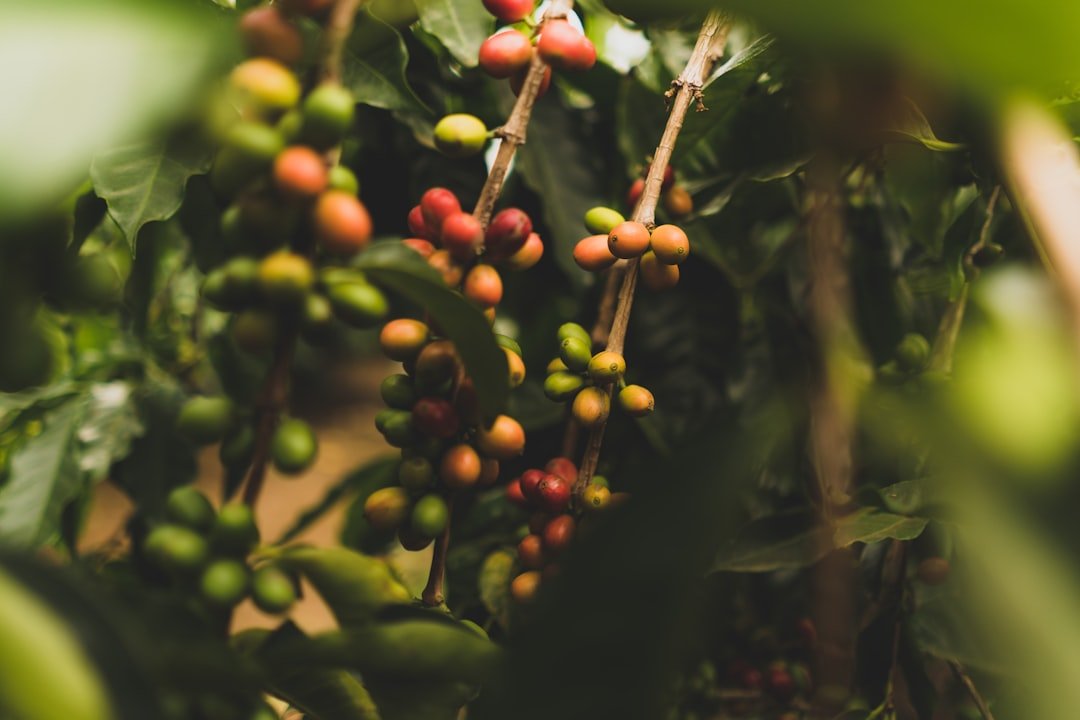
Your coffee isn’t just getting more expensive. The map behind it is moving.
That’s the part people miss. We talk about climate and coffee like it’s only a price problem, or a future problem, or one of those vague “supply chain” issues that somehow always end with you paying a few dollars more for beans and acting chill about it. But how climate change is reshaping coffee growing regions worldwide is bigger than that. It’s changing where coffee can grow, which varieties can survive, and whether the flavors tied to famous origins can stay the same. Which means the real risk isn’t just less coffee. It’s losing the regional character that made Ethiopia taste like Ethiopia, or Colombia taste like Colombia, in the first place.
And yes, that’s a little dramatic. Also true.
Coffee has terroir. Climate is rewriting the script.
How Climate Change Is Reshaping Coffee Growing Regions Worldwide
Most people carry around a pretty fixed mental map of coffee. Brazil is huge. Colombia is classic. Ethiopia is iconic. Vietnam powers robusta. Indonesia does its own earthy, slightly mysterious thing. End scene.
Except that map is already stale.
A recent Climate Central analysis, covered by both Daily Coffee News and Sprudge, found that major coffee-producing countries including Brazil, Vietnam, Colombia, Ethiopia, and Indonesia are now experiencing more “coffee-harming” hot days because of climate change, not in some distant sci-fi future, but right now (Daily Coffee News, Sprudge).
That phrase, coffee-harming hot days, sounds clinical. The reality is not. More extreme heat can affect flowering, cherry development, bean density, and overall plant stress. It can also increase pressure from pests and disease. So yes, yields matter. Livelihoods matter. Prices matter. But there’s another layer here that deserves more attention: geography.
Climate change doesn’t just ask, “Will coffee still grow?” It asks, “Will this exact coffee still grow here?”
Sharper question. Bigger implications.
Because coffee isn’t interchangeable, even if the supermarket shelf sometimes tries very hard to convince you otherwise. Origin matters. Altitude matters. Microclimate matters. The rhythm of cool nights, warm days, mist, rainfall, dry periods, soil, shade, and harvest timing all shape what ends up in your cup. A coffee region becomes famous for a reason. Those reasons are environmental as much as cultural.
Here’s the sneaky part: a region can stay on the label while quietly changing in real life. “Ethiopian coffee” may still be Ethiopian coffee, obviously. But if the land suited for certain arabica profiles shifts higher, narrows, or gets hit with different rainfall patterns, the cup profile tied to that origin can drift too. Same passport. Different personality.
So the old coffee map, the romantic one with fixed origin identities, is under pressure. Not erased. Not gone. But very much being redrawn in real time.
And that matters because coffee drinkers often think of climate change as a threat to quantity. The sneakier threat is to identity. The loss may not be coffee itself, but the erosion of the regional taste signatures that make coffee worth obsessing over in the first place. If you want a deeper grounding in why species differences matter as regions warm, see Arabica vs Robusta: the real difference explained.
Heat Doesn’t Just Shrink Harvests, It Edits Flavor, Altitude, and Terroir
Arabica, the species behind many of the world’s most prized coffees, is famously a little delicate. Great in the cup. Slightly needy in the field. Like a beautiful Italian sports car, honestly.
According to a Rabobank analysis reported by Daily Coffee News, a significant share of today’s arabica-growing land may become climatically unsuitable by 2050, with major implications for countries including Honduras, Colombia, and Ethiopia (Daily Coffee News).
That’s a big deal because arabica tends to do best within pretty specific temperature ranges. Push those conditions too hot, especially at lower elevations, and producers often have one obvious move: go uphill.
Sounds reasonable until you remember one tiny detail. Mountains are not infinite.
There isn’t an endless reserve of cooler, higher-altitude land waiting politely above every existing coffee farm. Sometimes there’s protected forest. Sometimes there are communities. Sometimes the slope is too steep, the soil is wrong, the roads don’t exist, or the economics just don’t pencil out. “Just move up” is one of those ideas that sounds tidy on paper and chaotic in real life.
And this is where terroir enters the chat.
Yes, terroir can sound a little precious if someone says it too many times while holding a tiny cup. But it matters. In coffee, terroir refers to the environmental conditions that shape flavor: temperature, elevation, rainfall, soil, shade, local ecology, the whole package. If those conditions change, flavor changes too.
So climate change isn’t simply reducing harvests. It’s editing taste.
A coffee once known for jasmine florals, citrus snap, and tea-like delicacy may become riper, heavier, less structured, or just less predictable if warming shifts ripening patterns. A region famous for crisp acidity might produce softer cups. Harvest timing can move. Uniformity can drop. Processing decisions may need to change to compensate for different cherry development. And suddenly the coffee from the “same” origin isn’t quite the same.
That’s the under-discussed part of how climate change is reshaping coffee growing regions worldwide: origin labels are becoming moving targets.
“Colombian” still means something. “Ethiopian” still means something. But those meanings aren’t frozen in amber. They’re climate-dependent, and climate is changing the terms.
A lot of coffee language assumes stability. We talk about origins as if they’re fixed categories rather than living agricultural systems. But what happens when the lower slopes of a famous coffee region become too warm? Or when rainfall gets erratic enough to alter flowering cycles? Or when a producer replants with a more resilient variety that tastes different from the one that built the region’s reputation?
You don’t just get a different farm plan. You get a different sensory future.
The Famous Coffee Countries Are Under Pressure, and Each One Is Getting Hit Differently
This isn’t one neat global story where every producing country faces the same problem in the same way. Climate stress shows up differently depending on region, species, altitude, weather patterns, and how central that country is to global supply.
Brazil: If the Giant Sneezes, Everyone Hears It
Brazil matters at a scale that’s almost rude. It is such a major force in global coffee that weather trouble there doesn’t stay local for long. According to the Associated Press, heat and drought in Brazil have reduced output, helping push coffee prices higher (AP).
That ripple effect is huge. Brazil supplies such a large share of the market that climate stress there can tighten supply worldwide, influence futures markets, and change what roasters everywhere are paying. Even if your favorite coffee isn’t Brazilian, Brazil still affects the economics of the whole system.
One detail people don’t always realize: climate pressure in a giant origin can distort the entire market in ways that spill into specialty. So even highly traceable coffees with beautiful provenance don’t exist in some magical bubble above commodity dynamics. Coffee is artisanal, yes. It is also agricultural, global, and very much subject to weather doing weather things.
Vietnam: Robusta Is Not the Side Character Anymore
Vietnam plays an outsized role in global robusta supply, and AP’s reporting also points to weather stress there as a major factor in tightening markets (AP). That matters because robusta is deeply embedded in global coffee production, from instant coffee to espresso blends to a growing number of quality-focused robusta conversations.
For years, robusta got treated like arabica’s less glamorous cousin. A little unfair. A little snobby. Very coffee industry. But climate reality is making that hierarchy look shakier. Robusta can handle warmer conditions better than arabica in many contexts, but that doesn’t make it invincible. Extreme heat, drought, and shifting weather still hit hard. And because Vietnam is so central to robusta supply, stress there moves quickly through the market.
Translation: if Vietnam struggles, everyone feels it.
Colombia and Ethiopia: This Is Where Flavor Identity Gets Personal
Colombia and Ethiopia are especially important in the arabica land-suitability conversation highlighted by Daily Coffee News through Rabobank’s analysis (Daily Coffee News). These aren’t just volume stories. They’re cornerstone origins in the global imagination of quality coffee.
Ethiopia is often treated, rightly, as one of coffee’s foundational homes, with an extraordinary range of heirloom varieties and flavor profiles that have shaped specialty coffee culture itself. Colombia has built a reputation on consistency, structure, and regional diversity that makes it both beloved and commercially essential. For more on how origin history shapes value and identity, read the story of Kona coffee and why it costs more.
So when climate pressure threatens suitability in places like these, the loss isn’t abstract. It’s sensory. Cultural. Agricultural. Historical.
If you’ve ever had a cup that made you stop mid-sip and do the little eyebrow raise, the “wait, why does this taste like bergamot and peach?” moment, you already know origin is not a minor detail. It’s the whole point.
That’s why coffees tied to these regions feel different now, not necessarily in the cup, but in meaning. A blend like MAMA AFRICA, which includes Ethiopian coffee, or RISERVA PREMIUM, which includes both Ethiopia and Colombia, becomes more than a flavor profile on a box. It’s a quiet reminder that the origins you enjoy are not permanent fixtures. They’re living places under real pressure.
Not in a melodramatic way. Just in a very real one.
Farmers Aren’t Just Coping, They’re Being Forced Into a Full Redesign of Coffee Agriculture
The word adaptation can sound reassuring. Calm, competent, maybe even optimistic. Like everyone is making a few smart adjustments and carrying on.
That is not exactly the vibe.
Sprudge’s coverage of World Coffee Research’s CafeClima gets at what’s actually happening: producers are increasingly using tools that help match coffee varieties to future climate conditions, not just current ones (Sprudge).
Pause there for a second, because that’s a profound shift.
Farmers aren’t only asking, “What grows well here now?” They’re asking, “What will still grow here years from now by the time these trees mature?”
That is a completely different planning horizon.
Coffee is not a crop you can casually pivot overnight. Replanting is expensive. New trees take years to become productive. During that time, farmers may face reduced income, uncertain yields, financing challenges, and the risk that the “future-proof” choice still doesn’t behave as expected. It’s less like updating software and more like renovating your entire house while still living in it and hoping the weather cooperates.
Adaptation can mean:
- planting different varieties
- changing shade management
- adjusting irrigation where possible
- shifting to different elevations
- altering pruning and farm design
- rethinking pest and disease management
- or, in some cases, deciding coffee may no longer be viable on certain land
That last one is brutal. But real.
And here’s something many consumers don’t fully clock: adaptation is not always a clean win for tradition. A more climate-resilient variety might protect livelihoods, which is crucial, but it may not taste exactly like the older variety it replaces. Shade changes can affect ripening. Elevation shifts can affect profile. Processing may need to evolve. Everything is connected.
So climate adaptation in coffee is not just an innovation story. It can also be a story of loss.
- Loss of familiar varieties.
- Loss of inherited farm patterns.
- Loss of local flavor signatures.
- Loss of agricultural identity that took generations to build.
That doesn’t mean adaptation is bad. Obviously it’s necessary. But let’s not flatten it into some shiny TED Talk narrative where resilience fixes everything with a neat infographic. Farmers are making hard, expensive, deeply consequential decisions under conditions they did not create.

One genuinely surprising detail here is how much climate forecasting is now part of coffee agriculture. The romantic image of coffee farming tends to stop at harvest baskets and mountain views. The current reality includes climate models, variety trials, and long-term suitability planning. It’s agriculture, yes, but increasingly it’s also strategic risk management with espresso stakes.
Why This Matters to Drinkers: Your Morning Coffee Is Becoming More Political, More Expensive, and More Traceable
You don’t need to become the person who monologues about precipitation shifts before 9 a.m. But if you care about coffee, even just enough to buy the good stuff, this matters to you.
The Associated Press makes the basic consumer angle pretty plain: climate stress in major producing countries is contributing to higher coffee prices, alongside broader trade and supply-chain pressures (AP). That’s the visible part. You see it on menus, in grocery aisles, in subscription prices, in that tiny moment where you stare at the shelf and go, “Okay. Wow.”
But the more interesting shift is cultural.
Consumers can’t really treat climate as background noise anymore, especially if they care about origin. If producing regions are changing, then what you buy isn’t only a taste preference. It is, in a small but real way, support for certain kinds of coffee futures.
That sounds political because it is. Not in a tedious slogan way. In the actual sense of choices shaping systems.
If you support traceable coffees, origin transparency, and producers working through climate pressure, you’re helping sustain a more legible coffee world, one where regions and their stories remain visible rather than disappearing into generic blends and anonymous sourcing. If you care where coffee comes from, climate turns that curiosity from niche hobby into practical awareness.
And younger specialty drinkers are already weirdly well positioned for this. They care about provenance. They read tasting notes. They know processing methods. They understand that “washed,” “natural,” and “honey” are coffee processing styles, not wellness buzzwords. They’re already paying attention to details older commodity-era coffee culture often ignored.
Climate change makes those details more essential, not less.
Because the coffee aisle is becoming a climate map in disguise.
Single origins, regional blends, even classic espresso components now represent snapshots of places in transition. A coffee from a famous highland zone isn’t just delicious; it may also reflect a narrowing band of viable production. A blend featuring Ethiopia or Colombia isn’t just about flavor architecture; it’s also a connection to regions negotiating major environmental shifts.
That doesn’t mean every purchase has to feel morally exhausting. Nobody wants a guilt spiral with their cappuccino. But it does mean your cup has context. And once you see that, it’s hard to unsee.
The Real Question Isn’t Whether Coffee Survives, It’s What Kind of Coffee World Survives
Coffee, broadly speaking, will probably survive. Humans are extremely motivated where caffeine is concerned. We’ll adapt, breed new varieties, shift production zones, redesign farming systems, and keep making coffee in one form or another.
But that’s not the most useful question.
The better one is: what kind of coffee world survives?
Will it be one with the same regional diversity, sensory range, and cultural specificity we’ve come to love? Will the famous origins retain their signatures? Will farmers be able to adapt without losing the varieties and identities that made their regions distinctive? Will “origin” still mean what coffee lovers think it means?
That’s the part under renegotiation.
Stable harvest zones are no longer guaranteed. Familiar flavor expectations are less fixed than they used to be. Origin stories carry more urgency now because they are stories in motion, not static labels on a bag or capsule.
So if there’s one useful thing to do as a drinker, it’s this: pay closer attention to origin stories, not just tasting notes.
If a coffee comes from Ethiopia, Colombia, Brazil, Vietnam, Indonesia, Honduras, or any other climate-exposed region, that label deserves a second look. Not because you need to become a climate scientist. Just because the geography behind the cup is changing, and caring about coffee means caring about that too.
At Pascucci, we’ve spent more than 140 years believing coffee is never just a beverage. It’s culture, craft, place, and people. Heritage sounds nice on paper, but it means very little if you ignore what’s changing in the regions that give coffee its character. Respecting coffee means respecting the fact that its map is moving.
And maybe that’s the clearest way to think about how climate change is reshaping coffee growing regions worldwide. It’s not only a story about scarcity. It’s a story about transformation. About which places can still produce the coffees we love, which flavors may shift, and which identities may become harder to hold onto.
Your future favorite coffee may still exist.
But it may come from a different elevation.
A different variety.
A different climate reality.
Maybe even a different understanding of what that origin means.
So yes, enjoy the cup. Obsess over the aroma. Be a little dramatic about acidity if that’s your thing. But also notice the map behind the coffee. It’s moving faster than most people think.
And some of your favorites may become archival before they become unavailable.
Frequently Asked Questions
How is climate change affecting coffee growing regions worldwide?
Climate change is making many traditional coffee regions hotter and less predictable, which can reduce suitability for existing varieties. In practice, that means farms may need to move uphill, replant, or change how they manage shade, water, and pests.
Will climate change change the flavor of coffee?
Yes, it can. As temperature, rainfall, and elevation suitability shift, ripening patterns and terroir change too, which can alter acidity, sweetness, structure, and the signature taste of famous origins.
Which coffee-producing countries are most affected by climate pressure?
Major producers including Brazil, Vietnam, Colombia, Ethiopia, and Indonesia are already experiencing more climate stress. The effects differ by country, but heat, drought, and changing rainfall are putting both supply and flavor identity under pressure.
Can coffee farmers adapt to climate change?
Many are trying, but adaptation is costly and complex. Farmers may plant new varieties, adjust shade and irrigation, or shift elevations, yet those changes can still affect flavor, income, and long-term farm viability.
Sources
- Daily Coffee News — https://dailycoffeenews.com/2026/02/18/report-climate-change-adding-weeks-of-coffee-harming-heat-in-major-growing-regions/
- Daily Coffee News — https://dailycoffeenews.com/2026/04/02/major-ag-lender-warns-of-arabica-land-losses-from-climate-change/
- Sprudge — https://sprudge.com/the-coffee-belt-is-already-getting-too-hot-to-produce-coffee-758037.html
- Sprudge — https://sprudge.com/cafeclima-a-free-new-tool-from-wcr-aiding-farmers-replanting-coffee-trees-741427.html
- Associated Press — https://apnews.com/article/f69dcf5e8b3ea3cdb1e36921b972dc4f
