

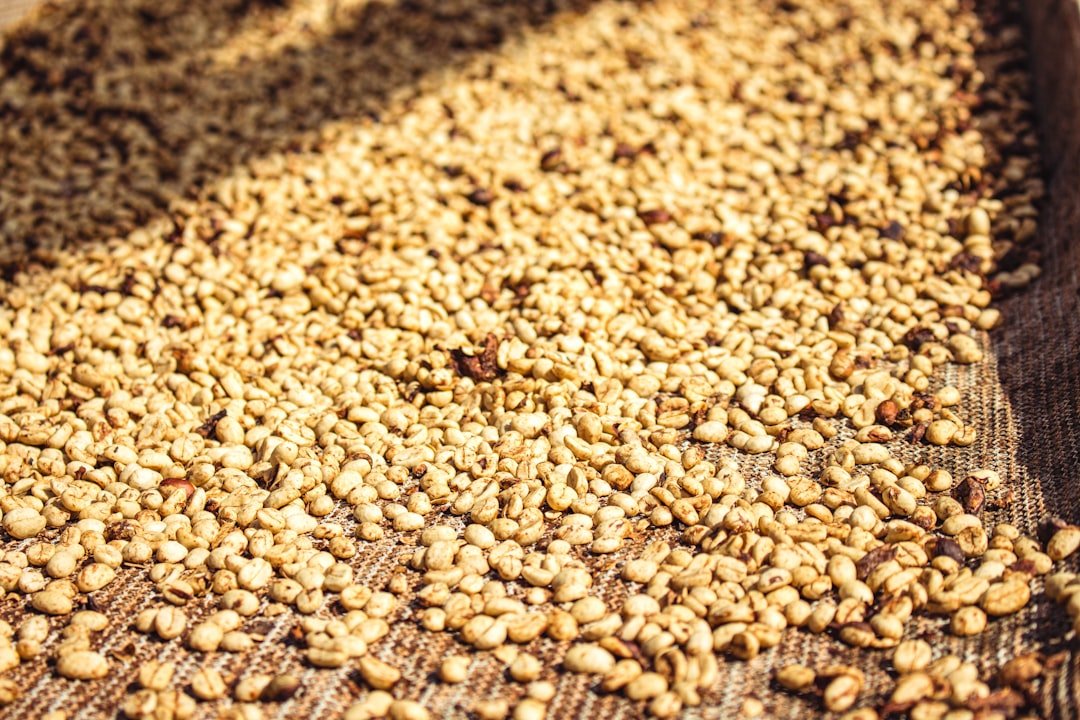
Coffee used to stay in its lane. You’d talk origin, variety, roast, maybe washed versus natural if you were the kind of person who actually reads tasting notes for fun. Now? A cup can land on the table tasting like sangria, lychee candy, spiced peach, or the boozy dessert your friend orders “for the table” and then absolutely does not share. That’s not just coffee getting better. That’s coffee wandering into entirely new flavor territory.
And that shift matters more than one more cupping card with “notes of berries.” The real story is that new coffee processing methods that are creating entirely new flavors are changing how the industry defines quality, how producers stand out, and how drinkers make sense of what’s in the cup. For decades, coffee quality language leaned hard on origin, cultivar, altitude, and roast. Those still matter. But processing is no longer a technical footnote. It’s becoming a flavor engine in its own right, sometimes powerful enough to rival terroir.
Coffee isn’t just tasting better — it’s becoming a category break
There’s a difference between refinement and reinvention.
Specialty coffee spent years getting better at clarity: cleaner washed lots, sweeter naturals, more precise roasting, and more articulate sourcing. What’s happening now is stranger, more ambitious, and a lot more fun to argue about. Experimental processing is no longer some fringe producer flex whispered about at competitions and niche Instagram accounts. It’s common enough now that major coffee publications cover controlled fermentation, anaerobic processing, thermal interventions, and co-fermentation as serious topics, not novelty acts.
Roast Magazine recently noted that experimental processing and novel flavor profiles now show up routinely on labels and in training conversations, a clear sign the category has moved beyond curiosity and into mainstream specialty coffee discussion (Roast Magazine).
That’s the real break. Processing used to be discussed mostly as the practical business of removing fruit from the seed and managing defects. Now it’s a creative tool. A style choice. Almost like a winemaker deciding on maceration length or a brewer tweaking fermentation conditions to shape ester production. Coffee is one of the few major drinks categories where consumers still often assume flavor comes mostly from the raw ingredient and roast. Increasingly, the farm-level process in between is doing much more of the storytelling than people realize.
In some cases, processing has become so expressive that two coffees from similar regions and varieties can taste farther apart than two coffees from entirely different countries processed more traditionally. Not long ago, that would have sounded borderline heretical in some specialty circles.
That tension matters. Specialty coffee built much of its modern identity around traceability, transparency, and celebrating the inherent qualities of place. If processing starts to dominate the sensory result, what exactly are we celebrating: the bean, the producer’s technical skill, the creativity of a fermentation protocol, or all of the above? That philosophical tangle is part of what makes this moment so interesting.
It also connects naturally to broader debates in specialty coffee about what counts as quality and innovation. Readers interested in how the category is challenging old assumptions may also like how robusta specialty coffee is challenging old coffee snobbery.
The flavor lab moved to the farm
Fermentation is now the main character
Fermentation has always been part of coffee. Even a classic washed coffee involves microbial activity as sugars and mucilage break down. What’s changed is the mindset. Instead of letting fermentation happen somewhat passively, producers are increasingly controlling it on purpose by adjusting oxygen exposure, temperature, time, vessel type, pressure, or the atmosphere around the cherries and parchment to steer flavor in a specific direction.
Basically, the farm started acting a little more like a lab. Not in a sterile, anti-romance way. More in a way that says producers finally know enough to be intentional.
A strong example comes from a Colombian trial covered by Daily Coffee News. Researchers from SENA and Universidad del Valle compared five fermentation approaches on whole coffee cherries from the same lot. The standout result was a 24-hour CO2 modified-atmosphere fermentation, which scored 86.90 on the Specialty Coffee Association’s legacy 100-point cupping protocol, versus 82.15 for an unfermented control (Daily Coffee News).
That score gap is not small. In specialty terms, it is the difference between a pleasant coffee and a lot that buyers actively talk about. But the more interesting point is not just that the coffee scored higher. It is why this kind of research matters: repeatability.
One of the biggest frustrations with experimental coffee has always been that a producer can make one spectacular lot that tastes like guava jam and orange blossom, then never quite recreate it. Great story, difficult business model. Controlled fermentation is trying to solve that. If oxygen levels, gas composition, time, and temperature can be managed more precisely, flavor outcomes may become more predictable from harvest to harvest.
That sounds technical because it is technical. But it is also commercially important. Repeatability is what turns a wild experiment into a category. It is the difference between limited microlot chaos and a recognized processing style buyers can source and consumers can actually learn.
The Colombian study also focused on natural processing systems under real production conditions, not just idealized lab setups. That matters because coffee research can sometimes produce beautiful ideas that fall apart the moment they hit farm scale. A method that works in a paper but not in a mill is not much of an innovation.
This is why new coffee processing methods that are creating entirely new flavors are no longer just coffee-nerd bait. They affect pricing, training, menu language, quality control, and producer differentiation. Once a producer can create unusual sensory profiles with some consistency, they are not just selling coffee. They are offering a style.
Co-fermentation is the most polarizing trend in coffee
If controlled fermentation is the main character, co-fermentation is the one blowing up the group chat.
In coffee terms, co-fermentation generally refers to coffee fermenting alongside other ingredients during processing, often fruits like peach, orange, melon, lychee, grape, or passionfruit, to influence microbial activity and ultimately the cup profile. Sprudge’s explainer makes an important distinction here: this is not the same thing as later-stage flavoring or infusion, like soaking beans in bourbon or spraying them with flavored oils. Co-fermentation happens during fermentation itself, not as a postscript (Sprudge).
That distinction matters because co-fermentation gets accused of cheating constantly in coffee discourse. The criticism usually goes like this: if a coffee tastes strongly of added fruit, are you still tasting coffee, or are you tasting process manipulation? It is a fair question. But maybe it is also the wrong one.
A more useful question might be why fermentation creativity is celebrated in wine, beer, cheese, and even chocolate, yet treated like a scandal the second coffee tries something similarly inventive. Coffee has always had a purist streak. Sometimes that is admirable. Sometimes it is just limiting.
The case for co-fermentation is not that every producer should start tossing passionfruit into tanks and hoping for the best. The case is that fermentation is a valid site of craftsmanship, and coffee does not need to freeze itself in one aesthetic era forever. If the process is transparent, intentional, and done well, then maybe the category can hold more than one idea of quality at once.
Consumer culture is already leaning that way. Perfect Daily Grind reported that broader flavor trends for 2026 point toward more unconventional combinations, including sweet and spicy, indulgent, nostalgic, and globally influenced profiles. The article also noted that innovation in coffee processing is helping create more unconventional flavors in specialty coffee, while reminding us that most consumers still want consistency and reliability (Perfect Daily Grind).
That tension is the whole plot. People are more open to surprise than they used to be, but they do not want every cup to behave like a prank. Not every co-ferment is good. Some taste thrilling. Some taste like the coffee equivalent of adding too many filters and calling it art. There are cups where the fruit influence feels integrated and expressive, and there are cups where the result is so loud it almost stops tasting grounded in coffee.
Still, dismissing co-fermentation outright misses what it reveals about the market: some consumers genuinely want novelty, not just reliability. They want a coffee that surprises them. Not every morning, maybe. But often enough that the industry has to take it seriously.
The next coffee status symbol might be precision
For a long time, coffee prestige leaned heavily on rarity. Tiny lot. Exotic variety. Impossibly specific farm details. That still matters. But the next big flex may be less about scarcity and more about precision, because flavor innovation gets much more valuable the moment it can be measured, diagnosed, and repeated.
That is where measurement science enters the conversation. Daily Coffee News recently covered research from the University of Oregon on using cyclic voltammetry, applying a controlled electrical current to brewed black coffee via electrodes, to quantify factors tied to flavor, especially brew strength and roast color. Research leader Christopher Hendon framed the breakthrough this way: “Until now we haven’t been able to separate those variables. Now we can diagnose what gives rise to that delicious cup” (Daily Coffee News).
No, cyclic voltammetry is not a new post-harvest processing method. But it matters because it points to where coffee is headed: a more mature era of experimentation. Less trying weird things and hoping. More tracking process variables, connecting them to sensory outcomes, and building systems that can be repeated.

That is a major shift in mindset. Experimental processing has often been framed like culinary improvisation: instinctive, creative, occasionally chaotic. The next phase will likely look more like controlled craft. Producers and roasters who can pair sensory storytelling with actual process understanding will have a huge advantage.
Think about what that means in practice. If anaerobic fermentation under a certain temperature range tends to push tropical fruit notes, and a certain roast treatment preserves those compounds more effectively, and brewing data confirms the extraction targets that best express them, then coffee starts building a real body of knowledge instead of a scrapbook of anecdotes. That is how niche experimentation becomes serious production intelligence.
Many of the quality tools coffee professionals use today still rely heavily on human sensory evaluation, which is essential but variable. The better analytical tools get, the easier it becomes to explain what happened in a coffee with something stronger than “trust me, it tastes purple.”
That is key for producers. If new coffee processing methods that are creating entirely new flavors are reshaping the market, the winners will not necessarily be the ones doing the wildest thing. They will be the ones who can do something distinctive consistently, explain it clearly, and show buyers what the process actually contributes.
This kind of evidence-driven shift also fits into larger conversations about coffee quality and consumer trust. For more on how science is changing coffee discussions, see new research on coffee and health changes the talk.
When does innovation stop tasting like coffee?
Some experimental coffees are exhilarating. Others feel like flavor cosplay: loud, memorable, highly shareable, and oddly detached from coffee’s own identity. You taste them and think, “That is fascinating,” which is not always the same as “I want another cup.”
This is the tension the industry keeps circling because there is no easy answer. As unconventional flavor trends rise, many specialty consumers still prioritize consistency, clarity, and reliability. Perfect Daily Grind makes that point directly: while adventurous flavors are gaining attention, most specialty coffee consumers still want a dependable, high-quality experience (Perfect Daily Grind).
Most people do not want every morning cup to taste like fermented tropical candy with a side note of red wine reduction. Sometimes you just want coffee that tastes like coffee: sweet, balanced, expressive, and comforting.
The useful distinction here is between processing that reveals latent flavor potential and processing that overwhelms the bean’s original character. That line is blurry, and coffee people will keep debating it intensely. But it is probably one of the defining arguments in modern specialty coffee.
If a processing method helps highlight fruit, florality, sweetness, or texture that the coffee was capable of expressing, many people see that as legitimate craft. If it imposes such a dominant signature that origin and variety become almost irrelevant, people start asking harder questions. And honestly, they should.
Transparency matters here. If a coffee has undergone co-fermentation, carbonic-style treatment, thermal shock, yeast inoculation, or any other intervention designed to steer flavor dramatically, that should be communicated clearly. Not because it is bad, but because it is relevant. Consumers deserve to know whether they are tasting terroir, process, or a very intentional duet between the two.
The best new coffee processing methods are not trying to make coffee taste like anything but coffee. They are expanding coffee’s flavor vocabulary without erasing its accent. That is the sweet spot: range, not amnesia.
What to watch next in new coffee processing methods that are creating entirely new flavors
The next phase probably will not just be more extreme flavors. It will be better language, better standards, and better transparency around what was done to the coffee and why.
That may sound less flashy than a wildly named experimental lot, but it is the infrastructure that makes innovation sustainable. Roast Magazine’s reporting on CQI’s evolving role points to a broader need the industry already feels: shared systems and language that create value for both buyers and sellers (Roast Magazine).
Coffee has spent decades building common frameworks for evaluating quality. Now it needs stronger frameworks for describing process-driven flavor without turning every label into either a chemistry lecture or total chaos.
Expect consumers to increasingly want process details on menus and bags, not just origin and roast notes. If a coffee tastes unexpectedly like sangria, tropical candy, or boozy stone fruit, people are going to ask what happened. That is where the story lives now.
Expect a split market, too, and that is not a bad thing. One lane will keep pushing adventurous, limited-run experimental coffees for curious drinkers and competition tables. The other will focus on cleaner, more classic profiles with subtler processing innovation happening quietly behind the scenes. Both deserve room. Coffee does not need to choose between tradition and experimentation.
Also worth watching: standards around labeling and quality evaluation may get sharper as these processes spread. If co-ferments, modified-atmosphere fermentations, and other interventions become more common, buyers and certification systems will need better definitions. What counts as processing? What counts as flavoring? What should be disclosed? Those are not minor questions anymore.
And here is the thought that sticks: coffee’s next flavor frontier may not come from planting a new variety or roasting a little lighter or darker. It may come from producers rewriting what the bean can become before it ever leaves the farm. That is a huge shift, quietly revolutionary and a little chaotic, which is also very on-brand for coffee right now.
Sources
- Daily Coffee News — Researchers Propose Electrifying Way to Measure Brew Strength and Roast Color
- Daily Coffee News — CO2 Fermentation Boosts Natural-Process Coffee Scores in Colombian Trial
- Sprudge — What is Co-Fermentation In Coffee?
- Perfect Daily Grind — Flavour trends are increasingly unconventional, but is this what specialty coffee consumers truly want?
- Roast Magazine — Industry Insights: CQI’s Next Act
Frequently Asked Questions
What are new coffee processing methods that are creating entirely new flavors?
They are newer or more controlled post-harvest techniques such as anaerobic fermentation, modified-atmosphere fermentation, thermal interventions, and co-fermentation. These methods can dramatically change how a coffee tastes by shaping microbial activity and flavor development before roasting.
Does co-fermentation mean coffee is artificially flavored?
Not necessarily. Co-fermentation happens during the fermentation stage with other ingredients influencing the process, which is different from adding flavorings after processing. The debate is less about whether it is artificial and more about how transparent producers are about the method.
Why are experimental coffee processing methods becoming more popular?
They help producers stand out in a crowded specialty market and can create distinctive flavor profiles that attract buyers. As research and measurement tools improve, these methods are also becoming more repeatable and commercially viable.
Can processing methods overpower a coffee’s origin character?
Yes, they can. Some processing methods reveal and amplify a coffee’s natural potential, while others can dominate the cup so strongly that origin and variety become harder to detect. That is why transparency and clear labeling matter more than ever.
