

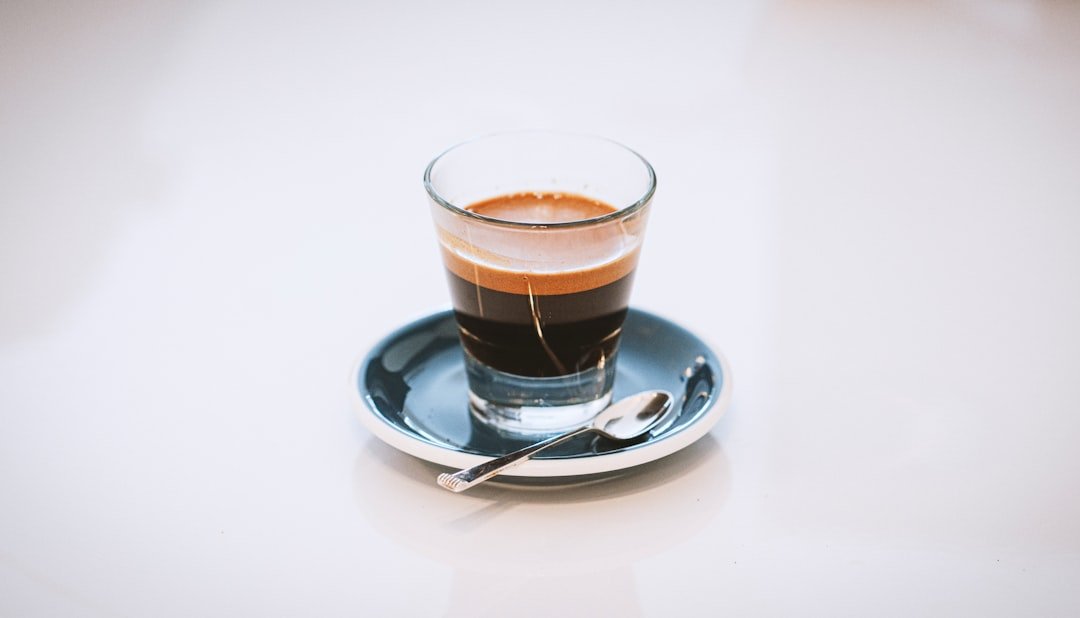
The americano origin story and why Italians find it hilarious begins with a simple joke: you take espresso, add hot water, and somehow name the result after the people who diluted it. If you have ever wondered why Italians find the Americano at least a little funny, that is basically the punchline.
And yet, the Americano is everywhere. Totally normal. Respectable, even. It is a default café order from Milan to Manhattan, just not for quite the same reasons. The commonly repeated origin story says that during World War II, American G.I.s stationed in Italy found local espresso too short, too intense, and too unapologetically itself, so they diluted it with hot water to get closer to the longer brewed coffee they knew back home. Both Sprudge and Barista Magazine recount that story, and Barista Magazine takes it one step further, calling the drink’s name a form of playful irony from the Italian point of view: this was coffee adjusted for Americans, not coffee Italians were trying to perfect for themselves.
That distinction matters. A lot.
Because what Italians are laughing at is not just the recipe. It is the logic behind it. In Italian espresso culture, concentration is the point. Brevity is the point. The tiny cup is not some unfortunate limitation everyone tolerated until bigger mugs arrived. It is the design brief. Espresso says: here is coffee stripped to its essentials, pulled fast, drunk fast, and slipped neatly into the rhythm of the day. The Americano, meanwhile, says: okay, but what if we made it longer, gentler, and a little more familiar?
And honestly, fair enough. People like what they like. But from an Italian perspective, it can still land like a tiny punchline. Not mean. More like affectionate disbelief. Like watching someone buy a beautifully tailored suit and then ask if it can be turned into a bathrobe.
The joke is baked into the name
The name Americano is doing a lot of heavy lifting. It does not just identify the drink. It quietly preserves the cultural misunderstanding that created it.
The usual version of the story is simple enough: American soldiers in Italy during WWII encountered espresso culture, found it stronger and shorter than the coffee they were used to, and added hot water to make it feel more like home. Sprudge’s explainer on the drink and Barista Magazine’s coverage both repeat this origin, which has become coffee-history canon for a reason. It is plausible. It is memorable. It explains the recipe in one sentence. Stories like that tend to stick.
But the funniest part is how the name frames the whole thing. Americano does not sound like a proud Italian invention in the same family as cappuccino, macchiato, or ristretto. It sounds more like a note scribbled in the margin. Ah yes, this one is for the Americans.
That is where the irony lives. If espresso is the local standard, then the Americano is espresso translated for foreign expectations. Not improved. Not elevated. Just adapted. A workaround in a cup.
It is one of those small coffee truths that says a lot about culture in general: the drinks we treat as normal often started as compromises. The Americano was not born because a room full of Italians said, “At last, the ideal expression of espresso.” It was born because somebody needed a bridge between two coffee worlds.
And Italians, with their extremely sharp radar for coffee ritual, can hear that in the name immediately.
There is also a subtle status joke in there. Espresso in Italy is not small coffee. It is just coffee. Walk into a traditional Italian bar and ask for a caffè, and you will get espresso. No footnotes. No clarifications. So from that angle, the Americano can read like a variation defined mostly by what it is not: not the local default, not the intended intensity, not the standard form. It is coffee adjusted outward.
That is why the name still has comic energy. It labels a preference, sure, but it also marks a distance from the culture that produced espresso in the first place.
One menu word, and suddenly you are reading a tiny history of taste. If you enjoy how espresso traditions evolved in Italy, you might also like why the doppio standard matters in Italian coffee culture.
The real origin story is not romance — it is culture shock in a cup
Coffee history gets romanticized fast. Give any drink enough time and someone will turn it into a cinematic legend involving war, migration, longing, invention, and probably one suspiciously attractive barista under dramatic lighting. The Americano does not really need all that. Its origin is more practical, and that is exactly what makes it interesting.
This was not Americans discovering a better way to drink espresso. It was culture-shock management.
American soldiers in Italy were generally used to longer, more diluted brewed coffee. Think percolated or drip-style coffee that filled a mug and took its time. Italian bars, meanwhile, were serving espresso: small, concentrated, aromatic, and meant to be consumed quickly. Those are not minor differences. They are completely different coffee philosophies.
One says coffee is a companion to time. The other says coffee is a punctuation mark.
So the Americano emerged as an adjustment. Not because espresso failed, but because it succeeded a little too hard for the palate and habits of people used to something else. That is why the drink matters historically. It is an early, very clear example of coffee localization: changing the drink rather than expecting the drinker to change overnight.
That pattern is everywhere now. Oat milk flat whites in one city, ultra-sweet iced espresso drinks in another, ceremonial single-origin pour-overs somewhere else. Coffee travels, and then coffee adapts. The Americano is one of the older, cleaner examples of that process. In that sense, it belongs in the same broader conversation as other hybrid espresso drinks, including dirty chai latte and espresso hybrids that blend traditions to suit new tastes.
Both Sprudge and Barista Magazine repeat the WWII-in-Italy origin story, but it is worth being honest about food history: stories like this often survive not because every detail is perfectly documented, but because they are culturally revealing and mechanically plausible. The recipe explains the need. The name explains the audience. The context explains why the drink stuck.
That is enough to make the story powerful, even if there was not one dramatic moment where a soldier stared into the middle distance and whispered, “Needs more hot water.”
There is also a detail people miss: adding hot water after the shot changes the drink differently than simply pulling a longer espresso. An Americano keeps some of the espresso’s aromatic structure and crema-related intensity at the start, then stretches it into something easier to sip over time. It is not drip coffee, and it is not a lungo either. It is a hybrid born from adaptation, which is a very modern idea hiding inside a very ordinary café order.
So no, the real origin story is not romance. It is contact between two habits. One side saying, “This is coffee.” The other saying, “Okay, but could it be more?”
Why Italians laugh: espresso in Italy is a social system, not just a beverage
To really get why the Americano can seem funny in Italy, you have to stop thinking of espresso as just a flavor profile. Espresso in Italy is infrastructure.
Sounds dramatic, yes. Stay with it.
BrewVox argues that Italian coffee culture is shaped less by postcard mythology and more by bar economics, price expectations, and repeated daily habits. Sprudge makes a similar point in its reporting on coffee prices in Italy: espresso is deeply woven into ordinary life, and expectations around affordability are strong enough to become politically and culturally sensitive. This is not niche hobby territory. This is daily ritual operating at national scale.
And that matters, because espresso in Italy is optimized for speed, accessibility, and repetition.
You walk into a bar. You order a caffè. You stand at the counter. You drink it. You leave. It is quick. It is affordable. It fits into the day without requiring an entire mood board. The cup is small because the ritual is efficient. The roast profile, service style, and pricing expectations all evolved around that reality.
Now drop an Americano into that system.
Suddenly you have taken a drink built for immediacy and stretched it into something slower, larger, and less concentrated. Not wrong. Just a little out of tune with the original setting. In a traditional Italian bar context, that can feel faintly absurd, like taking a scooter built for darting through city streets and asking whether it can tow a camping trailer.
That is why the laughter is usually bemusement more than snobbery. Italians are not shocked that people like different coffee. They know export culture exists. They know tourists exist. They know the world contains some very large mugs. The humor comes from seeing a highly optimized cultural object gently bent out of shape to satisfy a different set of habits.
Espresso, in Italy, is also social choreography. There is an elegance to the routine: the standing bar, the quick exchange, the familiar order, the low-friction pleasure of repetition. The Americano changes that choreography. It asks espresso to linger. It slows the rhythm. It brings in a different expectation of volume and duration.
And that is where the joke gets sharper. To many Italians, ordering an Americano can sound a bit like going to a pizza place and asking if the slice can be made more bread-like. Sure. They can probably do that. But the request reveals that you and the object are having slightly different conversations.
A small coffee fact that surprises people: in Italy, drinking at the bar counter is often priced differently from table service. So the physical way you drink coffee has long been part of the economic logic, not just the aesthetic. A quick espresso at the bar is not only tradition. It is part of how the whole system works. Which makes the Americano feel even more culturally sideways. It belongs to a slower coffee habit than the one the Italian bar was built to serve.
So yes, Italians laugh. But often they are laughing because the Americano exposes just how specific espresso culture really is. What feels perfectly normal to one coffee drinker can look gloriously weird to another.
The funniest part? Italians already have long coffee — just not that long
Here is where things get more interesting, and where a lot of non-Italians get tripped up: Italy is not a monolith of tiny cups and zero variation. Italians do have longer coffee formats. They just work within espresso logic instead of replacing it.
That distinction is everything.
An espresso is the standard short shot: concentrated, quick, direct. A caffè lungo is made by running more water through the coffee puck during extraction, producing a longer drink. An Americano, meanwhile, is espresso first, then hot water added afterward.
Those might sound similar if you are only looking at cup size. In the cup, they are not the same thing.
A lungo changes the extraction itself. More water passes through the grounds, which can pull out different compounds and shift the flavor toward more bitterness or a thinner body, depending on how it is prepared. An Americano preserves the original espresso shot and then dilutes it with hot water, changing strength and texture without re-extracting the puck. Similar destination on paper. Different route. Different result.
That is the kind of detail coffee people love, and for once, they are absolutely right to love it.
Because this is exactly where the Italian laughter gets more specific. To a traditionalist, the Americano can seem like a drink invented by people who wanted espresso to stop being espresso, but did not want to say that out loud.
And yet, that is also why the Americano survives. It solves a real preference gap. Plenty of drinkers want the flavor architecture of espresso, the aromatics, the structure, the darker concentration, without the full intensity of a straight shot. The Americano gives them that. It is not a mistake. It is a translation device.

There is also a subtle technical reason this matters: water changes not just strength, but perception. Dilution can make certain notes easier to spot. A sharp, dense espresso might feel more open once hot water stretches it out. That means a well-made Americano can actually be a great way to experience espresso in a gentler format, especially if you do not want milk and do not want the full punch of a short shot.
So yes, Italians may find it funny. But they also understand, maybe better than anyone, that format changes experience. They already have ristretto for shorter, lungo for longer, macchiato for marked with milk, and all kinds of regional habits around timing and preference. The issue is not that variation is forbidden. The issue is that the Americano comes from a different logic of what coffee is supposed to do.
That is a pretty hilarious thing to hide inside one cup of hot water and espresso.
Is the Americano actually bad — or just culturally misread?
This is where we defend the Americano a little. Not like a lawyer. More like a friend who knows the allegations and still thinks the accused has range.
The Americano is not a wrong drink. It is a revealing drink.
Its origin makes visible a tension that still exists: Italian espresso culture values intensity, speed, familiarity, and ritual, while Anglo-American coffee habits have historically leaned toward longer cups, longer drinking windows, and a different relationship to volume. The Americano sits right on that fault line.
Perfect Daily Grind’s reporting on specialty coffee in Italy shows how strong traditional expectations remain. In much of the Italian market, coffee is still expected to be quick, dark-roasted, inexpensive, and familiar. Drinks outside that classic espresso template can feel awkward not because they are objectively bad, but because they disrupt a long-set system of assumptions. If the baseline expectation is a fast, affordable caffè at the bar, then a larger diluted espresso will inevitably read as a little foreign.
But foreign is not the same thing as bad. That is the whole point.
In specialty coffee settings, the Americano can be handled with real intention. Baristas may pay attention to the order of assembly, water temperature, dilution ratio, and the espresso profile itself. Some prefer adding espresso to hot water rather than hot water to espresso to preserve crema presentation. Others care more about how dilution affects texture and aroma than how the top of the drink looks. None of that is trivial. Those choices shape whether the final cup tastes flat and sad or balanced and elegant.
Here is a fun little coffee-nerd note: an Americano made with too much water can taste hollow, but one made with a thoughtful ratio can preserve sweetness and structure while softening harshness. In other words, this drink is unusually sensitive to intent. Done carelessly, it becomes the insult Italians imagine. Done well, it becomes a legitimate style of black coffee.
So why do Italians still find it hilarious?
Because the Americano reveals a broader truth nobody loves admitting: people say they want authenticity, but most of the time they want familiarity. They want the local thing, adjusted just enough to feel comfortable. That is not a moral failure. It is human. But it is funny, especially in coffee, where everyone likes to act a little more principled than they really are.
The Americano is authenticity with a seatbelt on.
It says, “I would like to participate in espresso culture, but at my own pace.” Which, honestly, is relatable. Very few of us encounter a new food or drink culture and instantly become pure disciples of the local way. We negotiate. We translate. We soften the edges. We carry our habits with us.
That is why the Americano has charm. It is not pretending to be some sacred untouched tradition. It is visibly a compromise, and there is something refreshingly honest about that. Coffee history disguised as a normal order. Adaptation disguised as preference.
And maybe that is the best way to understand the americano origin story and why Italians find it hilarious. The humor is not just that Americans watered down espresso. It is that the drink permanently records a moment when one coffee culture met another and said, “Love this. Terrifying. Can we make it a little less intense?”
Perfect. Hilarious. Extremely human.
So the next time you order an Americano, notice what you are really asking for. Not just espresso plus hot water. Not just a larger black coffee. You are ordering a cultural compromise that somehow became canonical. A drink born from mismatch, kept alive by preference, and still carrying a tiny wink in its name.
That wink is the whole charm.
Frequently Asked Questions
What is the Americano origin story?
The most widely repeated story is that American soldiers in Italy during World War II diluted espresso with hot water to make it taste more like the longer coffee they drank at home. Whether every detail is perfectly documented or not, the story remains popular because it neatly explains both the recipe and the name.
Why do Italians find the Americano funny?
Many Italians see espresso as the default and ideal form of coffee, so adding hot water can seem like missing the point on purpose. The humor is usually affectionate: the Americano looks like espresso translated for people who found real Italian coffee a bit too intense.
What is the difference between an Americano and a lungo?
A lungo is made by running more water through the coffee during extraction, which changes the extraction itself and often the flavor balance. An Americano starts with a normal espresso shot and adds hot water afterward, so it dilutes the drink without re-extracting the grounds.
Is an Americano considered bad coffee in Italy?
Not necessarily. It is more accurate to say it is culturally outside the traditional Italian espresso system. In specialty coffee settings, a well-made Americano can be balanced, aromatic, and intentional rather than just watered-down espresso.
Sources
- Barista Magazine — https://www.baristamagazine.com/move-over-americano-the-canadiano-has-arrived/
- BrewVox — https://brewvox.com/the-myth-of-italian-coffee/
- Sprudge — https://sprudge.com/what-the-new-york-times-gets-wrong-about-coffee-prices-in-italy-378920.html
- Perfect Daily Grind — https://perfectdailygrind.com/2025/07/specialty-coffee-challenging-status-quo-italy/
- Sprudge — https://sprudge.com/what-is-an-americano-espresso-hot-water-and-history-176210.html
