

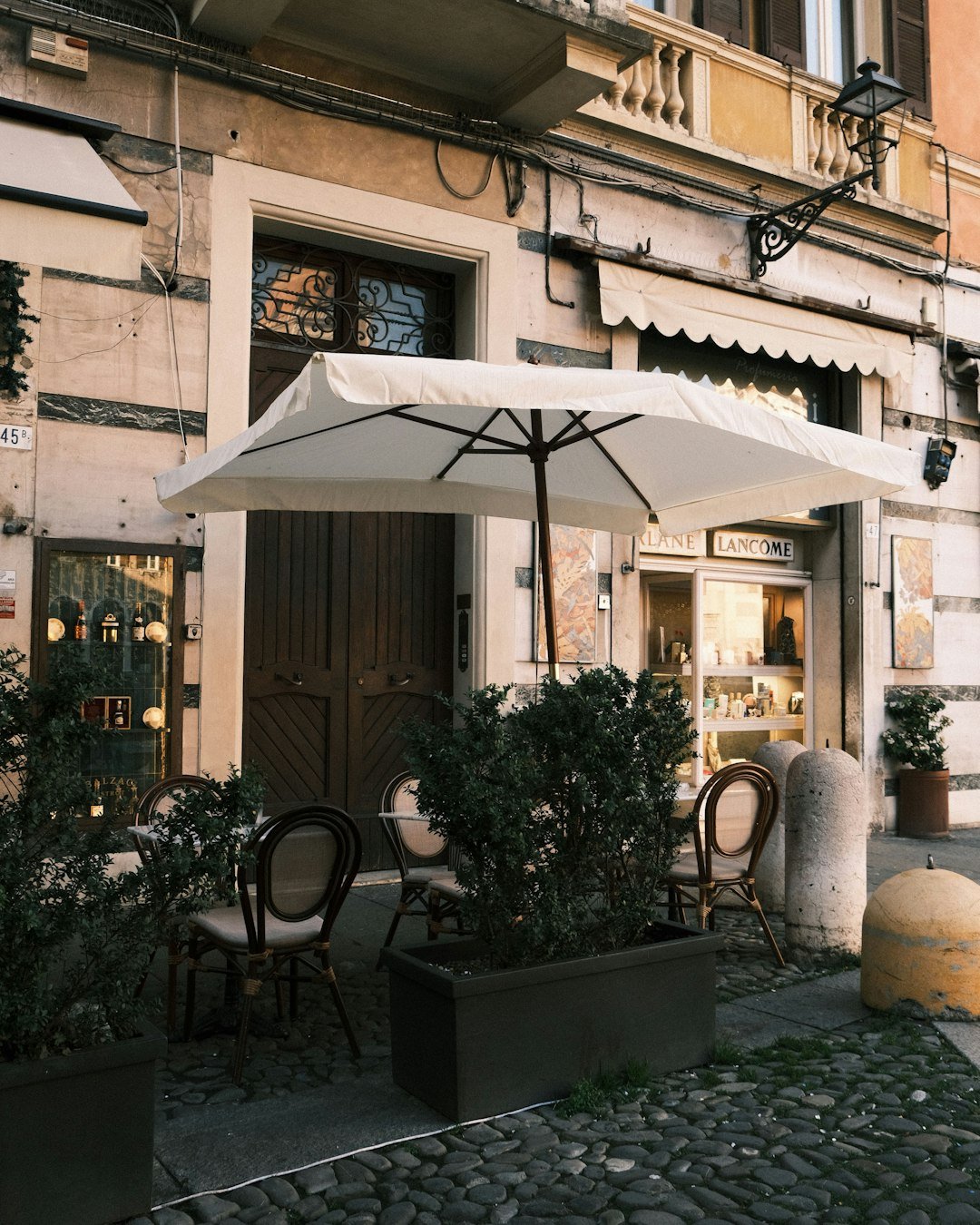
The more life disappears into screens, the more a coffee shop starts feeling less like a place to get caffeine and more like proof that other humans still exist. Dramatic? A little. Wrong? Not really.
Why the coffee shop experience matters more than ever in the digital age comes down to something simple: coffee is easy to get, but meaningful places are not. You can get coffee basically anywhere now: delivered to your door, brewed by a machine smarter than your first manager, made from pods, concentrates, cans, sachets, subscriptions, or a home setup that looks like a tiny stainless-steel spaceship. Coffee is easy to get. Great coffee, even. And yet the best cafés still matter, maybe more than ever. Not because they just sell coffee, but because they offer what your phone can’t: ritual, recognition, atmosphere, and that subtle social choreography of being a person among other people.
That idea is hardly new in Italy. At the Italian bar, coffee has never been only about obtaining a beverage. It’s a pause. A rhythm. A tiny reset in the middle of the day. You walk in, order an espresso, maybe stand at the counter, maybe exchange half a sentence and one meaningful glance, then you’re back out in the world. No TED Talk. No “experience economy” jargon. Just a very efficient reminder that you exist in society. If you want a deeper look at that rhythm, Italian bar culture and counter coffee explains why this style still feels so alive.
And that’s the real answer: convenience didn’t kill the café. It revealed what the café was for all along.
Why the coffee shop experience matters more than ever in the digital age
The battle over access is over. Convenience won by knockout.
You can brew excellent coffee at home with gear that used to belong only to professionals. You can get single-origin beans mailed to your apartment. You can tap an app and have an oat latte appear downstairs with mildly unsettling efficiency. Pods have improved. Instant has improved. Even office coffee, in a few blessed corners of the world, has improved. The baseline is just higher now.
Which means the café’s job has changed.
If people can get decent caffeine with almost zero friction, then a coffee shop can’t rely on caffeine alone as its whole pitch. That’s the pressure point across the industry. Perfect Daily Grind has reported that as retail coffee prices rise and competition increases, specialty cafés are being pushed to justify their pricing through service, hospitality, and customer care, not just what’s in the cup.
A café now has to offer the thing your kitchen can’t.
That thing is curation.
Not in the annoying, overused sense. In the real one. A café curates mood, pace, sound, social energy, and expectation. It gives structure to a break. It gives shape to a conversation. It lets you feel, for 12 minutes or two hours, like the day has a center of gravity.
That’s why coffee shops have become one of the last affordable luxuries that still feels communal instead of algorithmic. You’re not just buying a drink. You’re buying access to a setting where the lighting is better than your apartment, the soundtrack was hopefully chosen by a human with taste, and the whole room is organized around one of civilization’s best inventions: coffee made by someone who knows what they’re doing.
Here’s the quietly radical part: the more coffee itself becomes a commodity, the more the ritual around it becomes premium.
Italy figured this out ages ago. In many parts of the U.S., coffee has often been treated as identity fuel: giant cup, custom order, portable personality. In Italy, espresso is much more normalized. It’s not rare. It’s not precious. It’s not begging for applause. Because coffee is built into daily life, the ritual becomes the point. You step in, have your caffè, maybe a cornetto in the morning, and carry on. The act is small, but it creates continuity.
That mindset feels very current now because digital life has made so much of the day feel flat and frictionless in the least satisfying way. Click, scroll, order, confirm, track, repeat. A good café interrupts that loop. It asks you to actually arrive somewhere.
And yes, that somewhere had better be worth it.
A great coffee shop is one of the last acceptable third places
A lot of modern adult life is weirdly under-designed.
You have home. You have work, maybe, unless work is now just a laptop and a Slack notification haunting your kitchen table. Then you have what, exactly? The gym if you’re feeling disciplined. Bars if you want alcohol involved. Restaurants if you want to spend more money. Public parks if the weather behaves and your laptop battery doesn’t betray you.
That’s part of why cafés matter so much right now. They’re one of the last socially acceptable third places: not home, not work, but somewhere in between where you can exist with low commitment and relatively low stakes.
Perfect Daily Grind has explicitly discussed cafés as third places, noting their importance as spaces shaped by hospitality and human interaction, especially as people seek more than convenience from coffee. That framing hits for millennials and Gen Z because the café now does several jobs at once. It’s an office. A transition zone. A first-date venue. A pre-meeting holding pattern. A solo reset chamber. A place to be alone without feeling isolated. A place to be around people without having to make plans three weeks in advance using six apps and a shared calendar.
That last one matters more than people like to admit.
Coffee shops let you rehearse public life.
You remember how to order, wait, notice, respond, share space, and maybe strike up a conversation that isn’t mediated by a screen or optimized for performance. You practice tiny acts of belonging. You learn the rhythm of a room. You become a regular somewhere, which in 2026 can feel almost suspiciously luxurious. There’s something deeply stabilizing about being known by your order or your face, even just a little.
Fresh Cup’s coverage of after-hours events during the 2026 World of Coffee shows how coffee culture keeps spilling beyond the drink itself into parties, panels, meetups, and city-wide gatherings. That’s not random. It’s proof that coffee remains a social connector, not just a product category. The café is still where culture gathers. People don’t just want tasting notes. They want scenes, conversation, chemistry, accidental encounters.
And no, this does not mean every coffee shop needs to become a hyper-social clubhouse with panel discussions and live DJs. Sometimes the cultural function of a café is much simpler: it gives you a place to be a person in public without committing to a full evening out.
In Italy, this role has been built into the bar forever. The local bar is not trying to trap you there all day. It’s not aggressively branding itself as community. It simply is one. You stop by. You stand for an espresso. You see familiar faces. The interaction is brief, but it counts. The point isn’t duration. It’s repetition. If you’ve ever wondered why those quick rituals feel so meaningful, why Italians never order cappuccino after 11am offers another example of how coffee customs create shared rhythm.
Maybe belonging doesn’t always start with depth. Sometimes it starts with routine.
The best cafés are trust machines, not content backdrops
There are cafés designed for photos, and there are cafés designed for life.
Sometimes those overlap. Lovely when they do. But not always.
The internet has trained everyone to notice surfaces first: tile, typography, cups, angles, vibes, shelves, mirror selfies, the exact shade of green on the wall. We all know the type of place that gets posted relentlessly in its first month because it looks incredible and serves a drink with a garnish that appears to have been assembled by an art director. Fine. Fun, even. But photogenic is not the same thing as good.
Sprudge’s look at what makes a coffee shop genuinely good in 2026 points toward something less flashy and much more durable: atmosphere, execution, and trust. Trust is the key word. Because in a digital-first culture full of overpromised experiences, reliability starts to feel almost rebellious.
A trustworthy café is one where the flat white will be right. The espresso won’t taste like it was extracted by someone in a blood feud with water. The music won’t attack your nervous system. The Wi-Fi works if they offer it. The room feels considered. The staff knows how to be present without hovering. The pastry case is honest. The place has standards, and you can feel them.
That’s what keeps people coming back.
Not everything in life needs to surprise you. In fact, one of the reasons coffee shops matter so much now is that they offer a form of dependable pleasure in a culture addicted to novelty and exhausted by it. You don’t go to your favorite café because every visit reinvents your personality. You go because it’s reliably right. It gives you a known good thing in a day full of variables.
Italian bar culture quietly outclasses trend culture here. The best bars in Italy are not trying to become your entire identity. They’re not angling to be your morning ritual era on social media. They’re just competent, consistent, and woven into daily life. You get your espresso standing at the bar because it’s fast, democratic, and social. You don’t need a private corner and a cinematic soundtrack to have a meaningful coffee moment. Sometimes all you need is a porcelain cup, a polished counter, and a bartender who knows exactly how your morning moves.
Aesthetic cafés win the scroll. Trustworthy cafés win the habit.
That distinction matters. One gets attention. The other gets woven into memory, routine, and the shape of your week.

And here’s the part people underestimate: trust in a café can spill into trust in the surrounding neighborhood too. A good local coffee shop makes an area feel more legible, more alive, more inhabited. It becomes a marker that says real life happens here. Not just transactions. Not just deliveries left on stoops. Actual recurring human presence. In a digital age, that’s not a small thing. It’s infrastructure for sanity.
Tech should remove friction, not remove the human being
Coffee shops are using more technology now because, obviously, they are. Better POS systems. Smarter inventory tools. Integrated loyalty platforms. Mobile ordering. Queue management. Automation on the back end. None of that is inherently bad. Some of it is genuinely useful. Nobody is morally superior because they enjoy waiting in an inefficient line.
But the real question isn’t whether cafés should use technology. It’s whether tech is helping hospitality or replacing it.
Perfect Daily Grind has reported on new café technologies and highlighted this exact tension: digital tools can simplify operations and improve speed, but they work best when they support service rather than weaken it. That distinction matters. A smoother system can free staff to be more attentive. It can reduce mistakes. It can help regulars get what they like faster. It can make busy periods less chaotic for everyone involved.
That’s the dream version.
The nightmare version is a café that starts to feel like an app with countertops.
You know the feeling. QR code menu. Self-order screen. Pickup shelf. No acknowledgment, no warmth, no chance of a recommendation, no micro-moment of human contact unless something goes wrong. Efficient, technically. But if the whole thing feels emotionally identical to ordering batteries online, why did you bother leaving your house?
People do not go out for a better interface. They go out for a better encounter.
That doesn’t mean every café interaction needs to be intimate or chatty. Plenty of people just want a calm, competent exchange, and fair enough. Hospitality is not forced friendliness. It’s attentiveness. It’s reading the room. It’s knowing when someone wants to talk beans and extraction and when they just need a doppio and silence. That’s a human skill, not a software feature.
World Coffee Portal has emphasized that modern coffee culture is increasingly shaped by storytelling, skill, and creativity, qualities that make the café experience memorable beyond beverage quality alone. Notice what those qualities have in common: they’re embodied. They happen between people. You can digitize ordering, but you can’t automate genuine presence without losing the point.
The best tech in a café is often the tech you barely notice. It’s the system that makes the room feel smoother, not more robotic. It helps the barista look at you instead of wrestling with a terminal. It shortens the annoying part so there’s more room for the good part.
That’s the standard. Remove friction, not humanity.
Italian coffee culture has been teaching this lesson for decades
If you want to understand why the coffee shop experience matters more than ever in the digital age, Italy offers a pretty useful cheat sheet.
Not because Italy invented all coffee culture everywhere. But Italian coffee tradition has long understood something the digital age is only now rediscovering: coffee is a social technology.
Take the famous rules. No cappuccino after 11 a.m., more or less. Yes, Italians really do tend to avoid milk-heavy coffee later in the day. Tourists hear this and assume it’s just national drama. It’s not, or not only. It’s tied to rhythm, digestion, and context. Cappuccino belongs to breakfast. Espresso belongs to the rest of the day. Order accordingly, and you’re not just following etiquette; you’re participating in a shared tempo.
Then there’s espresso at the bar. In many Italian cafés, standing at the counter is normal and often cheaper than table service. That setup does something clever. It keeps coffee accessible. It keeps the room moving. It creates brief encounters without requiring a whole production. Rich, poor, rushed, relaxed, everyone can step up to the bar. The form itself is egalitarian.
That’s social design, not just tradition.
The digital world tends to assume every meaningful experience should be optimized for either maximum efficiency or maximum immersion. Either make it instant, or make it a whole branded event. Italian coffee culture sits beautifully in between. It says a coffee break can be tiny and still matter. A 90-second espresso can reset your brain, shift your mood, and reconnect you to the day.
There’s wisdom in that.
Not every café needs to imitate Italy literally. Nobody is saying every American coffee shop should suddenly ban laptops, install marble counters, and start correcting your pronunciation of macchiato with alarming confidence. But the underlying lesson is useful: ritual beats spectacle. Familiarity beats gimmick. Rhythm beats endless customization.
And maybe that’s the deeper reason cafés still matter so much. They resist the flattening effect of digital life. Online, everything competes for the same rectangle. Work, flirting, news, shopping, family updates, invoices, memes, existential dread, all delivered through one glowing pane. A café separates things again. It gives coffee its own place. It gives conversation its own acoustics. It gives pause its own architecture.
That’s not nostalgia. That’s design.
The future café will absolutely use better tech, sharper operations, and smarter service models. It should. But its real job is still ancient: offer ritual, familiarity, and a brief sense that you live in a society, not just a notification stream.
So the next time you choose a coffee shop, ask a better question than “Is the coffee good?”
Ask this: does this place make you feel more human when you leave than when you walked in?
That’s the metric now. Maybe it always was.
Sources
- World Coffee Portal — https://www.worldcoffeeportal.com/feature/the-future-of-coffee-is-here-inside-the-lavazza-barista-challenge-2026/
- Fresh Cup — https://freshcup.com/where-to-go-after-hours-during-the-2026-world-of-coffee/
- Sprudge — https://sprudge.com/how-do-you-tell-if-its-a-good-coffee-shop-in-2026-823831.html
- Perfect Daily Grind — https://perfectdailygrind.com/2026/01/more-focus-on-customer-service-specialty-coffee/
- Perfect Daily Grind — https://perfectdailygrind.com/2026/03/new-technologies-in-coffee-shops/
Frequently Asked Questions
Why does the coffee shop experience matter more in the digital age?
As more of life moves online, cafés provide something screens cannot: ritual, atmosphere, and real human presence. They give people a physical place to pause, connect, and feel part of public life again.
What makes a coffee shop experience better than making coffee at home?
Home brewing can deliver great coffee, but it can’t fully recreate the mood, hospitality, and social energy of a well-run café. A great coffee shop offers trust, consistency, and a sense of place that turns a drink into a meaningful break.
How do coffee shops function as third places?
Cafés sit between home and work, giving people a low-pressure place to meet, work, reset, or simply be around others. That flexibility makes them one of the few remaining everyday spaces for casual public life.
How should technology be used in coffee shops?
The best café technology removes friction without removing hospitality. It should make service smoother and faster while preserving the human interaction that makes visiting a coffee shop worth the trip.
