

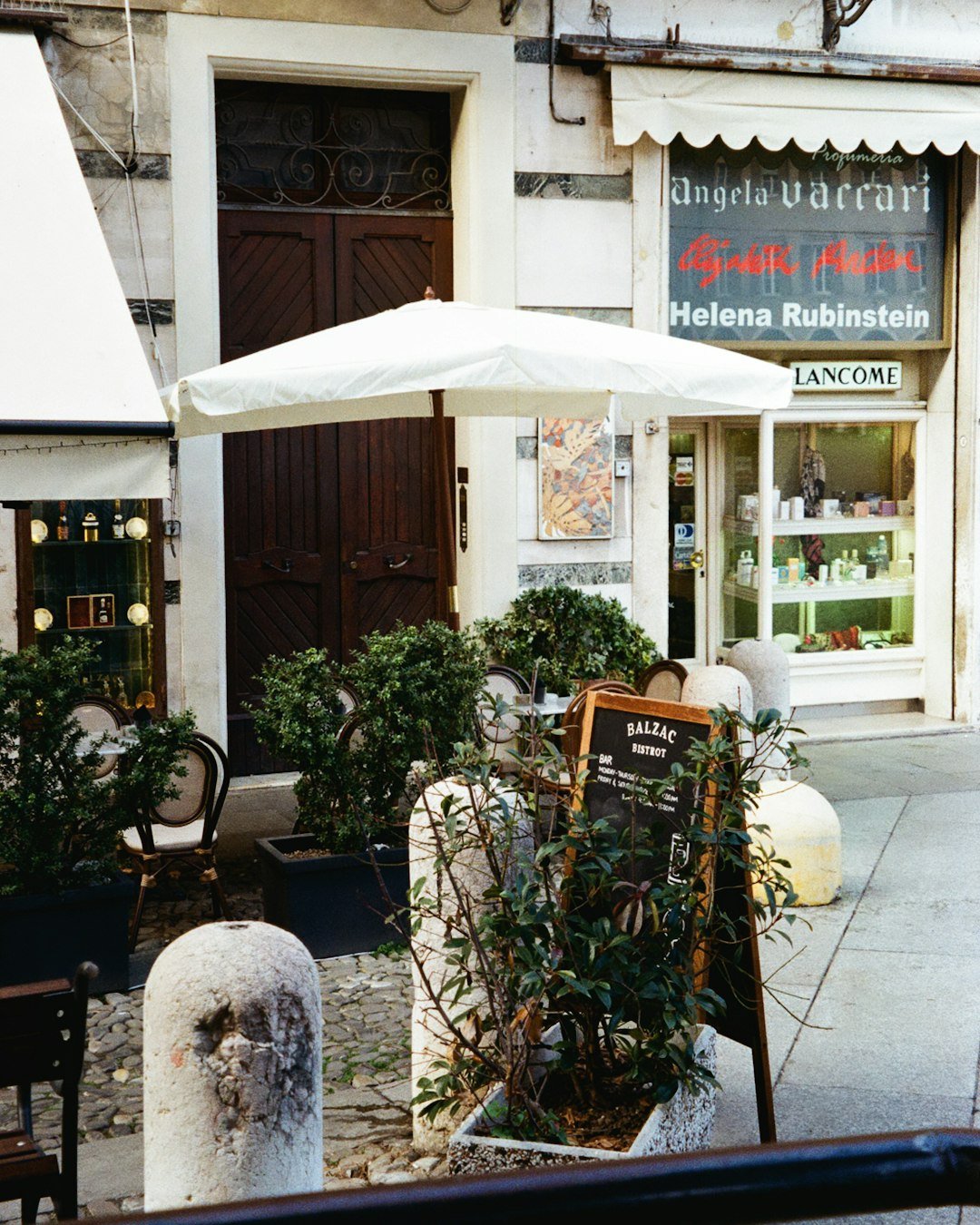
The best coffee moment in Italy is usually over before your phone even unlocks. No plush armchair. No laptop squat. No oat-milk novella scrawled on the cup. Just you, an espresso, a polished bar, maybe a few coins in your pocket, and about 90 seconds of highly competent joy. That’s the heart of Italian bar culture and why standing at the counter hits different: the premium experience is often the quick one.
If that feels upside down compared to the American coffee-shop script, that’s because it is. In much of the U.S., coffee has become a habitat. You go there to work, meet, scroll, decompress, hide, flirt, procrastinate, or cosplay as someone who definitely has a screenplay in progress. In Italy, the bar often runs on a different idea. Coffee isn’t the backdrop. It’s the point. You step in, order, drink at peak temperature and aroma, trade a few words, and head back into your day slightly more alive than you were a minute ago.
And that’s exactly why it feels so good.
This isn’t etiquette theater, and it’s definitely not one of those “14 rules tourists always get wrong” situations. Nobody needs more anxiety with their caffeine. Think of this as more of a cultural decode. Once you understand what the standing espresso ritual is actually doing to your pace, your attention, and your relationship to the room, the whole thing starts to make an elegant kind of sense. Maybe even a little genius.
The bold truth: the best Italian coffee experience is usually the one you don’t sit down for
There’s a reason the standing espresso has survived every trend cycle, every designy café concept, every imported coffee ideology. It works. Not in a “life hack” way. In a human way.
In Italy, a quick coffee at the bar is often the highest-expression version of the experience because it strips away everything that doesn’t matter. You’re not settling in. You’re not building an afternoon around one beverage. You’re not trying to turn a caffeine purchase into a temporary office lease. You’re there for a precise, concentrated pause. That changes the drink.
Standing at the counter changes your pace first. You arrive with momentum, and the ritual meets you there. You order simply. The barista moves fast because this dance has been rehearsed thousands of times. The espresso lands in front of you. You drink it while it’s still exactly what it’s supposed to be. Then you leave. The whole thing respects your time without making the experience feel disposable. That’s the bit people often miss.
It also changes your expectations. Sit down in a typical American café and you expect a stay. Maybe some ambiance. Maybe a playlist working a little too hard to seem tasteful. Maybe a chair that looks gorgeous and feels like a punishment after 14 minutes. The drink becomes part of a larger event. At an Italian bar counter, the coffee isn’t supporting another activity. It is the activity. Briefly, yes. But fully.
Then there’s the relationship to space. The bar is communal, not private. You’re in it with everyone else. That sounds like a small distinction. It isn’t. It means coffee isn’t staged as a hyper-individualized experience where your order becomes a tiny autobiography. It’s more collective, more rhythmic, more woven into daily life. Less performance, more precision.
That’s the secret engine behind Italian bar culture and why standing at the counter hits different. The coffee tastes better not because the molecules suddenly become patriotic, but because the ritual protects the exact conditions that let espresso shine.
In Italy, the bar is not a “coffee shop” — it’s social infrastructure with caffeine
One of the easiest mistakes non-Italians make is translating bar too literally. In Italy, a bar is not just a place to get alcohol, and it’s not exactly what Americans mean by “coffee shop” either. It’s more like an all-day neighborhood node. Morning espresso and a cornetto. Midday coffee. Afternoon pick-me-up. Aperitivo later on. News, conversation, routine, repetition. The bar is part of the wiring of everyday life.
That matters because it explains why the standing coffee isn’t some quirky old-world relic. It’s functional. People stop by multiple times a day. A quick espresso fits the cadence of real life far better than one giant drink designed to be carried around like emotional support. The average espresso shot is small, concentrated, and fast to consume, which makes it perfect for a culture that treats coffee as punctuation rather than a paragraph.
And the counter itself does something quietly democratic. At the bar, everybody shares the same physical plane. Construction workers, lawyers, university students, retirees, delivery drivers, fashion people with suspiciously perfect coats, someone reading the sports pages, someone already on their second caffè of the morning — they all line up in the same zone for the same brief reset. That’s not nothing.
You don’t need a reservation. You don’t need a whole free afternoon. You don’t need to signal belonging through aesthetics. You just show up and drink your coffee.
There’s a civilized efficiency to this that’s easy to underestimate if you’re used to café culture meaning “stay as long as you want.” In Italy, streamlined doesn’t mean cold. It means everyone knows the script, so the interaction can be warm without being slow. You get quality quickly. You get conversation in flashes. You get rhythm. Weirdly, that can feel more human than spaces that promise comfort but often deliver vague social isolation with Wi-Fi. For a broader look at how coffee shapes community beyond the café-as-office model, see Coffee Culture Redwood: Better Coffee Beyond Cafés.
A small but telling detail: this bar model shows up in how Italians consume coffee throughout the day. According to the International Coffee Organization, Italy remains one of Europe’s most culturally distinctive coffee markets, with espresso still central to daily consumption patterns rather than a niche format for enthusiasts. That sounds obvious, but it points to something deeper: espresso in Italy isn’t a specialty affectation. It’s infrastructure.
Which, yes, sounds almost too poetic for something that costs a few euros. Spend a little time around an Italian bar, though, and it makes perfect sense.
Why standing literally changes the experience: speed, sensory focus, and zero café cosplay
Espresso is one of the least patient drinks on earth. It’s made to be consumed immediately. Not “in a bit.” Not after you’ve picked a seat, taken off your coat, answered a message, and arranged your notebook like you’re about to write the definitive essay on urban melancholy. Immediately.
That’s because espresso is a volatile little masterpiece. Its aroma compounds dissipate fast. Crema — that reddish-golden foam on top — starts changing the second the shot is pulled. Temperature shifts quickly too, and with espresso, small changes matter. The National Coffee Association notes that aroma is a major driver of coffee flavor perception, and sensory research broadly backs the idea that timing changes what you experience in the cup. In other words, the bar ritual isn’t just cultural. It’s practical chemistry with good manners.
Standing helps because it removes delay. You don’t create distance between preparation and consumption. The drink goes from machine to cup to mouth on the timeline it deserves.
It also sharpens attention. You’re not setting up camp. You’re not half-drinking while half-emailing. You’re not making coffee the background actor in a scene starring your to-do list. At the counter, your attention narrows. Order. Sip. Taste. Done. The brevity makes you notice more, not less.
That sounds backward if you associate appreciation with slowness, but not every ritual gets better by stretching it out. Think of a perfect song under three minutes. It lands because it knows exactly how long to stay. Espresso works like that too. It’s concentrated in both form and feeling. Overbuild the moment and you can actually flatten it.
There’s also an anti-performative quality here that feels especially appealing right now. A lot of modern café culture is aestheticized within an inch of its life. Beautiful, sure. Also occasionally exhausting. Somewhere along the way, coffee became a set: the table, the laptop, the ceramic cup, the overhead shot, the paperback placed just so. Standing at the counter opts out. No scene construction. No main-character choreography. Just coffee, doing its job beautifully.
And that’s why it feels cool.
Not because it’s trying to be cool. Because it’s not trying at all.
The unspoken rules Italians actually follow — and why they exist
Yes, there are rules. No, they are not random acts of national snobbery.
Take the most famous one: cappuccino after 11 a.m. In Italy, cappuccino is generally considered a morning drink, often paired with breakfast. Why? Because milk-heavy drinks are seen as more substantial and, culturally, less suited to after-meal digestion later in the day. The old-school logic is that after lunch, you want something shorter and cleaner — usually an espresso — rather than a large milky drink sitting in your stomach. You can absolutely find Italians who break this rule, because Italians are people, not museum exhibits. But the norm is real, and it comes from habits around meals and digestion, not pure coffee theater.
Then there’s pricing. One of the more interesting things about Italian bar culture is that coffee at the counter often costs less than table service. If you sit, you may pay a service premium. That’s not a scam. It reflects different economics. Standing coffee means fast turnover, less space usage, less service time. Table service means you’re occupying real estate, and in busy cities, that matters. The standing espresso is efficient for both customer and bar.
It’s one of those little details that explains a lot. The lower counter price isn’t just tradition for tradition’s sake. It encourages the exact rhythm the space is designed for.
Ordering norms are similarly practical. Keep it simple. Ask for a caffè and in many parts of Italy, that means espresso by default. Depending on the bar, you might pay first at the register and bring the receipt to the counter, or order first and pay after. Watch what locals do for ten seconds and you’ll figure it out. This is not a high-stakes exam. It’s a choreography problem.
What you generally won’t do is launch into an elaborate customization monologue. Italian coffee culture values consistency. The drink has a standard form. That’s part of the trust. You go to a bar because they know how to make the thing the way the thing is meant to be made. There are, of course, variations: macchiato for an espresso “stained” with a bit of milk, ristretto for a shorter shot, lungo for a longer pull. But the system leans toward clarity, not endless personalization.
That’s the deeper point worth keeping: these habits evolved around digestion, timing, workflow, and shared expectations. Coffee in Italy is woven into ordinary life. It’s not treated like a customizable identity project. Honestly, refreshing.
What young professionals can steal from the Italian bar ritual — even outside Italy
You do not need to move to Bologna or start correcting people’s pronunciation of cornetto to borrow the good parts of this ritual. The point isn’t cosplay. It’s mindset.
For one, the standing espresso is a genuinely useful workday reset. A quick, deliberate coffee break can do more for your brain than a giant drink you absentmindedly sip for two hours while toggling between tabs and pretending your inbox isn’t spiritually corrosive. Short rituals create boundaries. And if your office is sometimes a kitchen counter, a couch, or a coworking space with suspiciously loud chairs, boundaries are gold.
That’s one reason Italian bar culture and why standing at the counter hits different lands so hard right now. Modern work has blurred everything. Morning, afternoon, online, offline, on-duty, “just checking one thing,” and suddenly it’s 6:40 p.m. and you’ve consumed one lukewarm coffee in a state of low-grade confusion. The Italian bar ritual offers another model: stop, drink, return. A micro-commute for the remote-work era.
You can do that without leaving home.
Make one cup smaller. Drink it fresh. Step away from your desk. Stand at the kitchen counter if you have to. Don’t bring your phone for two minutes. Don’t optimize it into oblivion. Just let coffee be an actual moment instead of a brown accessory parked next to your keyboard.
That sounds small, but rituals reshape attention. Behavioral research has repeatedly shown that even short intentional breaks can improve focus and reduce cognitive fatigue. The coffee itself helps, sure, but the structure helps too. The break has edges. It begins and ends. Your brain likes that more than the endless half-working, half-resting mush most of us call a weekday. If you’re interested in how coffee rituals can create more intentional daily habits, this look at better coffee beyond cafés offers a useful companion perspective.

Picture it side by side: one sleek Italian espresso bar counter, one sprawling café table covered in charger cables, sunglasses, a tote bag, half a pastry, and a laptop open to a document titled “final_final_v3.” Caption: 90 seconds vs. 90 minutes. Both have their place. But only one of them asks coffee to be fully itself.
And no, this is not an argument against lingering forever. Long café hangs can be glorious. We’re not anti-chair. We’re pro-context. Sometimes what you need is a room to stay in. Sometimes what you need is a clean little spark in the middle of the day. Those are different needs, and the Italian bar ritual is unusually good at serving the second one.
The real reason it hits different: standing at the bar reminds you coffee is a ritual, not a residence
Here’s the thesis, stripped down: the counter works because it turns coffee back into punctuation instead of background noise.
That’s the real magic.
A standing espresso says: pause here. Wake up. Taste this. Continue. It gives coffee a shape. In a culture where so much consumption is ambient and endless, that shape feels powerful. You’re not living inside the drink. You’re meeting it.
There’s also something emotionally smart about the whole setup. We live in a time obsessed with efficiency, but too often efficiency gets translated into sterile, joyless speed. Italy somehow held onto a better version. The bar is efficient, yes, but not soulless. The interaction can be brisk and still warm. The coffee can be quick and still cared for. The room can move fast and still feel social. That balance is the flex.
And maybe that’s why the experience sticks with people. It’s not just about espresso quality, though that matters. It’s about being reminded that small rituals can still have texture. That not everything meaningful needs to be long. That a daily habit can be disciplined without being dull.
Next time you order coffee, ask yourself a very unpretentious question: do you want a place to sit, or do you want a moment to feel awake?
Those are not the same thing.
And once you get that, you get Italian bar culture and why standing at the counter hits different. It isn’t superior because it’s old, or foreign, or wrapped in cinematic romance. It’s superior in certain moments because it respects what espresso actually is: brief, intense, aromatic, social, precise.
Maybe the best coffee flex isn’t rattling off tasting notes.
Maybe it’s knowing when to drink it standing up.
Sources
- International Coffee Organization, https://www.ico.org/
- National Coffee Association, https://www.ncausa.org/About-Coffee/What-is-Espresso
- Accademia Italiana della Cucina, https://accademiaitalianadellacucina.it/
- La Cucina Italiana, https://www.lacucinaitaliana.com/
- Italy Magazine, https://www.italymagazine.com/
- Treccani Enciclopedia, https://www.treccani.it/
- Perfect Daily Grind, https://perfectdailygrind.com/
- European Food Information Council, https://www.eufic.org/
Frequently Asked Questions
Why do Italians drink espresso standing at the counter?
Because it fits the rhythm of daily life and serves espresso at its best. Standing encourages quick service, immediate drinking, and a more social, communal experience.
Is coffee cheaper at the bar in Italy if you stand?
Often, yes. Counter service is usually priced lower than table service because it uses less space, less time, and allows faster customer turnover.
Why is cappuccino usually a morning drink in Italy?
In Italian coffee culture, milk-heavy drinks are traditionally associated with breakfast. Later in the day, many people prefer a shorter espresso, especially after meals.
Can you recreate the Italian bar ritual at home?
Yes, even without an Italian bar nearby. Make a smaller coffee, drink it immediately, step away from your desk, and treat the break as a short ritual instead of background sipping.
