

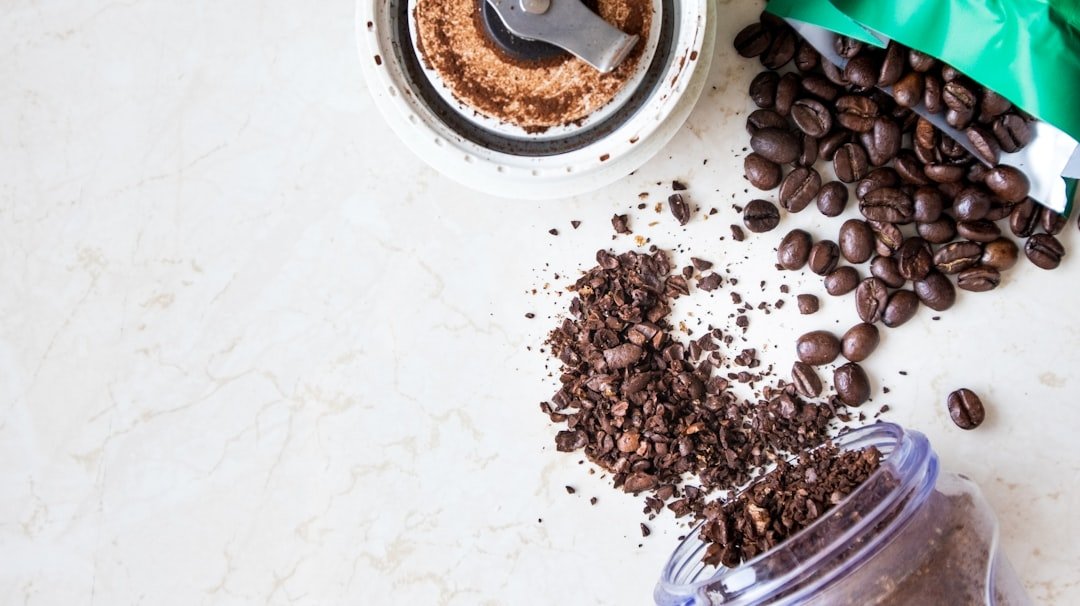
The second life of coffee waste from biofuel to fashion textiles starts with a simple idea: your daily coffee habit leaves behind more than a disposable mess. Every cappuccino, office drip, and aggressively necessary Monday espresso creates by-products that still contain oils, fibers, carbon-rich compounds, and useful organic material. That sad puck of spent grounds in the knock box may have more career options than half of LinkedIn. What sounds like a quirky sustainability subplot is becoming a serious materials story, one that reveals how industries are rethinking what gets tossed, what gets reused, and what probably never deserved the trash label in the first place.
Coffee waste is no longer just a lifestyle talking point for people with compost bins and a fondness for mason jars. It is increasingly being treated as feedstock for new products, systems, and industrial processes. That shift says something bigger about circular design: once a waste stream can be used at scale, it stops being a feel-good idea and starts becoming infrastructure. For brands already thinking about packaging and recovery systems, that broader mindset connects naturally to conversations around sustainable coffee packaging shifts and how better upstream choices affect downstream reuse.
Your morning coffee isn’t waste, it’s badly managed raw material
Coffee waste is one of the most overlooked raw material streams hiding in plain sight. Coffee is consumed at enormous scale, and every brewed cup creates by-products somewhere: spent grounds at home, in cafés, in offices, in hotels, in restaurants, and across industrial production. According to Daily Coffee News, reporting on the latest National Coffee Association data, two-thirds of Americans said they drank coffee yesterday. That matters because the visible part of coffee is the cup in your hand, while the invisible part is the pile of material left behind after extraction.
For years, zero-waste coffee was often framed as a small lifestyle gesture: reusable cups, grounds for plants, maybe a DIY scrub if you were feeling very 2017. But the larger shift now is industrial, not aesthetic. Coffee by-products are increasingly being treated as value streams instead of disposal problems. Once that happens, the question is no longer whether coffee waste can be reused. It becomes a more useful question: reused into what, under what conditions, and in systems that actually work outside a press release?
That is why the second life of coffee waste from biofuel to fashion textiles is really a story about the future of materials. Coffee just happens to be the familiar object that makes the larger transformation easier to understand. A lot of sustainability conversations get stuck at guilt, as if the consumer must personally account for every molecule on Earth. Coffee waste becomes more interesting when viewed as a design problem. If a material still contains value after first use, then calling it waste is often just an admission that the system around it failed to build the next step.
Spent coffee grounds are especially promising because they are both abundant and chemically interesting. Even after brewing, they can still contain compounds useful in energy production, composites, adsorbents, insulation, and certain textile applications. Not every cup becomes a miracle material, obviously, but the idea that coffee ends at the bottom of the filter is becoming outdated fast.
Why spent coffee grounds are suddenly attractive to everyone
Spent coffee grounds are drawing attention from researchers, startups, and manufacturers because brewed coffee is not empty. After extraction, the leftovers still contain oils, lignocellulosic material, structural fiber, minerals, and carbon-rich organic compounds. In plain English, the grounds may be spent for your latte, but they are not spent in the broader materials sense.
That makes them relevant across several categories at once:
- Energy applications, because residual oils and organic matter can be converted into fuels or gas
- Composites and fillers, because fibrous biomass can be incorporated into material blends
- Carbon-rich products, because coffee waste can be processed into char or related functional materials
- Insulation and building materials, where lightweight, biodegradable, or lower-fossil alternatives are in demand
- Textiles, where coffee-derived additives may support odor control, moisture management, or reduced virgin input use
The Center for Circular Economy in Coffee argues that coffee by-products should be treated as value streams that can be recaptured across industries, not just as an expensive mess to haul away. That sounds obvious once stated, but it represents a major mindset shift. Disposal is a cost center. Recovered feedstock is a resource strategy.
The science, however, is often easier than the logistics. Not all coffee waste is equally reusable. Clean, separated industrial volumes are one thing. Wet café grounds mixed with napkins, stirrers, food scraps, and contamination are another. Home waste streams are even more fragmented. Moisture content is high, contamination is common, collection is decentralized, and transporting wet biomass can be inefficient. Drying it takes energy. Processing it locally requires infrastructure. Suddenly the circular materials story becomes a very practical conversation about bins, routing, contamination thresholds, and storage conditions.
That practical middle is where the real innovation race may be won. The companies that succeed will not necessarily be the ones with the flashiest coffee-based product. They may be the ones that solve aggregation, drying, separation, traceability, and local processing. Circular systems often fail not because the concept is weak, but because the handoff between used and useful again gets messy.
Fresh spent coffee grounds are also heavy because they retain a great deal of moisture after brewing. In many cases, the thing being collected is mostly water by weight. That is one reason local processing matters so much. Hauling soggy grounds over long distances can make the sustainability math look much less elegant than the marketing suggests.
The second life of coffee waste from biofuel to fashion textiles starts with energy
Biofuel may be the least glamorous coffee afterlife, but it may also be one of the most important. Fashion gets headlines. Fuel handles volume. If circularity is going to matter at scale, energy pathways deserve more attention than they usually get.
Spent coffee grounds can be converted into several energy-related outputs depending on the feedstock, process, and local infrastructure. These can include biodiesel derived from extracted coffee oils, biogas produced through anaerobic digestion of organic waste streams, and biochar-related or thermal energy applications depending on how the biomass is treated. The details vary, but the core idea is simple: coffee waste still contains energy value, and that value does not have to end in landfill.
The African Fine Coffees Association has highlighted circular coffee approaches that include repurposing coffee waste into biogas and other value-added outputs. That matters because it suggests these ideas are not confined to lab experiments. They are appearing in industry-facing conversations about what practical circularity could look like in both coffee-producing and coffee-consuming systems.
Energy uses matter because they take scale seriously. A circular solution is not automatically impressive just because it exists. If it only works for a boutique pilot or a luxury capsule collection, it may not address much of the underlying waste stream. Fuel and energy pathways are less glamorous, but they may be better suited to handling larger volumes of lower-grade or mixed-quality material, especially when the waste is not clean enough for higher-value material applications.
That does not mean energy recovery is always the smartest move. In circular design, higher-value uses are generally preferable when they are feasible. If spent coffee grounds can become a durable material that displaces fossil-based inputs, that may be more desirable than simply recovering energy. But higher value on paper is not always the best real-world option if the infrastructure is missing, contamination is too high, or the economics only work inside a grant-funded demo.
Biofuel pathways may also play a role in cascading use systems. Some coffee waste streams can be screened for higher-value recovery first, while lower-grade residuals still go toward energy generation rather than landfill. Not every batch has to become the same thing. That is a far smarter model than pretending one destination will solve every waste stream equally well.
Fashion loves a coffee-waste headline, but textiles need real performance
Now for the part the internet loves: clothes made with coffee. This is where enthusiasm should be paired with just a little skepticism. “Made with coffee” can sound either ingenious or suspiciously theatrical depending on what is actually happening behind the label.
In most cases, coffee-derived inputs in fashion and textiles do not mean a sweater is literally knitted from espresso residue alone. More often, coffee waste appears as additives, fillers, functional compounds, composite ingredients, dye-related components, or performance enhancers in yarns and fabrics. The process is more technical than the headline, which is actually a good sign.
The useful question is not whether a shirt is made of coffee. It is what role coffee waste is playing in the material, and whether it improves anything measurable. That could include:
- odor management
- moisture handling
- reduced reliance on some virgin inputs
- functional additives in synthetic or blended textiles
- fillers or compounds in accessories, footwear, or trim materials
This is where the second life of coffee waste from biofuel to fashion textiles either becomes genuinely compelling or slips into gimmick territory. If coffee-derived inputs help deliver real performance and reduce demand for virgin material, that is meaningful. If the supply chain is traceable, the processing is transparent, and the resulting textile is durable enough to justify its footprint, even better. But if coffee is just a tiny marketing flourish sprinkled into an otherwise conventional product, then it is mostly a sustainability headline with excellent lighting.
Consumers are getting more sophisticated about these claims. They want to know how much waste was diverted, what material was displaced, whether the fabric performs better, and whether it can be recycled at end of life. That last question matters a lot. A textile made partly from recovered coffee waste is not automatically circular. If the final product is a complex blend that cannot be recycled, sheds microfibers, or has a short lifespan, then the coffee angle may not solve much.

That tension is what makes fashion such a useful case study. People love the idea of wearing waste because it feels clever, visible, and a little rebellious. But visibility can be a trap. The coffee content is not the whole sustainability story. It is only one chapter. Many coffee-based textile innovations are not trying to replace the entire fabric with coffee-derived matter. They are targeting specific functional properties or partial substitution. Less romantic than “jacket made from coffee,” perhaps, but usually more scientifically credible.
For readers interested in how these material choices connect to broader coffee sustainability decisions, the conversation also overlaps with how coffee brands rethink packaging systems, because end-of-life design principles matter across products, not just cups and bags.
The most exciting future may be materials you never post online
As appealing as coffee-waste fashion headlines are, the most transformative applications may be the ones nobody shows off on social media. Think insulation, packaging inputs, composite panels, building materials, and industrial fillers. These are not runway products, but they may do more of the heavy lifting.
MaterialDistrict recently reported on researchers developing biodegradable insulation from spent coffee grounds as an alternative to fossil-based materials. That is not exactly a viral lifestyle moment, but it could be a very significant development. Building materials and insulation sit in high-volume categories where replacing fossil-derived inputs can have meaningful environmental impact. If coffee waste can contribute there, the story becomes larger than novelty. It becomes structural substitution.
This is the angle many people miss. Lifestyle products make circularity visible, but invisible materials may deliver more systemic benefits. A coffee-based accessory might divert a modest amount of waste and raise awareness. Useful, yes. But insulation, packaging, and construction-related materials can potentially absorb larger volumes while displacing conventional inputs in sectors where emissions and waste add up quickly.
The circular economy framework from the Center for Circular Economy in Coffee points toward a smarter model: cascading use. Instead of forcing every coffee by-product into one trendy destination, the material should be matched to the most appropriate next life. Some streams may be suitable for high-value materials. Others may fit agricultural uses. Others may be best directed to energy recovery. And some should be composted, especially if the contamination profile makes biological return the cleanest option.
That point deserves more attention because upstream design affects downstream possibilities. A coffee system built around cleaner, simpler material choices makes recovery and reuse much easier later on. If the original format is full of hard-to-separate mixed materials, additives, or contamination risks, circularity becomes messy fast. If it is designed with end-of-life in mind, the next step becomes far more plausible.
This is where smarter coffee systems begin to look less like a niche sustainability flex and more like common sense. Better materials in coffee itself will not solve every waste challenge, but they can make the overall ecosystem easier to manage. The industry likely needs fewer heroic after-the-fact fixes and more smart decisions built in from the start.
That may be the real future hidden inside this topic. Not one miracle product made from coffee waste. Not one perfect answer. A network of better answers, matched to different waste streams, local infrastructure, and actual use cases. Circularity with less fantasy and more engineering.
Which brings the story back to your cup. The next status symbol in coffee may not be a rarer bean, a shinier machine, or an order so specific it needs subtitles. It may be something far less obvious and far more impressive: a smarter system where waste is designed out before the cup is even empty.
Sources
- Daily Coffee News — https://dailycoffeenews.com/2026/04/14/two-thirds-of-americans-drank-coffee-yesterday-nca-report-finds/
- World Coffee Portal — https://www.worldcoffeeportal.com/coffee-24-7/coffee-24-7-italys-illycaffe-posts-record-revenues-but-warns-perfect-storm-of-market-pressures/
- MaterialDistrict — https://materialdistrict.com/article/coffee-waste-upcycled-into-high-performance-biodegradable-insulation/
- Center for Circular Economy in Coffee — https://www.circulareconomyincoffee.org/wp-content/uploads/2024/12/The-Sustainable-Future-of-Coffee-A-Year-with-the-Center-for-Circular-Economy-in-Coffee.pdf
- African Fine Coffees Association — https://afca.coffee/wp-content/uploads/2025/03/AFCA-Magazine-Vol-14.pdf
Frequently Asked Questions
What is the second life of coffee waste from biofuel to fashion textiles?
It refers to the reuse of spent coffee grounds and other coffee by-products in new applications such as biodiesel, biogas, insulation, composites, and textile additives. Instead of being treated as trash, coffee waste is increasingly used as a raw material in circular systems.
Can spent coffee grounds really be turned into biofuel?
Yes. Spent coffee grounds can contain residual oils and organic matter that may be converted into biodiesel, biogas, or thermal energy products depending on the processing method and local infrastructure. The best pathway depends on contamination, moisture, and collection logistics.
Are coffee-based textiles actually sustainable?
They can be, but only if the coffee-derived input serves a real function and the overall product is durable, transparent, and responsibly designed. A coffee claim alone does not make a textile circular if the final material is hard to recycle or has a short lifespan.
Why does local processing matter for coffee waste reuse?
Fresh spent coffee grounds hold a lot of moisture, which makes them heavy and costly to transport over long distances. Local collection and processing can improve both the environmental and economic case for turning coffee waste into useful products.
