

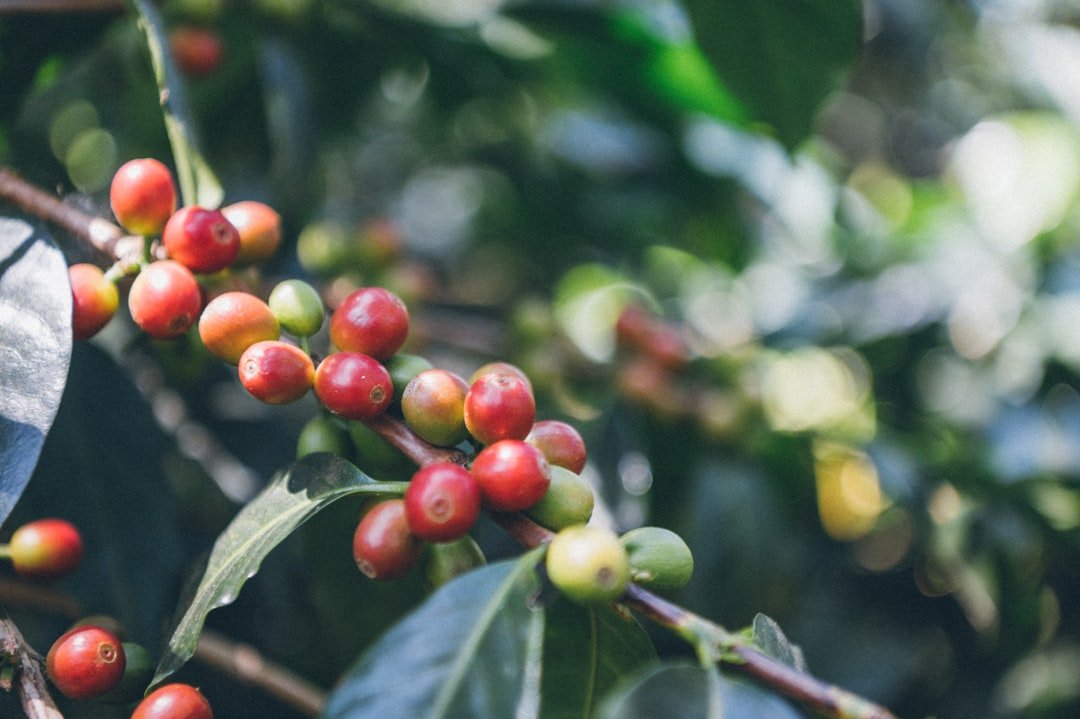
If you believed the internet, Arabica is the elegant favorite and Robusta is the chaotic cousin nobody wants near the good cups. Fun little story. Also not remotely the full picture.
The real difference between Arabica and Robusta beyond what you read online has less to do with moral rankings and more to do with biology, chemistry, farming reality, and what you actually want the cup to do. These are two different species—Coffea arabica and Coffea canephora, usually called Robusta—and they behave differently from the farm all the way to the demitasse.
And yes, some of what people pin on Robusta is really just the ghost of bad supermarket coffee still rattling its chains. Cheap blends, rough processing, stale beans, and roasts dark enough to taste like a minor electrical fire have done plenty of damage on their own. Robusta just got blamed in the group chat.
Arabica vs Robusta Is Not a Quality Ranking — It’s a Lazy Internet Shortcut
Let’s start where most explainers get a little too tidy.
Arabica and Robusta are not “premium bean” and “budget bean.” They’re different coffee species with different genetics, different growing preferences, and different sensory tendencies. That matters. A lot. Saying Arabica is always better than Robusta is like saying pinot noir is always better than syrah. Better for what? In what style? Grown where? Processed how? Roasted by whom? Brewed for what purpose?
Arabica is usually associated with more aromatic complexity and a wider range of delicate flavors. Canephora—Robusta—usually brings more body, more bitterness, more caffeine, and a more forceful structure in the cup. None of that is an insult. They’re just different operating systems.
So why does the internet keep flattening this into a snobbery meme? Because for decades, a lot of people met Robusta in the least flattering possible setting: low-cost commercial coffee built for shelf life, strength, and price. That often meant lower-grade lots, less careful processing, and roasting dark enough to make everything taste vaguely smoky and vaguely hostile. If your main Robusta memory is “gas station espresso that could strip paint,” fair enough. But that’s not the whole species. That’s one corner of the market doing one thing badly.
Here’s the part people tend to skip: a bad Arabica can taste flat, papery, sour, baked, or charred. A well-produced Robusta can taste clean, intense, chocolatey, spicy, and nicely structured. Species matters, but quality still lives in the details. Origin, cultivar, ripeness, processing, roast development, freshness, water, grind, extraction—it’s all in the room.
And if you’re talking espresso culture, especially the Italian kind that cares about body, crema, and persistence, dismissing Robusta entirely starts sounding less like discernment and more like repeating packaging copy from 2009. If you want more context on origin-driven coffee value, the story of Kona coffee and why it costs more is another useful example of how price and prestige are often more complicated than labels suggest.
The Chemistry Is the Plot Twist: Caffeine, Sugars, Lipids, and Why the Cup Tastes So Different
This is where it gets more interesting than “smooth vs harsh.”
Robusta generally contains about twice the caffeine of Arabica. Exact numbers vary by variety and growing conditions, but standard industry references often place Arabica around 0.8–1.4% caffeine by dry weight and Robusta around 1.7–4.0%. That’s not a small gap. It helps explain why Robusta often tastes more bitter and more intense, and why it delivers that punchy, wake-up-immediately effect people read as “strong.”
But caffeine is only part of the story. Arabica typically contains more sugars and lipids than Robusta. In normal-person terms: it often has more potential for sweetness, smoother texture, and aromatic complexity. Those sugars and oils help create the kind of layered sensory experience people describe as floral, fruity, silky, or elegant. It’s one reason a good Arabica can feel like it has more range, especially in lighter roasts and filter brewing.
Robusta, meanwhile, often has higher levels of chlorogenic acids, compounds that contribute to bitterness and astringency and also transform during roasting into other flavor-active compounds. That’s one reason lower-quality or aggressively roasted Robusta can come across as woody, earthy, or blunt. But “can” is doing a lot of work there. Handled well, those same structural qualities can show up as dark cocoa, toasted nuts, spice, and grip instead of just roughness.
Then there’s acidity—coffee’s most misunderstood word, right up there with “strong.”
When coffee pros say a coffee has acidity, they usually do not mean it tastes sour in a bad way. They mean brightness, liveliness, structure, fruit definition. Think green apple snap, citrus lift, berry sparkle. Acidity is what keeps a cup from tasting flat. It’s the difference between music with dynamics and music that’s just bass turned up until the walls start filing complaints.
Arabica often expresses acidity more clearly, especially at higher altitudes and with careful roasting. That’s part of why it gets so much love in specialty coffee. But if you’ve ever had an underdeveloped light roast that tasted like lemon water and regret, you already know acidity without balance is not automatically noble.
One more coffee-nerd curveball: lipids also affect mouthfeel and crema behavior, but crema itself isn’t just “quality foam.” It’s the result of extraction, gas release, pressure, roast degree, freshness, and coffee chemistry all colliding at once. Robusta tends to contribute to thicker, more persistent crema, partly because of its composition. That’s one reason it keeps showing up in espresso blends even while online coffee discourse acts like it should have been quietly uninvited.
Funny how that works. The cup is chemistry dressed up as aroma.
What You’re Actually Tasting Has Less to Do With Snobbery and More to Do With Context
If you want a quick sensory shorthand, here it is—with one very large disclaimer that these are tendencies, not laws.
Arabica often leans:
- floral
- fruity
- citrusy
- tea-like
- chocolatey
- elegant
- more aromatically complex
Robusta often leans:
- earthy
- nutty
- spicy
- cocoa-heavy
- woody
- fuller-bodied
- more intense and bitter
Useful shorthand, yes. Destiny, no. Coffee refuses to be that simple. A washed Ethiopian Arabica and a natural Brazilian Arabica can taste like they came from different planets. The same goes for Robustas from different origins, cultivars, and processing methods.
And yes, fine Robusta exists. Not fake-polite “actually this is sort of okay” Robusta. Real, high-quality canephora that’s carefully grown, selectively harvested, properly processed, and thoughtfully roasted. Organizations like the Coffee Quality Institute have even developed standards and protocols for evaluating fine Robusta separately, because judging a different species by Arabica standards is not exactly a fair trial.
That’s one of the biggest misses in most online explainers. Most consumers have only met Robusta through low-cost blends designed for strength and price efficiency. That’s like deciding all sparkling wine is bad because you once drank warm prosecco from a plastic flute under office fluorescent lighting. The setting was not helping.
Brew method changes everything too.
In filter coffee, Arabica often gets the spotlight because its aromatic complexity and acidity have room to stretch out. Pour-over, batch brew, Chemex, V60—these methods can make a nuanced Arabica feel almost perfumed. You notice florals, fruit, and those little shape-shifting details from sip to sip.
In espresso, Robusta starts making a lot more sense. Espresso is concentrated. It compresses flavor, texture, bitterness, sweetness, acidity, and aroma into a tiny, high-pressure package. In that setting, Robusta’s body, crema, and structure can be assets rather than liabilities. It adds weight. It adds persistence. It helps an espresso stand up to sugar. It cuts through milk in cappuccini and lattes instead of vanishing politely into the foam like it doesn’t want to be a bother.
The hidden variable most blogs glide past? Roast profile and extraction.
A badly roasted Arabica can taste like cardboard, ash, or hot disappointment. A well-roasted Robusta can taste bold but balanced. Under-extract either one and you’ll get thin, sour cups. Over-extract either one and bitterness and dryness show up fast. Species influences the result, but it doesn’t override technique.
That’s the real difference between Arabica and Robusta beyond what you read online: one is not the hero and the other the villain. They’re ingredients with different strengths, and coffee is a craft built on choosing those strengths on purpose.
Espresso Culture Changes the Whole Debate — Especially If You Think Like an Italian
This conversation sounds very different depending on which coffee culture you’re standing in.
In much of the U.S. specialty scene, single-origin Arabica became the benchmark for quality. Clarity, terroir, transparency, fruit, florals, processing distinction—those values shaped the whole discussion. Fair enough. That world taught a lot of people to taste more carefully and ask better questions.
But classic Italian espresso culture has historically optimized for something a little different: balance, body, crema, bitterness in proportion, and persistence on the palate. Not just “what notes can you identify?” but “how does this shot hold together?” Does it have structure? Does it work after lunch? Does it still make sense with sugar, if that’s your thing? Does it stay present in a cappuccino? Does it feel complete?
That’s where Robusta often enters the blend not as a compromise, but as a strategy.
Why roasters may include Robusta in espresso blends
- denser, more persistent crema
- stronger body
- more bitterness to balance milk and sugar
- a flavor profile that reads clearly in concentrated extraction
- a certain grinta—that punch and backbone espresso can wear very well
Saying all Robusta is bad in espresso is a bit like saying all bass lines ruin music because you prefer acoustic guitar. Fine, that’s your preference. But let’s not confuse personal taste with universal truth.
And here’s the part people rarely say out loud: “100% Arabica” became a marketing flex because it was simple. It told shoppers, “this is the nice one.” Easy story. Clean label. Premium signal. But it never meant every 100% Arabica coffee was automatically better in every context than every blend containing Robusta. That’s not how tasting works. That’s how shelf talkers work.

If you put Arabica and Robusta side by side on the factors that actually matter, the comparison looks something like this:
- Caffeine: Robusta usually higher
- Altitude: Arabica generally prefers higher elevations; Robusta does well lower down
- Crema: Robusta often contributes more
- Body: Robusta tends to be heavier
- Aromatics: Arabica often more complex and delicate
- Bitterness: Robusta generally more pronounced
- Climate resilience: Robusta usually stronger
- Price: Arabica often higher, but not because nature handed it a luxury certificate
There’s a very Italian way to think about this: balance over dogma. If a little Robusta helps create a more satisfying espresso, that’s not cheating. That’s knowing what you’re making.
And dismissing all Robusta because of one bad cup? Same energy as swearing off all olive oil because someone once served you the dusty bottle from the back of a supermarket shelf. Category prejudice is not taste.
The Farming Difference Is Real — And It Quietly Shapes Price, Availability, and Flavor
A lot of the Arabica-vs-Robusta conversation gets framed as if flavor exists in a vacuum. It doesn’t. Agriculture is in the cup whether people notice it or not.
Arabica generally grows best at higher altitudes, often in cooler conditions. Those environments can help cherries mature more slowly, which is one reason higher-grown Arabicas often develop greater complexity. But Arabica is also more fragile. It tends to be more vulnerable to pests, diseases like coffee leaf rust, and climate instability. It’s fussier. Beautiful, yes. Also a little dramatic.
Robusta is usually more resilient. It can thrive in warmer, lower-altitude environments, often with higher yields and stronger natural resistance to pests and disease. That resilience matters economically. It helps explain why Robusta has been so important to global coffee supply, especially in countries producing large volumes for espresso blends, instant coffee, and commercial roasting.
Here’s the part a lot of people don’t realize: Arabica’s higher price is not simply a reward for tasting better. It’s often more expensive because it is harder to grow, lower yielding, and riskier to produce. That’s an agricultural and economic story as much as a sensory one.
World Coffee Research and other industry bodies have been warning for years that climate change is putting pressure on coffee-growing regions, especially those suited to Arabica. Rising temperatures, shifting rainfall patterns, and increased disease pressure are making cultivation more complicated. In that context, Robusta’s resilience stops looking like a commodity footnote and starts looking like part of coffee’s future.
That doesn’t mean Arabica disappears. Far from it. But the old hierarchy—Arabica on top, Robusta as backup dancer—may not age especially well in a climate-stressed world. We may see more innovation around high-quality canephora, more breeding work, more attention to origin-specific Robustas, and more premium conversations that don’t treat the species as automatically second-class.
Also worth remembering: high yield does not equal low worth. Sometimes it just means the plant is better suited to the conditions. Coffee has enough drama already. It doesn’t need species-based classism too.
So Which One Is Better? Wrong Question. Ask What the Coffee Is Trying to Do
This is the part where people want a winner, and coffee politely declines.
If you love floral aromatics, fruit, elegance, and complexity, Arabica often shines. It’s brilliant in filter brewing, lovely in lighter roasts, and capable of astonishing nuance. A great Arabica can taste like jasmine, peach, bergamot, cocoa, red berries, caramel, or all of the above in sequence. It can be subtle in the best way, like a very good linen shirt or someone who knows exactly how much perfume is enough.
If you want intensity, crema, body, and a more forceful espresso presence, Robusta can be exactly the point. Not the fallback. The point. In espresso blends, especially for milk drinks or a more traditional profile, it can add structure and persistence that a lot of drinkers genuinely prefer.
So instead of asking which species is better, ask:
- What brew method is this for?
- Is this meant to be sipped black or cut through milk?
- Am I looking for aroma or impact?
- Do I want brightness and complexity, or depth and punch?
- Is this a straight espresso, a cappuccino, a moka pot coffee, a cold preparation, or an all-day office brew?
Different use cases reward different traits.
A delicate, floral Arabica may be stunning as a pour-over and feel a little underpowered in a large milky drink. A blend with some Robusta might make a more satisfying morning espresso and a much better cappuccino. A post-lunch shot? A little intensity can feel perfect. An afternoon filter you want to linger over? Maybe that’s Arabica’s stage.
And next time you see “100% Arabica” on a label, don’t treat it like an automatic gold medal. Ask what the label isn’t telling you:
- Where is it from?
- Was it washed, natural, honey processed?
- How fresh is it?
- How dark was it roasted?
- What is it trying to taste like?
- What brew style was it designed for?
Those questions tell you more than the species line alone ever will. And if you enjoy learning how origin, rarity, and market storytelling shape perception, this look at why Kona coffee costs more adds another layer to the conversation.
That’s really the real difference between Arabica and Robusta beyond what you read online. The upgrade isn’t memorizing which one the internet decided was “better.” It’s understanding what each species does well, why it tastes the way it does, and how culture, chemistry, farming, and brewing shape the final cup.
Because some of the loudest coffee opinions online are not wisdom. They’re branding in a trench coat.
Sources
- World Coffee Research, https://worldcoffeeresearch.org/work/supply-chains/arabica-coffee
- World Coffee Research, https://worldcoffeeresearch.org/work/supply-chains/robusta-coffee
- Specialty Coffee Association, https://sca.coffee/research/coffee-tasters-flavor-wheel
- Specialty Coffee Association, https://sca.coffee/education
- Coffee Quality Institute, https://www.coffeeinstitute.org/what-we-do/fine-robusta
- National Coffee Association, https://www.ncausa.org/About-Coffee/What-is-Espresso
- International Coffee Organization, https://www.ico.org/
- Illy & Viani (eds.), https://shop.elsevier.com/books/espresso-coffee/illy/978-0-12-803520-7
- Clarke & Macrae (eds.), https://www.routledge.com/Coffee-Volume-1-Chemistry/Clarke-Macrae/p/book/9781851667086
- Royal Botanic Gardens, Kew, https://www.kew.org/read-and-watch/coffee-climate-change
Frequently Asked Questions
Is Arabica always better than Robusta?
No. Arabica and Robusta are different species with different strengths, and quality depends on origin, processing, roasting, and brewing. Arabica often offers more aromatic complexity, while Robusta can deliver more body, crema, and intensity.
Why does Robusta taste more bitter than Arabica?
Robusta usually contains more caffeine and higher levels of chlorogenic acids, both of which can contribute to bitterness and a stronger flavor profile. When grown and roasted well, that bitterness can show up as dark cocoa, spice, and structure rather than harshness.
Why is Robusta used in espresso blends?
Robusta can add thicker crema, heavier body, and a more persistent flavor in concentrated espresso. It also tends to stand up well in milk drinks and can create a more traditional Italian-style espresso profile.
Why is Arabica usually more expensive than Robusta?
Arabica is often harder to grow, prefers higher altitudes, and is generally more vulnerable to pests, disease, and climate stress. Its higher price reflects farming difficulty and lower yields as much as cup quality.
