

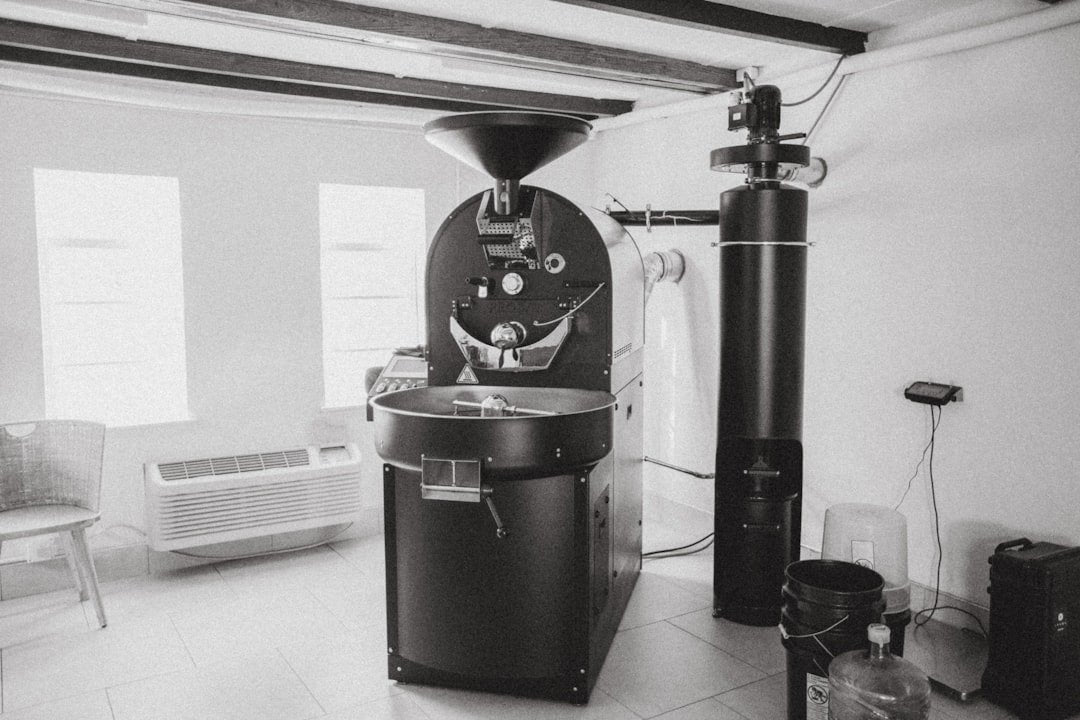
Indonesia and coffee usually get introduced with the same tired script: volcanic soil, dramatic highlands, famous origins, beans go out, money comes in, everyone applauds. Nice story. Also wildly incomplete.
Because the real action in coffee tends to happen after the cherries are picked and before the buyer signs off. That’s where PT Aneka Coffee Industry gets interesting. Not because it fits the dreamy version of coffee people love to romanticize, but because it lives in the part of the business that decides whether “great origin” turns into actual commercial power. Processing. Quality control. Export readiness. Documentation. Standards. The stuff nobody prints on a tote bag.
That’s the sharper question here: is PT. Aneka Coffee Industry a symbol of Indonesia’s strength in coffee, or proof that growing coffee is only step one now — and the bigger fight is over consistency, compliance, and margin? If that sounds less sexy than tasting notes of jackfruit and dark chocolate, fair. It’s also where a lot of money gets made or lost.
PT Aneka Coffee Industry matters because coffee power has moved off the farm and into infrastructure
Coffee media — and honestly, coffee culture in general — has a habit of treating farms as the heart of the story and cafés as the face of it. Fair enough. Farms are where coffee begins, and cafés are where most people meet it. But between those two worlds sits a less photogenic middle layer that quietly decides who captures value.
That’s where a company like PT Aneka Coffee Industry matters.
Indonesia is one of the world’s major coffee-producing countries. According to the USDA Foreign Agricultural Service, Indonesia remains among the largest global producers and exporters of coffee, with robusta doing much of the volume heavy lifting while arabica carries a lot of the prestige narrative. But production alone does not automatically equal influence. Plenty of producing countries grow coffee. Far fewer turn that agricultural output into real bargaining power in international markets.
Why? Because global buyers are not purchasing vibes. They’re purchasing coffee that arrives on spec, with predictable quality, proper moisture, acceptable defect counts, traceability records, and food safety compliance. Origin romance gets attention; export infrastructure gets paid.
That’s why PT. Aneka Coffee Industry is more than a line item in an export ecosystem. It represents the industrial layer connecting farmers and raw material to the expectations of importers, manufacturers, and international buyers. That layer matters more than ever. For related context on how Indonesian exporters fit into the bigger market picture, see Indonesia’s export edge in coffee.
You can see that more clearly in the broader context of PT Prasidha Aneka Niaga Tbk, the publicly listed Indonesian agribusiness company associated with export-oriented commodity processing and trading. Public company materials describe the group as active in agricultural commodities including coffee, which is a useful reminder that coffee here is not just a lifestyle category. It sits inside a larger business structure built around processing, quality assurance, and international trade. Very different story from the one glossy café branding likes to tell.
And honestly, that difference is the whole point.
Coffee influence today is less about who grows the most beans and more about who can deliver repeatable quality at scale without creating chaos for the buyer. That phrase — “without creating chaos” — might be the most underrated competitive advantage in coffee. If a buyer in Europe, the U.S., Japan, or the Middle East is sourcing serious volume, they do not want surprises. No moisture issues. No residue concerns. No shipment inconsistency. No paperwork comedy. They want reliability so boring it’s almost elegant.
In commodity and export coffee, boring can be premium. Not boring in flavor, obviously. Boring in execution.
That’s what makes firms like PT Aneka Coffee Industry worth watching. They show where coffee power has actually migrated: away from pure agricultural identity and toward industrial capability.
The least sexy part of coffee — testing, grading, and lab work — is where margins are won
If coffee were casting a movie about itself, everyone would want to play the farmer, the green buyer, or the roaster with suspiciously excellent knitwear. Nobody’s rushing to audition as the lab technician checking moisture readings and screen-size consistency. Which is a shame, because that person might be protecting the margin on the entire shipment.
This is where Lab PT. Aneka Coffee Industry becomes more than a facility reference. It points to a bigger truth about modern coffee trade: labs are not side characters. They’re commercial weapons.
In export coffee operations, laboratories typically handle a mix of physical and sensory quality control. That can include moisture testing, density checks, defect screening, grading by bean size, contamination assessment, and cupping to verify cup profile against buyer specifications. Depending on the market and product format, testing may also include food safety parameters, residue checks, and documentation support.
Why does this matter so much? Because coffee is maddeningly vulnerable to inconsistency.
A shipment with moisture outside an acceptable range can run into storage issues, quality deterioration, or buyer claims. The Specialty Coffee Association notes that moisture content is one of the foundational physical measurements affecting green coffee stability, with improper moisture linked to reduced quality and greater risk during storage and transport. The International Coffee Organization and coffee quality references have long emphasized grading, classification, and defect control because these variables affect not just taste, but price.
One inconsistency can shove coffee down the value ladder fast.
A lot of readers know that coffee gets cupped, but fewer realize how deeply testing shapes commercial outcomes. If the coffee profile doesn’t match the approved sample, a buyer may renegotiate. If physical defects exceed tolerance, the lot can be downgraded. If documentation doesn’t line up with requirements, the problem is no longer flavor — it’s trade risk. And trade risk gets priced in immediately.
That’s the thing nobody tells you when they’re busy talking terroir. Everyone wants to post tasting notes. No one wants to post a carousel about calibration standards, lot segregation, or moisture meter verification. Yet those are often the reasons an invoice gets honored at premium pricing instead of being haggled into the floor.
The difference between “good coffee” and “commercially successful coffee” is often not the bean itself, but whether the bean can prove itself repeatedly under scrutiny.
This is why Lab PT. Aneka Coffee Industry matters as a symbol. A lab says: we’re not just moving product; we’re measuring, validating, and defending it. That changes a company’s role in the supply chain. It moves from passive seller to active quality manager.
And in coffee, active quality management is where a lot of origin value gets protected. It also connects to a broader shift in how the industry talks about quality and health, as explored in new research on coffee and health, where evidence and verification matter more than storytelling alone.
Because here’s the hard truth: producing countries do not capture more value simply by having great coffee. They capture more value when they can verify, standardize, document, and deliver that greatness in a form buyers trust. Lab work is part science, part discipline, part anti-chaos spell. Molto importante.
PT Aneka Coffee Industry shows why Indonesia’s coffee story is bigger than “specialty”
Specialty coffee has done a lot of good. It has made consumers more curious, more quality-aware, and more interested in origin. Love that for us. But it has also created a weird blind spot where people start acting like only boutique coffee is meaningful, and everything outside that frame is somehow less interesting.
That’s not how national coffee economies work.
A company like PT. Aneka Coffee Industry points to the much larger middle of the market — the zone where commercial requirements, international trade, quality management, and export economics all collide. This middle zone does not always get third-wave headlines, but it does a huge amount of the real economic work.
Indonesia’s coffee story is not just microlots and competition-winning lots, though those are valuable and exciting. It is also volume, processing, blending, industrial quality systems, and long-term buyer relationships. For many producing countries, export-grade and commercial-grade coffee remain essential to foreign exchange earnings, farmer demand, and overall sector stability. The International Coffee Organization’s market reporting consistently shows that global coffee trade is driven by a wide range of quality tiers and uses, not just the top sliver that gets the most cultural attention.
That matters because media narratives can distort what “success” looks like.
Consumers often imagine coffee strength through boutique cues: direct trade menus, sleek roasters, fancy brew bars, tiny lots with poetic farm notes. Those things have a place. But national coffee strength often depends on firms that can move meaningful volume, meet exacting standards, and survive ugly market conditions. Not glamorous. Very important.

A company like PT Aneka Coffee Industry likely operates in precisely that underrated middle. Not purely a farm-facing actor, not purely a consumer-facing brand, but part of the industrial bridge between origin and market. And that bridge is where countries either start moving up the value chain or stay stuck exporting raw potential while others capture the premium.
A country can be famous for coffee and still leave a lot of value on the table if it doesn’t control enough of the processing, testing, and export infrastructure.
That’s why “specialty versus commercial” is often the wrong lens. The better question is: who owns the systems that turn coffee into trusted, market-ready product? If the answer is increasingly companies with strong processing and quality-control capability, then the middle of the market deserves a lot more respect than it gets.
Honestly, coffee people can be a little snobby about this. We adore the artisanal edge of the industry — and to be fair, we’re Italian, we understand the appeal of obsession — but scale, discipline, and logistics are not the enemies of quality. They’re often the reason quality survives the trip.
The real pressure on PT. Aneka Coffee Industry isn’t hype — it’s volatility, compliance, and buyer expectations
The coffee business right now is not exactly a calm little espresso at the bar. It’s more like trying to carry six cappuccini across a moving train.
Companies involved in processing and exporting coffee face a stack of pressures that keeps getting heavier: price volatility, climate disruption, logistics instability, tighter food safety regulations, shifting currencies, and buyers who increasingly want more data, not less.
Start with price volatility. Coffee prices have been especially turbulent in recent years, driven by weather disruptions in major producing countries, supply concerns, freight issues, and speculative activity. Reporting from Reuters and market analyses from the International Coffee Organization have shown how climate events in Brazil and Vietnam, among others, can ripple through global pricing fast. For exporters and processors, volatility can compress margins, complicate contracts, and turn inventory decisions into nerve-wracking math.
Then there’s climate. The Intergovernmental Panel on Climate Change and multiple coffee-focused studies have warned that coffee production is highly exposed to changing temperatures, rainfall variability, and pest pressure. Even if a processor is not farming directly, climate instability upstream becomes a business problem downstream. Supply consistency gets harder. Quality can wobble. Forecasting gets messier.
Now add compliance. This is where things get real, fast.
Global buyers are increasingly asking for traceability, residue monitoring, supplier documentation, and proof that products meet destination-market regulations. The European Union’s deforestation regulation, for example, has intensified conversations around traceability and supply-chain transparency for agricultural commodities. Food safety frameworks in major markets also continue to raise expectations around documentation and risk control. The U.S. FDA’s Food Safety Modernization Act changed the logic of food imports by emphasizing preventive controls and supply-chain accountability. In plain language: “trust us” is no longer enough. Show your work.
For a company like PT. Aneka Coffee Industry, that means compliance is not some boring back-office function. It’s part of the product.
And if there is a connection to a larger corporate structure like PT Prasidha Aneka Niaga Tbk, that can create advantages. Public-company affiliation can support stronger governance, more formalized reporting, broader export networks, and potentially more sophisticated risk-management systems. But it can also bring more scrutiny from stakeholders, regulators, and markets. Bigger structure, brighter spotlight.
In export coffee, compliance itself can become a moat. If one company can prove origin, document safety, monitor quality, and satisfy buyer audits more smoothly than another, that operational discipline becomes a competitive edge.
That’s the future-facing part of this story. The likely winners in coffee may not be the loudest brands or the trendiest roasters. They may be the operators who can make a wildly complex supply chain feel almost boringly reliable. Which, yes, sounds profoundly unsexy. It’s also very close to how actual trade power works.
There’s a reason seasoned importers obsess over consistency. One reliable supplier relationship can be worth more than ten exciting but chaotic ones. Coffee is romantic until a container has issues. Then suddenly everyone becomes a spreadsheet person.
So what should readers actually watch when they hear about PT Aneka Coffee Industry?
The next time you see a generic headline about Indonesian coffee exports, resist the urge to nod and move on. “Exports are happening” is not really the story. The better questions are sharper.
What kind of coffee is being processed? Is it largely robusta, arabica, soluble input, roasted product, green export, or a mix? Which markets is it serving? Does the business model center on volume, premium segments, private-label relationships, industrial buyers, or diversified channels? How much value stays in origin, and how much gets captured later in the chain? What role does quality control actually play in preserving price?
Those questions matter more than the broad headline because they reveal whether a company is simply participating in trade or actually strengthening origin-side capability.
That’s the best way to understand PT Aneka Coffee Industry: as a case study in how producing countries try to move up the value chain through industrial capability, not just agricultural output. Sometimes that effort works beautifully. Sometimes it stalls. But the key variable is rarely just “do we grow coffee?” It’s “can we process, verify, standardize, and deliver coffee in a way global buyers reward?”
That’s a more demanding standard. It’s also a more honest one.
For coffee-savvy readers, there’s a broader takeaway here. If you care about who shapes coffee’s future, pay attention to the companies building standards, labs, logistics systems, and compliance processes — not only the ones building café aesthetics and social media presence. One makes the culture visible. The other often makes the economics possible.
And yes, the café side is fun. We love a beautiful espresso bar as much as anyone with functioning taste buds. But the next era of coffee status may belong to businesses nobody romanticizes. The quiet operators. The lab people. The processors. The exporters who make complexity look simple.
That may be the real lesson in PT. Aneka Coffee Industry.
Not that Indonesia can grow coffee. We knew that already.
The more interesting lesson is that in a volatile, standards-heavy, buyer-driven market, coffee power increasingly belongs to whoever can turn origin into dependable performance. Not once. Repeatedly. With receipts.
That’s less cinematic than a farm at sunrise. But if you want to know who actually wins, follow the infrastructure.
Sources
- USDA Foreign Agricultural Service — https://www.fas.usda.gov/data/indonesia-coffee-annual
- PT Prasidha Aneka Niaga Tbk — https://www.prasidha.co.id/
- Indonesia Stock Exchange — https://www.idx.co.id/en/listed-companies/company-profiles/
- Specialty Coffee Association — https://sca.coffee/research/protocols-best-practices
- International Coffee Organization — https://www.ico.org/
- Reuters — https://www.reuters.com/markets/commodities/
- U.S. Food and Drug Administration — https://www.fda.gov/food/guidance-regulation-food-and-dietary-supplements/food-safety-modernization-act-fsma
- European Commission — https://environment.ec.europa.eu/topics/forests/deforestation/regulation-deforestation-free-products_en
- Intergovernmental Panel on Climate Change — https://www.ipcc.ch/
- International Trade Centre — https://www.intracen.org/
Frequently Asked Questions
What does PT Aneka Coffee Industry actually do in the coffee supply chain?
PT Aneka Coffee Industry appears to represent the processing, quality-control, and export-readiness layer between coffee production and international buyers. That means its value is tied less to farm storytelling and more to delivering consistent, compliant, market-ready coffee.
Why is Lab PT. Aneka Coffee Industry important?
Lab PT. Aneka Coffee Industry matters because testing helps protect quality, pricing, and buyer trust. Moisture checks, defect grading, cupping, and documentation can determine whether a shipment earns a premium or gets downgraded.
How does PT Prasidha Aneka Niaga Tbk relate to PT Aneka Coffee Industry?
PT Prasidha Aneka Niaga Tbk is the larger agribusiness group associated with export-oriented commodity processing and trading, including coffee. That connection can support governance, reporting, and broader export capabilities, while also increasing scrutiny and compliance expectations.
Why does processing infrastructure matter more than coffee origin alone?
Origin creates potential, but infrastructure turns that potential into dependable commercial performance. Buyers reward suppliers who can process, verify, standardize, and deliver coffee consistently with the right documentation and compliance.
