

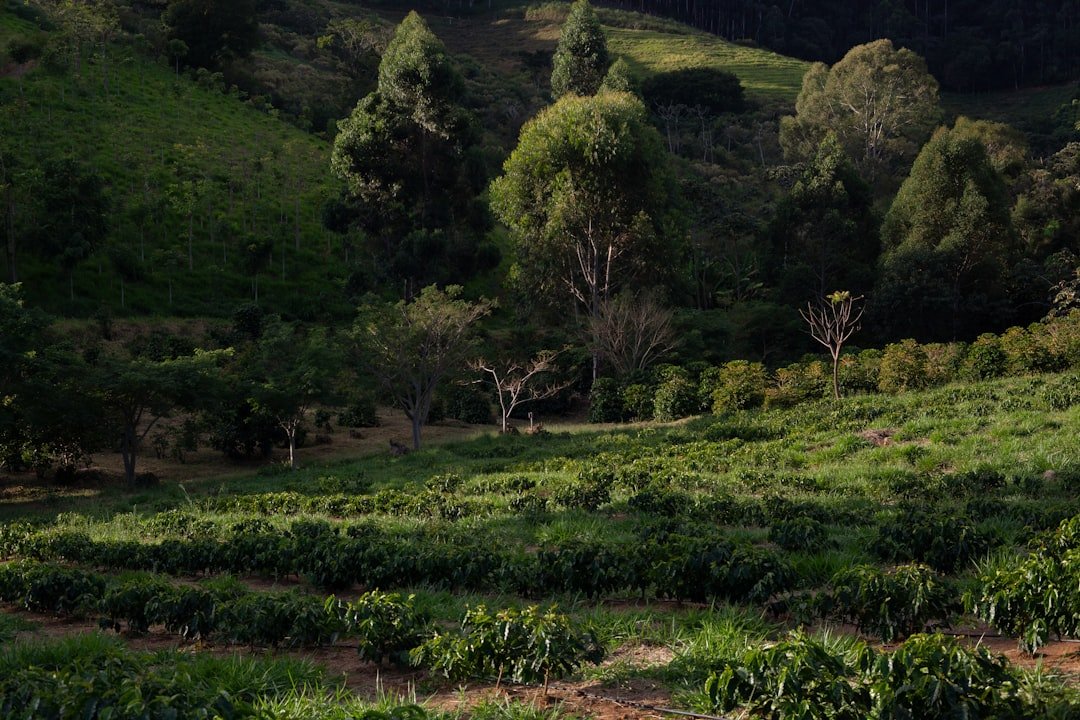
Altitude gets treated like a cute little label flex. A romantic detail. A mountainside humblebrag. But in coffee, altitude is doing a lot more than making the bag look worldly. It’s more like the quiet force behind flavor — slowing cherry development, changing bean density, shaping acidity, and low-key deciding whether your cup tastes like bergamot and peach or cocoa and toasted hazelnut. That doesn’t mean higher is always better — coffee is not a ski competition — but it does mean elevation is one of the biggest reasons two coffees can both be Arabica and still taste like they grew up in completely different households.
If you’ve ever wondered why one Ethiopian coffee hits like a jasmine-scented plot twist while a lower-grown Brazilian lands all creamy, nutty, and reassuring, altitude is often the hidden variable. Not the only one, obviously. Variety matters. Processing matters. Roast matters. The producer’s decisions matter. But altitude shows up in the cup more than most people realize, and once you know what it’s doing, coffee labels start making a lot more sense. This isn’t geography homework. It’s the reason your morning brew can feel crisp and sparkling one day, then soft and chocolatey the next.
The bold truth: altitude is basically coffee’s unfair advantage
Let’s just say the quiet part out loud: specialty coffee talks about altitude so much because, a lot of the time, it delivers. Not magically. Not every single time. But often enough that pros keep paying attention.
At higher elevations, temperatures are generally cooler. Coffee cherries ripen more slowly. That longer maturation gives the seeds inside — the beans you eventually grind — more time to develop sugars, acids, and aromatic compounds. The result can be kind of ridiculous in the best way: more clarity, more complexity, more of those tasting notes that make you stop mid-sip and go, “Wait, is that orange blossom?”
That’s why altitude keeps sneaking into tasting notes whether you notice it or not. A high-grown Ethiopian from Yirgacheffe might bring florals, tea-like texture, and citrus peel. A crisp Colombian from a lofty Andean farm can show red fruit and bright acidity. Meanwhile, a lower-grown coffee may lean into chocolate, nuts, spice, and a plusher body. None of these profiles are “wrong.” They’re just different expressions of how coffee develops under different conditions.
And that matters because the cup isn’t abstract. It’s sensory. If you love coffees that feel juicy and elegant, altitude is often part of that story. If you want something rounder and gentler — less sparkle, more comfort — altitude can explain that too. Same species. Same broad category. Totally different vibe.
Here’s the useful reframe: instead of thinking of elevation as a prestige badge, think of it as a flavor clue. That’s the more interesting lens. It tells you what kind of experience might be waiting in the cup, not whether you’re supposed to applaud. If you want a broader foundation for why coffees from different places taste so distinct, how climate change is reshaping coffee regions adds helpful context around environment and cup character.
Slower growth, harder beans, brighter cup: what altitude actually does to coffee
Here’s the science, minus the lab-coat energy.
Coffee plants grown at higher elevations usually deal with cooler average temperatures, especially at night. That slows down cherry ripening. And when ripening slows down, the plant has more time to build and concentrate sugars and other flavor compounds. In Arabica especially, that slower pace is often linked to more nuanced cup quality.
One thing that happens physically: the beans tend to become denser. Which matters more than it sounds. Density affects how coffee roasts because denser beans absorb and transfer heat differently than softer, less dense ones. Roasters usually have to handle high-grown coffees with more precision to bring out sweetness and complexity without scorching the outside or leaving the inside underdeveloped. Done well, those beans can hold onto lively acidity, layered aromatics, and distinct flavor separation. Done badly, they can taste sharp, grassy, or weirdly hollow. High altitude gives you potential, not immunity.
This is where “hard bean” terminology comes in. In parts of Central America, coffees grown above certain elevations are sometimes classified as SHB or Strictly Hard Bean, and in some countries SHG, Strictly High Grown. Those terms are tied to altitude and density, and while they’re not automatic guarantees of greatness, they reflect a long-standing understanding that elevation changes the raw material itself.
Flavor-wise, high-grown coffees often show what people call brightness or acidity. Quick clarification: acidity in coffee does not mean sour in the bad, lemon-face way. It means liveliness. Structure. The thing that makes a coffee feel crisp instead of flat. Depending on origin and processing, that can show up as citrus, stone fruit, berries, florals, black tea, even tomato leaf or bergamot. When it’s balanced by sweetness, it’s excellent.
Lower-altitude coffees tend to move differently. Warmer growing conditions can lead to faster cherry maturation and, in many cases, softer acidity and heavier body. You may get notes like milk chocolate, roasted nuts, caramel, spice, or earthy depth. Less sparkle, more bass line. Espresso drinkers especially tend to love this because those qualities can translate into syrupy texture and a more rounded shot.
The nuance matters, though. Altitude is not working solo like some caffeinated superhero. Soil composition, rainfall, shade cover, farm management, cultivar, harvest timing, and processing method all shape flavor. A washed high-grown coffee and a natural-processed high-grown coffee can taste wildly different. Same altitude, very different post-harvest choices. World Coffee Research and the Specialty Coffee Association both emphasize that coffee quality is multifactorial — genetics, environment, and processing all interact in the final cup. Altitude is one of the biggest environmental levers, not the only one. If you want to understand how species differences layer on top of elevation, Arabica vs Robusta: the real difference explained is a useful companion read.
That “environment + genetics + processing” trio is the part worth remembering. Elevation sets the stage. It doesn’t write the whole script.
Why “high altitude” became coffee shorthand for quality — and where that gets oversimplified
There’s a reason specialty coffee got a little obsessed with elevation. Many of the world’s most celebrated coffee regions sit high up: Ethiopia’s famed highlands, Kenya’s elevated growing areas, Colombia’s mountain slopes, Guatemala’s volcanic regions, and parts of Costa Rica and El Salvador. These places keep producing coffees with striking acidity, aromatic complexity, and clean structure. So over time, altitude became a kind of shorthand. A useful one, right up until it gets lazy.
Because here’s the trap: “grown at 1,800 meters” sounds impressive even if everything else went sideways.
Poor picking? Problem. Bad fermentation control? Problem. Drying mistakes? Huge problem. Weak roasting? Also a problem. A coffee can be grown in a cloud-kissed paradise and still taste flat, harsh, or oddly woody if post-harvest handling is sloppy. The SCA’s green coffee evaluation standards exist for exactly this reason: quality has to be assessed across multiple dimensions, not assumed from one romantic farm stat.
This is where coffee marketing occasionally needs a gentle espresso-fueled reality check. Altitude is a clue, not a halo.
And lower-altitude coffees? They get underrated way too often. They’re sometimes treated like the supporting cast while high-grown lots get all the awards-season attention. But lower- and mid-altitude coffees can be gorgeous in their own right: syrupy body, cocoa richness, spice, lower-toned sweetness, low-acid comfort. If your favorite espresso tastes like dark chocolate, toasted almond, and brown sugar, there’s a decent chance you’re enjoying exactly the qualities that altitude maximalists tend to overlook.
That’s not a compromise. That’s taste.
Honestly, this is one of the more useful things to know if you’re buying coffee for your actual life instead of chasing tasting notes like it’s a side quest. Not everyone wants every cup to taste like grapefruit and white flowers. Sometimes you want a coffee that feels steady, rich, and forgiving with milk. Sometimes you want a moka pot brew that tastes like dessert’s more disciplined cousin. Mid- and lower-altitude coffees often shine there.
So yes, altitude became shorthand for quality because many exceptional coffees do come from higher elevations. But the smarter takeaway is this: altitude helps predict style more than it guarantees excellence. That’s a much better use of the information.
Your palate already knows the difference, even if you’ve never said “elevation”
You may not be sitting there whispering “ah yes, 1,750 meters” into your cup, but your palate has probably been picking up on altitude for a while.
High-altitude coffee often tastes crisp, juicy, elegant, or layered. You might notice a kind of lifted quality — the flavors feel separated and articulate. Citrus stands out. Florals drift in. The finish can feel clean and precise, almost tea-like in some washed coffees from Ethiopia or Kenya. It’s the coffee equivalent of a shirt with perfect tailoring: not louder, just sharper.
Lower-altitude coffee tends to feel fuller, rounder, heavier, and more straightforward. That’s not an insult. Straightforward can be great. It can mean chocolate sweetness, mellow acidity, a thicker mouthfeel, and a finish that lingers in a cozy way instead of sparkling off the palate. Think less violin solo, more velvet couch.
Brew method amplifies these differences. Pour-over and filter brewing often spotlight the sparkle and aromatic detail of high-grown coffees because those methods tend to highlight clarity. You taste the distinctions more easily. Espresso, on the other hand, compresses coffee into a concentrated, textural format where body and sweetness become huge assets. That’s one reason lower- or mid-altitude coffees can feel especially satisfying as espresso: they bring plushness, crema-friendly structure, and a flavor profile that plays nicely with milk.
And here’s another wrinkle: altitude can influence not just flavor, but how easy a coffee is to read in the cup. High-grown coffees often show more obvious contrast between acidity, sweetness, and aroma, which can make them feel more “complex.” Lower-grown coffees may feel more blended and integrated, which some drinkers read as less exciting and others read as more comforting. Same trait, different interpretation.
If you want to train your palate without becoming unbearable at brunch, try this simple framework:
- Compare two coffees from different elevation ranges.
- Taste them black first.
- Pay attention to five things: acidity, sweetness, body, finish, and aromatic detail.
- Ask basic questions: Does one feel brighter? Is one heavier? Does one leave a cleaner finish? Which one smells more floral or fruity? Which one feels more like cocoa or nuts?
That’s it. No need to invent tasting notes like “rain on slate” unless that genuinely happens to you and, if so, honestly, respect.
This is basically terroir — the idea that place shapes flavor — but with more caffeine and fewer people pretending they always taste “gooseberry.” Wine people have been doing this forever. Olive oil people too. Tomatoes absolutely know what’s up. Coffee belongs in that conversation. Where and how it’s grown changes what ends up in your cup, and altitude is one of the clearest examples of that.
The altitude sweet spot is not one number — it depends on origin, variety, and roast
One of the easiest mistakes in coffee is assuming there’s some magic elevation where greatness begins, like 1,500 meters is the velvet rope and below it everyone’s stuck outside. Not how it works.
“High altitude” is relative. A coffee grown at 1,500 meters in Colombia may develop differently than one grown at the same elevation in Hawaii, Brazil, or Yemen because latitude changes climate patterns. Regions closer to the equator tend to support coffee cultivation at higher elevations while still maintaining viable temperatures. In other places, lower elevations may already be cool enough to slow maturation and support quality development.
That’s why agronomists and coffee researchers usually avoid making altitude claims in isolation. Temperature, day-night variation, sunlight intensity, rainfall timing, and local ecology all interact. The International Coffee Organization and World Coffee Research both stress regional context because growing conditions aren’t interchangeable just because the meter count matches.
Variety matters too. A lot.
Different coffee cultivars respond differently to altitude. Gesha, for example, is famous for producing astonishing florals and citrusy elegance, especially at higher elevations under the right conditions. Bourbon can show beautiful sweetness and structure. SL28 and SL34 in Kenya are prized for their acidity and blackcurrant-like intensity in elevated regions. Caturra, Typica, Castillo, Pacamara — all of these can express altitude differently depending on origin and farm management. The same mountain doesn’t make every variety sing the same song.
Then roast enters the group chat and changes the mood.
A lighter roast often highlights the precision and acidity of high-grown coffees. That’s where you’re more likely to notice florals, citrus, tea-like texture, and distinct fruit notes. A medium roast may balance those qualities with more caramelized sweetness. Darker roasting tends to mute some origin distinctions and emphasize roast character: bittersweet chocolate, smoke, toast, carbon, spice. Nothing wrong with dark roast if you like it, but it can flatten the very altitude-driven nuances that made the bean special in the first place.
That’s one of those things people don’t always realize: altitude can give a coffee tremendous aromatic detail, but the roast decides how much of that detail survives to your cup. If a coffee with delicate high-grown florals gets roasted too dark, those notes may disappear under roast flavors. It’s like buying a silk shirt and then wearing a winter coat over it indoors. The potential is technically still there. Functionally? Not helping.
So there isn’t one altitude sweet spot. There’s a matrix:
- origin
- climate
- variety
- processing
- roast
That’s why one coffee at 1,700 meters can taste electric and transparent, while another at a similar elevation tastes sweet, dense, and almost tropical. Same number. Different outcome.

So what should you do with this information the next time you buy coffee?
Use altitude as a shortcut, not a scoreboard.
If you love bright, floral, citrusy coffees with lots of aromatic lift, look for higher-elevation lots — especially from origins known for clarity and acidity like Ethiopia, Kenya, Guatemala, or certain Colombian regions. If you prefer chocolate, nuts, spice, lower acidity, and a heavier body, lower- or mid-altitude coffees may be exactly your thing. Not your backup thing. Your actual thing.
And read labels a little smarter.
Most people check country and roast level, which is fair, but if a coffee label gives you more detail, pay attention to the combination of:
- elevation range
- processing method
- variety
- roast style
That combination tells you way more than altitude by itself. For example:
- High elevation + washed process + light roast often points toward clarity, acidity, and florals.
- Mid elevation + natural process + medium roast may lean sweeter, fruitier, and heavier.
- Lower elevation + darker roast might bring chocolate depth, spice, and body with less obvious acidity.
Another useful move: match altitude to brew method. If you’re making pour-over and want maximum nuance, a high-grown washed coffee can be a beautiful choice. If you mostly drink espresso or coffee with milk, a mid- or lower-altitude coffee with chocolate and nut notes may give you a more satisfying cup day after day. There’s no medal for preferring one over the other. Your mug, your rules.
Also, don’t get hypnotized by one impressive-sounding number. A bag bragging about 1,900 meters should make you curious, not automatically impressed. Ask what that elevation is doing for flavor. Is the producer using a variety that thrives there? Was the coffee washed or natural? Is the roast designed to show off acidity and aroma, or has it been taken dark enough that altitude barely matters anymore?
That question — what is this detail doing in the cup? — is the one that separates useful coffee knowledge from label decoration.
And maybe here’s the only mildly opinionated take worth keeping: the best coffee isn’t the one grown highest up a mountain. It’s the one whose altitude, origin, processing, and roast all make sense together. Harmony beats hype. Every time.
So next time you see altitude on a bag, don’t just file it under “fancy.” Treat it like a clue. A really good one. Because how altitude changes everything about the coffee in your cup isn’t just producer trivia. It’s flavor, texture, aroma, and structure — the whole caffeinated plot.
Frequently Asked Questions
Why does high-altitude coffee often taste brighter?
Higher elevations usually mean cooler temperatures and slower cherry ripening. That slower development can help coffee build more sugars, acids, and aromatic compounds, which often shows up as brighter acidity and clearer flavor notes.
Is higher altitude coffee always better?
No. High altitude can create strong quality potential, but variety, processing, harvesting, and roasting still matter just as much. A lower-altitude coffee can be excellent if those other factors are handled well.
What flavors are common in lower-altitude coffee?
Lower-altitude coffees often lean toward chocolate, nuts, caramel, spice, and a heavier body. They usually have softer acidity, which can make them especially appealing for espresso and milk drinks.
How should I use altitude when buying coffee?
Use altitude as a flavor clue rather than a quality guarantee. Pair it with origin, processing method, variety, and roast level to get a better idea of whether a coffee will taste bright and floral or rich and comforting.
Sources
- Specialty Coffee Association: https://sca.coffee/research/coffee-value-assessment
- World Coffee Research, Catalog of Coffee Varieties: https://worldcoffeeresearch.org/work/catalog
- International Coffee Organization: https://www.ico.org/
- Scientific Reports: https://www.nature.com/articles/s41598-017-06577-8
- Scott Rao: https://www.scottrao.com/
- National Coffee Association: https://www.ncausa.org/
- World Coffee Research: https://worldcoffeeresearch.org/work
