

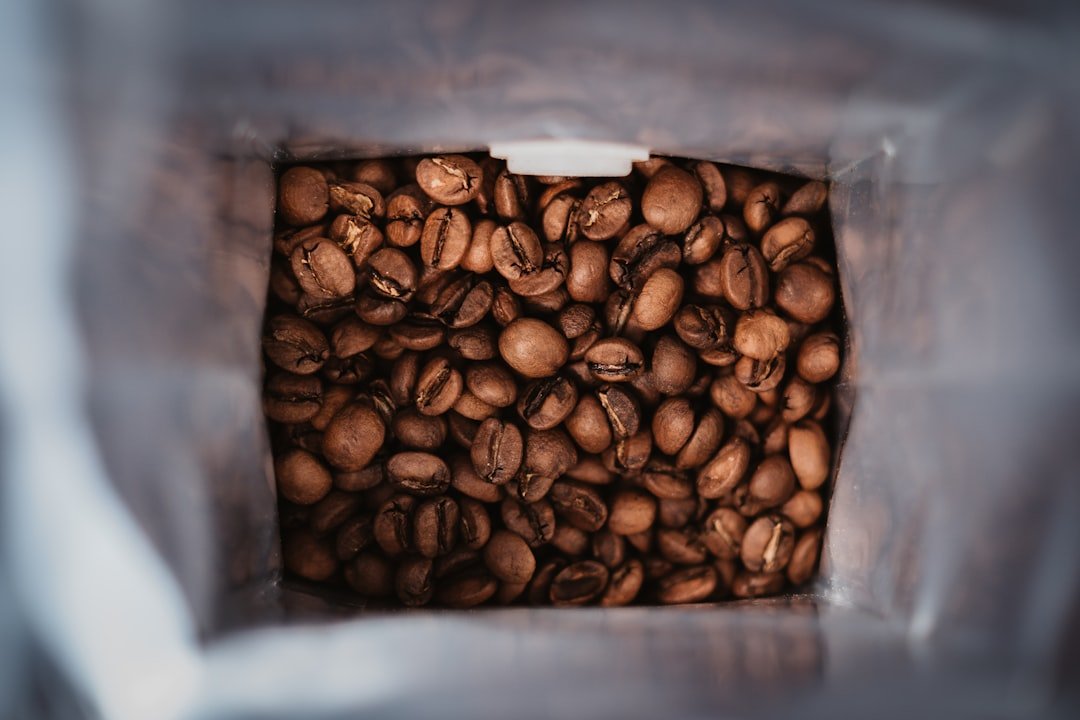
If a coffee brand still expects you to take “ethical” on faith, that is already a little suspicious.
The boldest sustainability claim a coffee brand can make in 2026 is not “eco-friendly.” Not “responsibly sourced,” either, which now has the same energy as a dating profile that says “I love to laugh.” The real flex is specificity.
Can the brand show you where the coffee came from beyond a romantic paragraph about misty mountains and generational craft? Can it name the cooperative, explain how it verifies sourcing claims, show what standard it follows, what data it tracks, and where the blind spots still are? Because if the answer is basically “trust us, we care a lot,” that is not transparency. That is vibes.
And vibes are great for playlists and café lighting. They are not a supply-chain standard.
Young coffee buyers are getting much sharper about this, and fairly so. Premium coffee has spent years teaching people to care about origin, process, roast level, varietal, altitude, fermentation, and tasting notes. Once you train people to notice details, you cannot really ask them to stop right before the sourcing part and just nod politely.
That shift matters because brands now have more tools than ever to know more and show more about where coffee comes from. We are well past the era when “Colombia” on a bag counted as radical transparency. The infrastructure is changing. Traceability is getting more granular. Verification is getting more technical. And consumers are catching on.
Which is why coffee supply chain transparency and what brands should be showing you has become a much smarter question than the old, fuzzy “Is this brand sustainable?” Sustainability is broad. Sometimes too broad. Transparency is testable. It asks a cleaner question: what exactly is this company willing to show you, and what is it still keeping blurry?
That is where it gets interesting. Because once you start looking for proof instead of poetry, a lot of coffee marketing starts reading like a beautifully lit shrug.
Coffee Supply Chain Transparency and What Brands Should Be Showing You
For a long time, origin labeling did a lot of heavy lifting. “Ethiopia.” “Peru.” “Guatemala.” Maybe a region if the brand was feeling especially specific. And to be fair, origin still matters. Countries and regions can tell you something real about flavor profiles, production traditions, and trade networks.
But as a transparency benchmark, country-level origin is increasingly just the cover page.
A useful sign of where this is headed came from Fairtrade’s launch of Plot Insights, a free geolocation and deforestation-risk tool for coffee cooperatives, reported by Daily Coffee News in June 2026. This is not branding fluff. It is operational. Cooperatives can map farm plots, assess deforestation risk, and prepare for stricter due-diligence expectations tied to EU deforestation rules. According to the report, data-sharing to traders, retailers, and brands is expected through Fairtrace later in 2026, which means more actors across the chain may soon have access to much more precise sourcing information than the public has traditionally seen (Daily Coffee News).
That is a big deal.
Not because every coffee bag is about to come with a tiny dossier attached. But because it changes what “we do not have that information” really means. If cooperatives can map plots and screen for risk, and if those systems increasingly connect upstream data to downstream buyers, then transparency stops being a dreamy aspiration and becomes a capability question.
That is the shift.
The industry is moving toward traceability that can connect coffee to specific farms or cooperative plots. That does not mean the system is complete or universal. Coffee supply chains are messy. Mixed lots exist. Data quality varies. Smallholder farmers and cooperatives already carry real administrative burdens. But the direction is clear: more geolocation, more documentation, more screening, more proof.
So if a brand still talks about transparency like it is 2016, with a broad origin story, maybe a sepia-toned farmer photo, and zero explanation of verification, that is not visibility. That is aesthetic sourcing.
Reasonable expectations matter here. You should not assume every brand can instantly publish a farm polygon map for every blend tomorrow morning. But you can expect a serious brand to explain how far down the chain it can trace its coffee. Farm? Cooperative? Exporter? Importer? Country only? You can also expect it to say what evidence supports those claims and what systems it uses to validate them.
That is the new baseline. Not perfection. Competence. And if you want to understand how sourcing details can shape cup quality too, see why sustainable coffee tastes better every time.
What Brands Should Actually Be Showing You
If you want a simple way to judge coffee transparency, think of it as a stack. The more layers a brand can clearly explain, the more legible its sourcing becomes.
1. Traceable origin beyond country level, where possible
“Brazil” is not nothing. But it is also not much.
Better transparency usually means getting more specific: region, producer group, cooperative, washing station, farm, or a named community. For some coffees, especially blends with more complicated sourcing structures, a brand may not be able to offer farm-level clarity for every component. Fine. Then say that plainly.
What matters is whether a brand can tell you how specific its traceability really is. Not “single origin” as a mood. Actual origin detail.
And yes, there is a difference. A brand can tell a gorgeous origin story while staying vague about the chain itself. If it can name where coffee was grown but not who aggregated it, exported it, or verified it, you are not looking at full transparency. You are looking at the front half of the story.
2. Named cooperatives, exporters, and importers
Coffee does not teleport from a hillside into your cup. It moves through a chain of people and businesses: farmers, cooperatives, mills, exporters, importers, roasters, and retailers. Every handoff matters.
So brands should be naming those players where possible.
Not every consumer is going to memorize exporter names for fun. But naming partners gives sourcing claims structure. It shows there is an actual chain, not just a brand speaking in soft-focus abstractions.
If a brand says it works directly with producers, ask what that means. Directly how? With whom? Through which importer? Under what arrangement? “Direct trade” can be meaningful, but without detail it can also become one of those phrases that sounds impressive while covering a lot of different realities.
3. Sourcing standards or certifications
Certifications are not perfect. No serious person thinks they solve every labor, climate, price, or equity issue in coffee. But they are still useful because they create a visible framework. Fairtrade, Rainforest Alliance, organic certification, and other standards at least give you something to inspect: criteria, audits, scope, and public language around compliance.
No certification can still be legitimate. Some brands work through private sourcing programs or relationship-based models that are meaningful and well documented. But then they should explain the standard they use instead. Who verifies it? How often? Against what criteria?
That is the move: replacing adjectives with systems.
Because “ethical” is not a system. “Planet-friendly” is not a system. “Conscious sourcing” is not a system. Those are captions.
4. Public explanation of how claims are verified
This is where a lot of brands suddenly get very poetic and very unhelpful.
They will tell you the coffee is carefully sourced, but not how that is checked. They will say they support farmers, but not whether they monitor premiums, contracts, long-term commitments, or traceability records. They will mention sustainability, but not the mechanism behind the claim.
A credible brand should explain verification in a way a normal person can understand. That could include third-party audits, cooperative records, importer documentation, geolocation tools, transaction traceability, internal sourcing protocols, or annual reviews. Not every detail has to be thrilling. Most compliance language has all the charm of tax software. But boring can be beautiful if it proves something.
5. Deforestation-risk screening and geolocation readiness
This is one of the strongest emerging proof points, especially for companies selling into markets with tighter due-diligence expectations.
The Fairtrade Plot Insights development matters because it shows where transparency is becoming more technical: mapping farm plots, screening deforestation risk, and creating data pathways that can be shared with supply-chain partners through systems like Fairtrace (Daily Coffee News).
You may never personally request a geolocation file from your coffee brand. Most people also do not ask their pasta brand for mill specs. But the existence of that capability tells you something important about how seriously a company treats traceability.
A smart question for brands now is simple: are they preparing for this kind of traceability, or talking like none of it exists? Relatedly, if you care about environmental proof beyond sourcing language, read how shade-grown coffee boosts biodiversity and flavor.
6. Regular public reporting
One evergreen “Our Commitment” page from four years ago is not transparency. It is décor.
Real transparency has a cadence. Annual sustainability reports. Sourcing updates. Progress disclosures. Methodology notes. Even a short public update is more useful than a beautifully designed page that says the same three polished things forever.
This matters even more because organizational visibility can shift. A 2026 Trellis report noted that Starbucks folded sustainability under its social impact function, raising broader questions about how visible and prioritized sustainability work remains internally and externally (Trellis).
The point is not to single out one company for drama. It is to recognize a pattern: when sustainability functions become less visible, public accountability can get fuzzier too.
Which means consistent reporting matters a lot.
7. Honesty about limits
This one is underrated and, oddly, one of the strongest signals of credibility.
If a brand says, “We can trace 80% of this coffee to cooperative level, but farm-level mapping is still in progress,” that is not a weakness. That is useful information. If it says, “Our blends include lots from multiple groups, so traceability is partial here,” great. That is honest.
Brands that pretend the whole chain is perfectly visible at all times are often less trustworthy than brands that clearly explain what they know and what they are still building.
Because transparency includes edges. It includes uncertainty. It includes saying, here is the part we can prove today, and here is the part we are actively improving.
That is not messy. That is adult.

The Red Flags Are Easier to Spot Than They Look
Once you know what real transparency looks like, the red flags stop being subtle. They are actually kind of loud.
Red flag 1: Vague adjectives doing all the work
If a brand leans hard on words like “conscious,” “ethical,” “planet-friendly,” or “responsibly sourced” without linking those claims to standards, dates, metrics, or named partners, you are looking at language that wants credit without paperwork.
And paperwork, while tragically unsexy, is the whole point.
The easiest test is this: could a skeptical person verify the claim from the information provided? If not, it is probably not a transparency claim. It is a branding claim.
Red flag 2: Packaging gets a TED Talk, sourcing gets a whisper
Packaging is visible, easy to photograph, and convenient for marketing. Supply chains are harder. They involve contracts, records, audits, partner relationships, and data systems that do not exactly crush on social media.
So sometimes brands talk a lot about the outside of the product and almost nothing about the inside of the sourcing chain.
That imbalance is worth noticing.
To be clear, packaging matters. Material choices matter. Waste matters. Compostability matters. But if a brand can give you a five-minute monologue about the box and no meaningful detail about origin verification, labor standards, or sourcing oversight, that tells you where the evidence is strongest and where it may be thin.
Visible sustainability often gets the spotlight. Harder-to-prove sustainability is where the real character test lives.
Red flag 3: Lofty goals, no progress cadence
A brand says it aims to transform coffee sourcing by 2030. Amazing. So what happened this year?
If there is no timeline, no update cycle, no milestone reporting, and no evidence trail, the goal is basically a mood board with a deadline.
This is where public reporting becomes a differentiator. The best disclosures do not just tell you what a company believes. They tell you what changed, what improved, what stalled, and what the next checkpoint is.
A promise without cadence is just a polished wish.
Red flag 4: Farmer storytelling with zero supply-chain architecture
Nobody is against farmer stories. They matter. Coffee is agricultural, cultural, and deeply human. But if a brand gives you names and portraits while skipping the actual sourcing mechanics, something is off.
Human stories should not replace documentation. They should sit alongside it.
Otherwise the effect is a little too convenient: emotional credibility without operational transparency.
Red flag 5: Everything sounds certain, nothing sounds specific
Real supply chains are complicated. So if a brand makes every claim sound frictionless and absolute, that can be a warning sign.
Credible transparency usually includes nuance: percentages, scopes, exceptions, phases, mixed-lot explanations, evolving systems, and audit windows. Not because brands enjoy making life complicated, but because reality is.
If everything sounds effortlessly perfect, you may be reading copy optimized for reassurance, not accuracy.
Transparency Is Not About Perfection
Let us be fair to coffee for a second. This supply chain is not simple.
Coffee moves through farmers, cooperatives, mills, exporters, importers, roasters, and retailers. One coffee can involve thousands of smallholder producers. Blends can combine multiple origins. Documentation quality can vary. Regulatory expectations can shift. Infrastructure is uneven. And the people doing the actual growing are often carrying the heaviest burden in systems built far away from them.
So no, a global coffee supply chain is not going to become flawlessly neat overnight. Anyone promising total simplicity is either selling fantasy or has never met a real commodity chain.
But that is not an excuse for opacity.
The best brands do not pretend complexity does not exist. They make it legible.
You should be able to follow the story from farm to cup without needing a law degree, a sourcing career, or a private investigator. A premium brand should not just have premium values. It should have premium information architecture.
- the sourcing story is coherent
- the proof points are visible
- the standards are named
- the update cycle exists
- the gaps are acknowledged
- the direction of improvement is clear
That is what trust looks like now. Not blind belief. Structured visibility.
Most consumers are not demanding sainthood from brands. They know supply chains are messy. They know progress can be partial. They know “sustainable” is not a binary switch you flip one sunny Tuesday.
What they do expect is coherence.
If a company claims quality, care, heritage, and premium standards, then the information should reflect that. The sourcing page should not feel like the neglected cousin of the tasting notes page. The sustainability language should not sound like it was written by a committee paid by the adjective.
It should feel like someone took the question seriously.
That is also why transparency in sourcing tends to make other sustainability claims more believable. If a brand is disciplined about documenting where coffee comes from, how it is verified, and what it can and cannot yet prove, then claims about packaging, emissions, compostability, or reforestation land differently. There is an evidence culture behind them. A pattern of receipts. A sense that the company understands the assignment.
And if this all sounds a little more demanding than it used to, good.
Coffee is too global, too valuable, too culturally loved, and too dependent on agricultural systems under pressure for “just trust us” to be enough anymore.
So the next time a brand talks about sustainability, ask a better question. Not whether it cares. Every brand says it cares. Ask what it can show you. Ask how specific it is willing to get. Ask what gets updated, what gets verified, and what still is not fully visible.
That is not cynicism. It is taste.
And frankly, if you know the difference between a decent espresso and a tragic one, you already get the principle: details matter. A lot.
Sources
- Daily Coffee News, https://dailycoffeenews.com/2026/06/16/fairtrade-launches-free-eudr-geolocation-tool-for-coffee-cooperatives/
- Trellis, https://trellis.net/article/starbucks-layoffs-sustainability/
- Fairtrade / Fairtrace materials as referenced via Daily Coffee News coverage, https://dailycoffeenews.com/2026/06/16/fairtrade-launches-free-eudr-geolocation-tool-for-coffee-cooperatives/
- EU deforestation compliance context as referenced in Daily Coffee News coverage, https://dailycoffeenews.com/2026/06/16/fairtrade-launches-free-eudr-geolocation-tool-for-coffee-cooperatives/
Frequently Asked Questions
What does coffee supply chain transparency actually mean?
It means a brand can clearly show where its coffee comes from, who handled it along the way, and how those claims are verified. Good transparency includes traceability, named partners, standards, and regular updates rather than vague promises.
What should coffee brands disclose about sourcing?
Brands should disclose origin beyond country level when possible, plus cooperatives, exporters, importers, certifications, and verification methods. They should also explain limits, such as blends or partial traceability, instead of pretending the chain is perfectly visible.
Are certifications enough to prove ethical coffee sourcing?
No. Certifications can be useful because they create a visible framework, but they are only one part of the picture. Stronger proof includes public reporting, traceability detail, and clear explanations of how sourcing claims are checked.
Why is geolocation and deforestation screening important in coffee?
These tools help brands and cooperatives map farm plots, assess deforestation risk, and prepare for stricter due-diligence rules. Their use shows that a company is building more precise, evidence-based traceability instead of relying on broad marketing language.
