
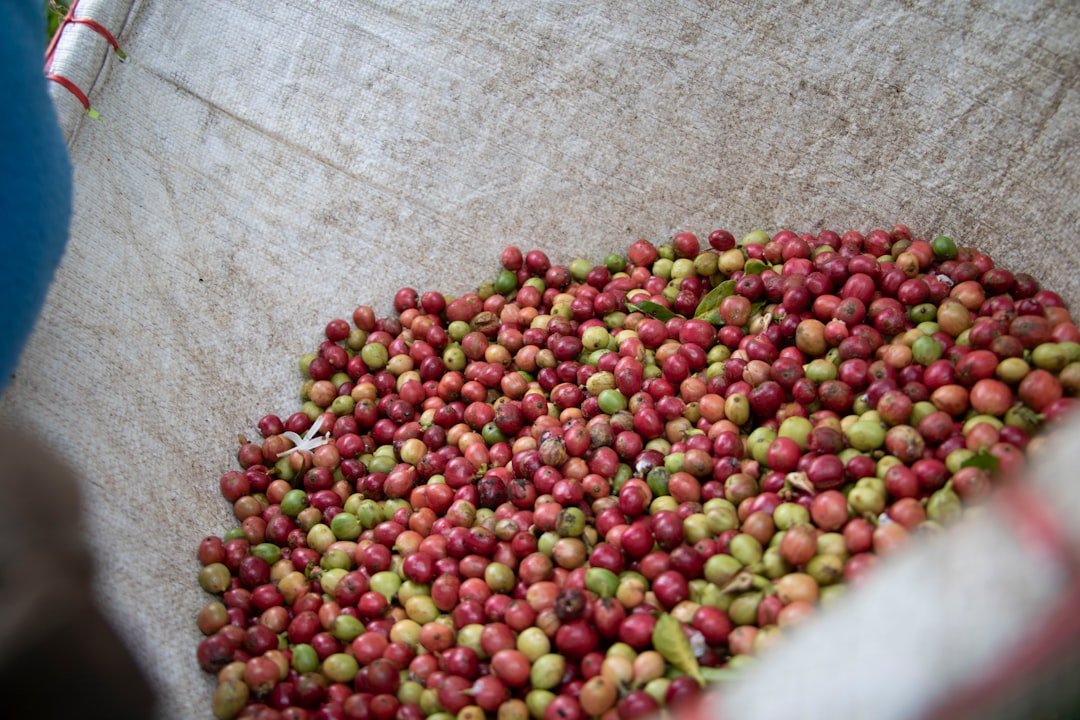
Specialty coffee has a bit of an identity crisis. The label still sounds premium, but on its own, it does not guarantee the story in your cup is as clean, fair, or traceable as the menu copy makes it seem. Specialty coffee is still a real, meaningful quality category. But the more useful question now is what is actually underneath it: origin verification, farm resilience, and who really captures the premium.
That is the tension. For years, the flex was rarity: better beans, more specific tasting notes, a bag that whispers bergamot, panela, pink guava like it deserves applause. The future of premium coffee is less about increasingly poetic flavor language and more about whether the industry can prove what it says when things get messy. Producing regions are dealing with drought, deforestation, market bottlenecks, and a growing need for hard evidence. The romance is still there. It just needs receipts.
What is specialty coffee, really?
Specialty coffee is coffee that scores 80 points or higher on the Specialty Coffee Association's 100-point scale, with minimal defects and distinctive sensory quality. In everyday use, the term also suggests traceability, careful roasting, and better sourcing, but the score itself does not automatically prove those things.
That formal definition still matters. Coffee is evaluated through green coffee grading and cupping, the tasting process where trained tasters assess aroma, flavor, acidity, body, balance, and other sensory attributes. Defects are counted. Cleanliness matters. Distinction matters. An 80-point coffee is not random luck in a bag; it has cleared a legitimate quality bar.
So no, this is not a claim that the term means nothing. It means something. It just does not mean everything people often assume it means.
Here is where it gets slippery. A coffee can cup beautifully and still move through a supply chain that is vague, inconsistent, or polished within an inch of its life. A roaster can describe something as specialty roasted coffee and genuinely mean they handled it with care, trying to preserve clarity and origin character instead of roasting every lot into the same dark, smoky shrug. But specialty roasted coffee is a market phrase, not a formal grading category. It tells you something, maybe. It does not tell you enough.
Same story with the alternate spelling, speciality coffee. That is just the British spelling. No secret code. No elevated tier. No hidden velvet rope. In daily consumer life, both spellings get used as shorthand for a bundle of ideas at once: better taste, better ethics, cooler cafés, and maybe a barista with very strong opinions about water chemistry. The score itself does not prove all that.
That is really the point: the label has picked up more cultural meaning than the scoring system can carry on its own. Once that happens, you need better questions.
Because asking whether a coffee is specialty does not quite cut it anymore. The sharper question is specialty according to what, and proven how?
That shift matters more than it sounds. Coffee has always sold a story, but premium coffee sells a very specific one about place, process, people, and quality. If any one of those gets fuzzy, the label starts doing too much heavy lifting. We are talking about a product that can list a mountain range, an altitude, a variety, a fermentation style, and notes of jasmine and stone fruit, yet still leave you unclear on whether the origin claim is independently verifiable or whether the producer actually benefited from the premium.
Huh, I didn’t know that: the quality score is about sensory performance and defect profile. It is not a certification of fairness, climate resilience, or transparency.
The old specialty flex was flavor—the new one is proof
For a long time, premium coffee culture treated flavor as the main event. If the cup was expressive enough, the rest of the story often got accepted on vibes alone. That era is looking shakier.
A June 2026 report covered research from the University of Turin, the University of Nebraska-Lincoln, and Illycaffè proposing a method for identifying a roasted coffee's geographic origin through a combination of comprehensive two-dimensional gas chromatography, shortened to GC×GC, and computer vision pattern recognition. In plain English, researchers analyzed volatile compounds, the aroma-related chemicals in coffee, and turned those patterns into image-like fingerprints that could help distinguish origins. It is very science-lab-meets-espresso-bar, and honestly kind of brilliant.
Why does that matter? Because once coffee is roasted, visual clues become much less useful. Green coffee can be inspected more directly. Roasted coffee is harder. Which means that in premium markets, where origin can meaningfully affect price, there is room for fraud, confusion, or just enough fuzziness to make everyone a little uncomfortable.
This proposed method is not being pitched as a plug-and-play industry tool you will see everywhere next week. The researchers described it as a reliable strategy for origin identification and quality assessment, but not a routine, market-ready system yet. Still, the direction is the interesting part. Specialty coffee used to sell provenance mostly through trust, relationships, and paperwork. Increasingly, trust may need backup.
And yes, that sounds less sexy than a tasting card full of florals and tropical fruit. But it may be the most important luxury in coffee now: proof.
Think about how often the market leans on terms like single origin, farm to cup coffee, carefully sourced, or traceable. Some brands absolutely back that up with detail and consistency. Others use those phrases more like decorative throw pillows: nice to look at, not structural. Lab-backed verification could become the thing that separates origin storytelling from origin evidence.
That is a major shift in what premium means. The old flex was that a coffee tasted rare. The new flex is that a company can prove where it came from.
And here is the sneaky important bit: better verification protects everyone in the chain, not just buyers trying not to get played. It also protects producers whose coffees genuinely deserve a premium because their origin and quality are real, distinct, and documentable. If the market gets flooded with vague premium claims, true differentiation gets blurred. Blurred differentiation usually helps the middle, not the farmer.
Readers interested in how processing shapes flavor claims may also like washed vs natural coffee explained simply, since processing details often reveal whether a coffee story is specific or just decorative.
Huh, I didn’t know that: roasted-origin verification is harder than green coffee verification, which is exactly why new analytical methods matter so much in high-value coffee markets.
Why specialty coffee's biggest issue starts on the farm
Brazil is probably the clearest place to see the problem. Great arabica coffee beans are increasingly not just a terroir story about place, soil, altitude, and climate, but a climate adaptation story. And that changes everything.
Reporting published by Daily Coffee News, drawing from Dialogue Earth, highlighted conditions facing smallholders in Minas Gerais, one of Brazil's major coffee-growing regions. Farmer Edson Paes, 53, has cultivated 12,000 organic Arabica coffee plants on three hectares since he was 14. During one drought period, he reported 45 days without rain. His trees also showed sun-scald, with brownish spots on the leaves linked to excessive temperatures.
It is not just one bad season, either. According to the same reporting, five consecutive Arabica harvests in Brazil were affected by heatwaves, droughts, or frosts. A 2024 study by Brazil's Federal University of Itajubá suggests that 35% to 75% of the areas in Brazil currently planted with Arabica could become economically unviable by the end of the century as warming and water stress intensify.
Read that again. Not lower yielding. Not slightly trickier. Potentially economically unviable.
That is the kind of statistic that should make anyone talking about specialty coffee sit up a little straighter.
Because if coffee farming in a country as central to global supply as Brazil becomes less stable, quality cannot be treated like some floating sensory miracle detached from production reality. Cup quality is increasingly downstream from resilience. Shade management, water access, soil health, varietal choices, and adaptation strategies are no longer side topics for agronomists. They are part of the quality conversation now.

This is one of those places where coffee culture can get a little too aesthetic and not quite practical enough. We love talking about origin in terms of flavor: chocolatey Minas, floral Ethiopia, syrupy Colombia, all that good stuff. But origin is also labor exposure, rainfall patterns, pest pressure, financing, and whether a farm can survive a bad cycle without sliding into debt or walking away from coffee altogether.
That makes specialty feel less like a fixed category and more like a stressed system trying to hold onto quality under worsening conditions.
A lot of consumers still picture premium coffee as the polished top of the pyramid. But the base of that pyramid is weather, agronomy, and economics. If those crack, all the beautiful branding on top starts to look fragile.
There is another wrinkle too: climate pressure can tighten supply and push prices up globally, but higher retail prices do not automatically translate into greater security for producers. That is one of the central contradictions in premium coffee right now. The market may charge more because coffee is harder to produce, while the people producing it still carry the worst of the risk.
For more context on environmental pressure at origin, see how climate change is reshaping coffee regions, which helps explain why resilience is now inseparable from quality.
Huh, I didn’t know that: some of the best Arabica in the world is now as much a story of adaptation to heat and water stress as it is of altitude or cup profile.
The uncomfortable truth: specialty does not automatically mean better livelihoods
This is where the conversation gets less cozy.
Specialty coffee loves the idea that quality creates opportunity. Sometimes it does. But not reliably enough, and definitely not automatically enough, to assume the premium always reaches the people doing the hardest work.
A sharp example comes from Chiapas, Mexico, where a new Women-Powered Coffee Coalition launched with support focused on around 500 women smallholder coffee farmers. According to Daily Coffee News, the initiative brings together Bean Voyage, the Coffee Quality Institute, Coffee Circle, the W.K. Kellogg Foundation, and Falcon Specialty to support training, seed funding, and direct market access.
Why build a whole coalition around this? Because high cup quality alone has not reliably translated into better income.
Bean Voyage describes a triple barrier facing women producers: limited post-harvest knowledge, limited capital to act on that knowledge, and limited access to specialty buyers. Brutally clear. You can know your coffee could be better, not have the cash to improve processing, and still struggle to find buyers willing to pay for the extra effort.
That framing matters because it cuts through one of specialty coffee's favorite myths: that the market naturally rewards excellence. Sometimes the market rewards visibility, logistics, relationships, timing, export infrastructure, and who already has your email.
If that sounds cynical, it is really just supply chain realism.
Now for the contrast, and a little possibility. In eastern Democratic Republic of Congo, the Best of Congo Cooperatives returned in 2026 with 34 traceable arabica microlots from North and South Kivu. According to Daily Coffee News, each lot is accompanied by a full profile including farmer details, plot locations, varieties, and processing methods, with strong representation from women-led farmer groups.
That is the kind of detail people often imagine farm to cup coffee means. Not just a country name and some tasteful typography. Actual profiles. Actual locations. Actual process information.
And just as importantly, programs like this can create rare buying windows for regions that are underrepresented in global specialty markets. That does not solve everything. A competition or auction is not a magic wand. But it does show what accountable premium coffee can start to look like: traceable lots, richer producer visibility, and more specific market access.
The gap between Chiapas and Congo is not really a contradiction so much as a diagnosis. Specialty coffee can generate incredible value through differentiation, but its credibility depends on whether that value reaches producers consistently, not just occasionally in the form of standout microlots buyers get excited about for one season.
That is the uncomfortable truth. Exceptional coffee can exist inside unfair economics. A stunning cup score does not guarantee a healthy livelihood behind it.
If you want a deeper look at producer margins, coffee farming economics and what farmers really earn adds useful context to why quality premiums do not always fix structural problems.
Huh, I didn’t know that: one of specialty coffee's recurring bottlenecks is not just producing quality, but having the post-harvest knowledge, capital, and buyer access needed to convert quality into income.
Is specialty coffee still worth it?
Yes. Specialty coffee is still worth it if you treat it as a signal to investigate, not a guarantee to trust blindly. The best coffees today offer distinctive flavor plus real traceability, thoughtful roasting, and a clearer connection between what you pay and what coffee farming actually requires.
That is the short answer. The longer one is that specialty coffee still gives you access to better sensory experiences, more interesting origins, and often more transparency than conventional coffee. But the label works best as a starting point, not final proof.
Here is a practical way to judge it without turning your morning cup into a dissertation.
1. Ask where the coffee was grown—and whether the answer is specific
Colombia is fine. Huila, producer group X, Caturra, washed, harvested in late 2025 is better.
The more specific the origin story, the more likely it reflects real traceability rather than decorative geography. Specificity does not guarantee integrity, but vagueness makes accountability harder. If a brand or café talks about origin like it is classified information, that is a clue.
2. Look past country names
Good coffee information usually includes some combination of region, producer or cooperative, variety, process, and harvest timing. Those details tell you whether someone is communicating coffee as an agricultural product rather than a lifestyle accessory.
This is especially useful if you are comparing coffees that are all marketed as premium. One bag says single origin Ethiopia. Another tells you the region, process, variety, altitude, and producer relationship. Those are not the same level of transparency.
3. Notice whether the story is only flavor-deep
Tasting notes matter. We love tasting notes. But if all you get is blueberry, milk chocolate, and jasmine with no sourcing context, that is a polished half-story.
Brands do not need to dump every internal document on you. Nobody wants to read a legal brief before espresso. But some acknowledgment of sourcing realities, producer relationships, or traceability standards goes a long way, especially now.
4. Keep one eye on the economics of coffee farming
This is the less glamorous but more honest part. Quality is expensive to produce. Climate adaptation is expensive. Better processing is expensive. Accessing specialty buyers is expensive. If a coffee is unusually cheap while also making huge claims about rarity, ethics, and perfection, your eyebrow is allowed to rise.
Vietnam offers a useful reality check against simplistic narratives about affordable coffee. According to Daily Coffee News' coverage of a Coffee Watch report, Vietnam now has roughly 700,000 hectares of coffee land, with about 97% of production in robusta. The report estimates that more than 207,000 hectares of humid tropical forest may have been lost in coffee expansion zones in the Central Highlands. That does not mean robusta is bad, or that affordable coffee is morally suspect by default. It means low prices can carry very real origin-side costs: environmental, social, and long-term economic.
That is a useful check on the false binary where specialty equals virtue and commodity equals vice. Reality is messier than that. But the mess is exactly why proof matters.
The future divide in coffee may not be commodity versus specialty in the old sense. It may be opaque premium coffee versus accountable premium coffee.
Honestly, that is a better divide. It asks more of the industry. It respects the intelligence of the drinker. It gives producers a stronger case for differentiated value. It also saves us from mistaking expensive branding for meaningful transparency, which is a risk in basically every premium category on earth.
So yes, specialty coffee is still worth it. Just do not outsource all your judgment to the label.
The next time a bag says specialty coffee, the better question is not whether it is fancy. It is what, exactly, is being proven here, and for whom.
Frequently Asked Questions
What is specialty coffee?
Specialty coffee is coffee graded 80 points or higher on a 100-point quality scale, with low defects and distinctive flavor. In practice, people often expect traceability and careful roasting too, but those are not guaranteed by the score alone.
What is the difference between specialty coffee and speciality coffee?
There is no difference in meaning. Specialty coffee is the American spelling, while speciality coffee is the British spelling for the same category of higher-quality coffee.
What is specialty roasted coffee?
Specialty roasted coffee usually refers to coffee roasted to preserve origin character, balance, and clarity rather than aiming only for uniform dark roast flavors. It is a useful market term, but not a formal grading standard.
Are arabica coffee beans always specialty coffee?
No. Arabica coffee beans are a species, not a quality grade. Many specialty coffees are Arabica, but plenty of Arabica does not meet specialty standards.
Sources
- Report Says Vietnam’s Robusta Boom Faces a Reckoning — https://dailycoffeenews.com/2026/07/01/report-says-vietnams-robusta-boom-faces-a-reckoning/
- As Brazil’s Coffee Climate Shifts, Small Farmers Seek New Ways to Survive — https://dailycoffeenews.com/2026/07/07/as-brazils-coffee-climate-shifts-small-farmers-seek-new-ways-to-survive/
- Researchers Propose New Method for Tracing Roasted Coffee Origins — https://dailycoffeenews.com/2026/06/25/researchers-propose-new-method-for-tracing-roasted-coffee-origins/
- Women-Powered Coffee Coalition Launches with Focus on Chiapas, Mexico — https://dailycoffeenews.com/2026/06/25/women-powered-coffee-coalition-launches-with-focus-on-chiapas-mexico/
- Best of Congo Cooperatives Returns with 34 High-Quality Traceable Lots — https://dailycoffeenews.com/2026/06/23/best-of-congo-cooperatives-returns-with-34-high-quality-traceable-lots/
