

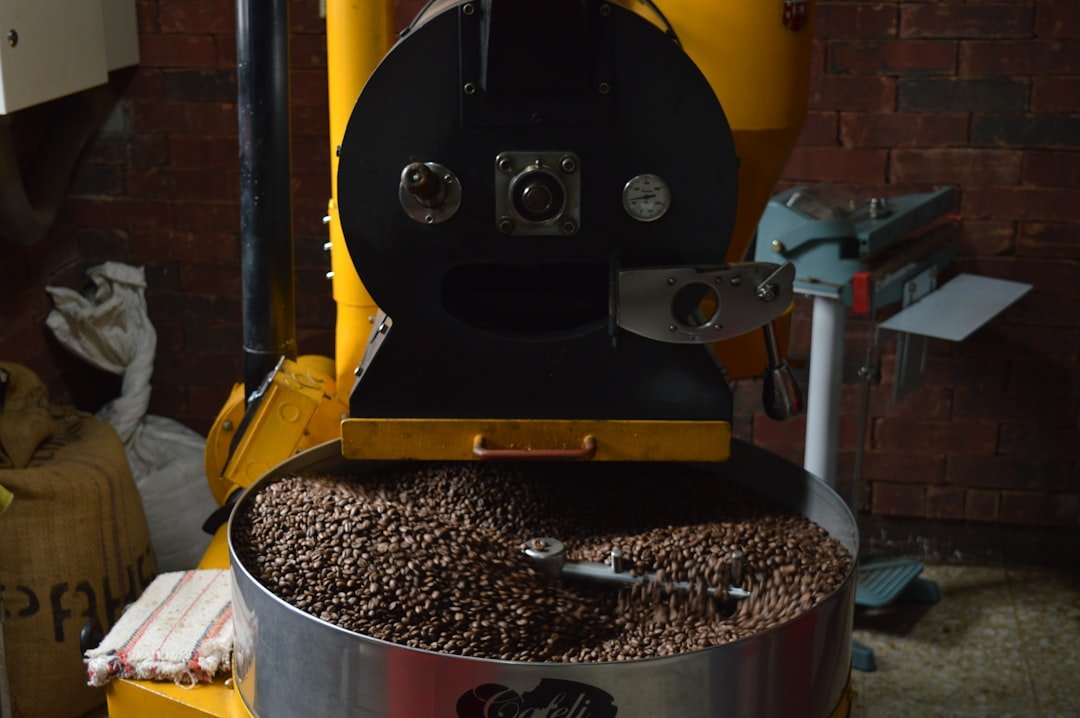
The real debate in how small batch roasting reduces waste compared to industrial roasting is not whether bigger machines can roast more coffee per hour. They can. The better question is where waste actually happens across the coffee system. In practice, waste often shows up as overproduction, stale inventory, rejected batches, excess packaging, markdowns, returns, and roasted coffee that loses its best flavor before anyone fully enjoys it.
Industrial roasting can look efficient at the factory level, but coffee is not always kind to spreadsheets. A giant system may optimize throughput beautifully while still producing too much coffee too early. Small batch roasting, at its best, works as a precision model: roast less, roast more often, adjust faster, and respond to real demand instead of long-range guesses. That makes it highly relevant for sustainability.
If you are interested in the wider relationship between sustainability and cup quality, see why sustainable coffee tastes better every time.
Why How Small Batch Roasting Reduces Waste Compared to Industrial Roasting Matters
Most people think coffee waste starts after brewing, with used grounds, capsules, or disposable cups. But a surprising amount of waste happens before the bag is even opened. One of the biggest causes is simple overproduction.
Industrial roasting usually depends on large-scale forecasting. Brands estimate what retailers, subscriptions, wholesale partners, or regional distributors will need, then roast around those projections. Forecasting is necessary, but it is still guesswork. If demand comes in lower than expected, coffee sits. If preferences change, coffee sits. If a retailer moves product slowly, coffee sits in even more places.
That matters because roasted coffee starts changing immediately. Carbon dioxide begins to degas, volatile aromatic compounds fade, and oxidation gradually affects flavor. The Specialty Coffee Association notes that roasted coffee freshness depends on preserving aroma and managing storage carefully, because those desirable compounds are fragile. Research in food science has also shown that roasted coffee aroma degrades during storage because of oxidation and the loss of volatile compounds.
So roasting too much, too early, is not just a planning issue. It is also a quality issue. And quality decline turns into waste in several familiar ways.
- Product gets discounted to move faster.
- Stale coffee is blended into other products.
- Bags remain unsold until they are no longer worth shipping.
- Customers buy it, taste the flatness, and do not return.
- Half-finished bags die quietly on kitchen counters.
Another hidden problem is off-profile production. In high-volume roasting, if a batch drifts from the target profile, the stakes are larger. Sometimes those batches are corrected through blending. Sometimes they are sold through lower-value channels. Sometimes they are rejected. Even if nothing literally goes into the trash, resources were still spent growing, transporting, roasting, packaging, and distributing coffee that missed its original purpose.
That is invisible waste, and it adds up quickly in a centralized system.
Where Industrial Roasting Often Creates More Invisible Waste
Large industrial systems usually depend on moving coffee through longer, more complex supply chains. Coffee may travel from the roastery to a distribution center, then to a retailer, then to a shelf, and finally to a customer. Every handoff adds time, secondary packaging, and another chance for inventory to age.
That often means more corrugate, more pallets, more protective materials, more fuel, and more storage time. A giant roasting line may be highly efficient while it is running, but if that efficiency encourages volumes that spend too long in the system, the total waste picture becomes less flattering.
This is why the idea of efficiency needs context. A factory can optimize throughput and still create downstream waste if it produces more roasted coffee than the market can absorb at peak quality. In lean manufacturing, overproduction is considered one of the most serious forms of waste because it triggers excess inventory, unnecessary transport, extra handling, and spoilage. The U.S. Environmental Protection Agency also emphasizes source reduction as the most effective way to cut waste. In coffee terms, not making excess product in the first place is usually smarter than trying to manage aging product later.
There is also a customer experience cost. When coffee arrives stale or flatter than intended, people may drink less of it, abandon the bag, or decide not to reorder. That is consumer-side waste that began much earlier in the roasting and inventory process.
How Small Batch Roasting Reduces Waste Compared to Industrial Roasting
The strongest advantage of small batch roasting is control. In smaller roasting runs, roasters can respond more precisely to what is happening in the drum: bean temperature, rate of rise, airflow, charge temperature, and development time. If a coffee behaves differently because of moisture content, density, crop variation, or ambient conditions, adjustments can happen in real time with lower risk.
Coffee is agricultural, not perfectly uniform. Two lots from the same origin can roast differently. Seasonal shifts change behavior. Storage conditions matter. Small batch roasting makes it easier to adapt to those variables without committing huge volumes to a profile that may need correction.
If a roast misses slightly, the loss is measured in kilos rather than in a production run large enough to affect a national inventory plan. That lower failure stake matters financially, but it also matters materially. Fewer beans are wasted. Less energy is embedded in a bad batch. Less packaging is committed to coffee that does not deserve a full retail life.
That is a direct answer to how small batch roasting reduces waste compared to industrial roasting: it shrinks the blast radius of mistakes.
Small batch roasting also supports roasting closer to actual orders. Instead of producing massive quantities far in advance, roasters can make smaller runs more frequently based on real sales velocity. That means less coffee lingering in storage, less finished inventory aging on shelves, and less need to over-distribute product just in case.
- Fewer beans are roasted without a clear destination.
- Fewer retail bags are used for slow-moving stock.
- Fewer shipments are tied to surplus coffee.
- Less labor goes into handling products that end up discounted.
- Less energy is spent maintaining inventory buffers that may never be needed.
Every bag of coffee contains farming, processing, export logistics, import logistics, roasting labor, packaging material, warehousing, and transport. If that bag goes stale or unloved, all of those inputs were spent on a weaker outcome. Small batch roasting helps protect that value by matching production more closely to actual demand and actual quality targets.
Quality Control Is Also a Waste Reduction Strategy
Quality and sustainability are often treated as separate conversations, but they are tightly connected. If coffee is roasted poorly, inconsistently, or far too early, waste starts happening even when nothing goes directly into the bin.
The chain reaction is straightforward. Inconsistent roast quality lowers customer satisfaction. Lower satisfaction leads to unfinished bags, reduced repeat purchases, returns, markdowns, or subscription churn. Retailers reorder less confidently. Stock sits longer. More coffee gets discounted, blended away, or forgotten.
That is all waste, even if it looks less dramatic than a pile of discarded beans.
The Specialty Coffee Association's roasting and cupping standards exist for a reason. Consistent sensory evaluation helps roasters detect defects, track roast performance, and maintain intended flavor outcomes. In a small batch operation, that feedback loop is tighter. Roast a batch, cup it, tweak the profile, adjust airflow, alter development, and roast again. The cycle is shorter, and the consequences of a miss are smaller.
In larger industrial systems, quality drift can take longer to catch and longer to correct across big volumes. By the time an issue is identified, much more coffee may already be roasted, packed, and moving through the system.
A small batch setup can turn faster. If something needs correcting, fewer units are affected. If a coffee shines with a slightly different profile, that change can happen with less friction. The result is often coffee people actually finish, which is a sustainability win in itself.

A simple comparison makes the point clear. Industrial roasting waste points often include overproduction, stale warehouse inventory, larger rejected runs, broader quality drift, and customer abandonment at scale. Small batch roasting waste points usually include smaller batch misses, tighter inventory, faster correction loops, and lower stale stock risk.
Small Batch Is Not Automatically Greener
It is important not to romanticize small scale. Small batch roasting is not a magical sustainability halo. A tiny roastery can still be inefficient. It may use older equipment with poor thermal efficiency, run too many underfilled batches, ship small orders in wasteful ways, or overpackage products while still looking charming online.
Industrial roasting has real advantages too. Large facilities may invest in high-efficiency burners, afterburners, emissions controls, heat recovery systems, and sophisticated process monitoring that smaller operators cannot afford. Per unit of output, some large roasters may use less energy than a smaller setup, especially when optimized systems run close to capacity.
That is why the strongest argument is not small at all costs. It is right-sized roasting supported by strong demand planning, quality control, and fast inventory turnover. That model can exist at different scales, but small batch roasting often has a natural edge in premium coffee because premium coffee depends on flavor precision. Flavor precision usually rewards producing less, more often, rather than more, less thoughtfully.
This is also where broader sustainability choices matter. Roasting decisions are only one part of the picture. Packaging materials, shipping formats, and end-of-life outcomes matter too. For readers comparing packaging impacts, compostable coffee pods vs aluminum pods: real impact offers useful context on downstream waste.
Premium coffee is closer to fresh bread than shelf-stable cereal. You can industrialize parts of the process, but the farther production gets from real demand and real freshness windows, the more likely waste starts creeping in.
What Coffee Drinkers Should Look For
If you want coffee with a lower-waste footprint, you do not need to master roasting physics. You just need a better filter for marketing claims.
Start with roast dates. Freshness is not the only factor, but a visible roast date usually suggests a brand expects you to care about when the coffee was produced, not just when the packaging was printed. That often signals more intentional production planning.
Look for a transparent roasting philosophy too. Does the brand explain how it roasts, how it handles quality control, or why freshness matters? Or does it rely mostly on mood and vague eco language? A little romance is fine, but if every sustainability claim is broad and every production detail is missing, skepticism is fair.
Also pay attention to product range sprawl. A huge wall of barely differentiated SKUs can be a waste red flag. More products can mean more forecasting complexity, more slow movers, and more inventory sitting around in hope rather than in response to demand. Sometimes fewer, better coffees say more about a disciplined system than dozens of novelty blends.
Packaging matters too. Ask what happens at end of life. Is the format recyclable, compostable, or likely to become landfill for decades? If a company talks endlessly about origin but ignores packaging waste, that is not the full sustainability picture.
A better question than whether a brand sounds green is this: How is this brand reducing waste in production, inventory, and packaging?
The most sustainable coffee may not be the one talking the loudest about sustainability. It may be the one making fewer wrong guesses from roastery to cup: fewer excess batches, faster turnover, better roast control, smarter packaging choices, and less dead stock.
That is the real difference in how small batch roasting reduces waste compared to industrial roasting. Small is not automatically pure, and big is not automatically bad. The lower-waste coffee system is usually the one that produces with more precision, adjusts faster, protects quality better, and avoids making more than people can actually enjoy at its best.
Sources
- Specialty Coffee Association, https://sca.coffee/research/coffee-freshness-handbook
- Specialty Coffee Association, https://education.sca.coffee/catalog/roasting-foundation
- National Coffee Association, https://www.ncausa.org/About-Coffee/How-to-Store-Coffee
- MDPI Beverages, https://www.mdpi.com/2306-5710
- National Center for Biotechnology Information / PubMed Central, https://pmc.ncbi.nlm.nih.gov/
- U.S. Environmental Protection Agency, https://www.epa.gov/sustainable-management-food/reduce-wasted-food-feeding-soil-and-composting
- U.S. Environmental Protection Agency, https://www.epa.gov/smm/sustainable-materials-management-non-hazardous-materials-and-waste-management-hierarchy
- Lean Enterprise Institute, https://www.lean.org/explore-lean/what-is-lean/8-wastes-of-lean/
- Food and Agriculture Organization of the United Nations, https://www.fao.org/platform-food-loss-waste/en/
Frequently Asked Questions
How does small batch roasting reduce coffee waste?
Small batch roasting reduces waste by aligning production more closely with actual demand, which lowers overproduction and stale inventory. It also makes roast adjustments easier, so fewer beans and packaging materials are tied to off-profile batches.
Is industrial coffee roasting always less sustainable?
No. Industrial roasting can be highly energy efficient per unit, especially with advanced equipment and optimized systems. The waste issue usually appears when scale leads to overproduction, longer storage times, and more inventory aging before sale.
Why is coffee freshness connected to sustainability?
Freshness affects whether people fully enjoy and finish the coffee they buy. When roasted coffee sits too long and loses flavor, it is more likely to be discounted, abandoned, or wasted, which means all the resources behind that bag were used less effectively.
What should shoppers look for in lower-waste coffee?
Look for visible roast dates, clear quality control practices, reasonable product ranges, and better packaging materials. These signs often suggest a brand is managing production carefully instead of simply marketing sustainability.
