
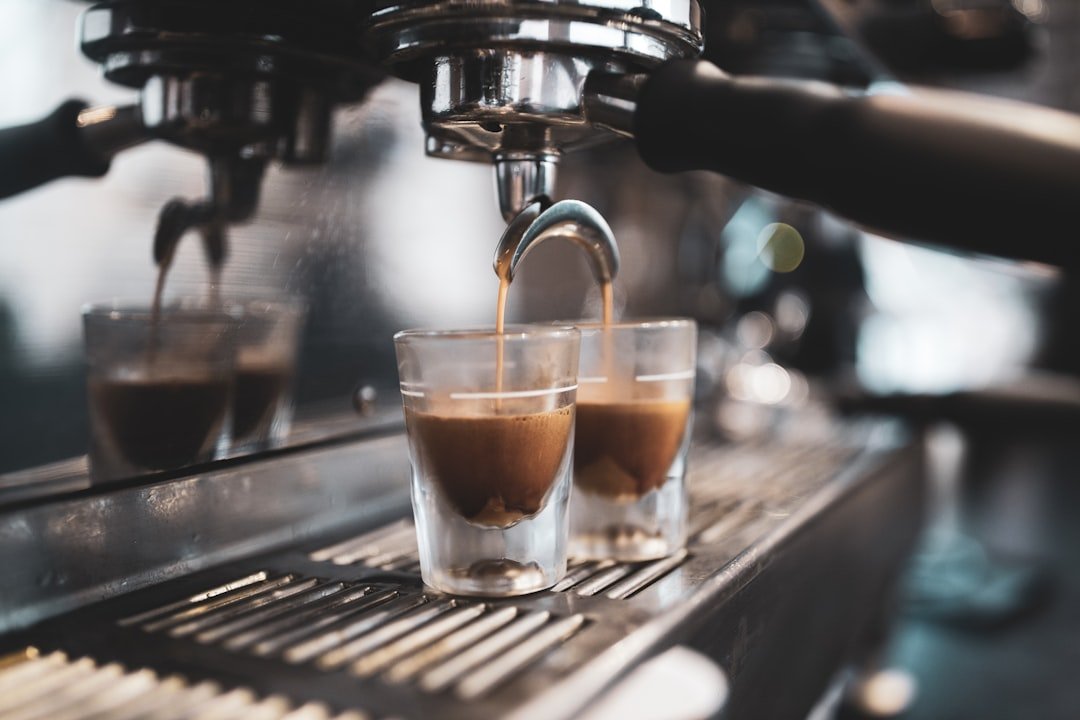
Freddo coffee is what happens when iced coffee stops phoning it in. Not “espresso, but cold.” Not a sad little drink sweating itself into mediocrity over half-melted cubes. It’s shaken, aerated, deliberate, and weirdly thrilling—the kind of cold coffee that makes a lot of American iced drinks feel a bit emotionally distant.
Dramatic? Maybe. Greece would still back it up. According to To Vima, freddo espresso and freddo cappuccino are estimated to account for 70–80% of all cold coffee beverages consumed in Greece. That’s not a micro-trend. That’s a takeover. And while cold brew spent the last decade positioning itself as the sophisticated cold option, freddo quietly makes the case for the opposite: fresh espresso, chilled immediately, can taste brighter, more textured, and more alive than coffee that’s been hanging out in the fridge for 12 to 18 hours. If you assumed it was just another iced espresso, fair enough. It’s just not quite that simple.
What is freddo coffee, exactly?
Freddo coffee is a Greek-style cold espresso drink made by pulling a double espresso, shaking it with ice—often with a little sugar—and pouring it over fresh ice. That shaking step is the whole point. It chills the espresso fast, adds a touch of dilution, and creates a foamy texture that plain espresso over ice just doesn’t have.
Quick language detour, because coffee loves a technicality. Freddo means “cold” in Italian, but the drink itself belongs most clearly to modern Greek café culture, especially as freddo espresso and freddo cappuccino. So yes, the name is Italian. The devotion is Greek. Very Mediterranean. No one seems bothered.
The standard build is simple enough: a double shot of espresso, ice, optional sugar added before shaking, then a hard shake until the coffee is cold and lightly frothy. After that, it’s strained over fresh ice. Order a freddo cappuccino and you’ll get that shaken iced espresso topped with a cap of cold milk foam. Not steamed milk. Not an iced latte in disguise. An actual foam layer.
And this is where people tend to miss the plot: freddo is not just espresso poured over ice.
Greek recipe and retail sources are unusually clear on this. Coffee Island says the drink is not “espresso with ice cubes,” but espresso shaken with ice until it develops a dense, creamy foam. That texture isn’t a bonus. It’s the identity. The Mediterranean Dish describes the same basic method: shake a double shot with ice until cold and foamy, then serve over ice. Different audiences, same point. Skip the shake, and yes, you’ve made something cold. No, it’s not really this.
- Not a frappé: the Greek frappé is traditionally made with instant coffee, shaken into foam, and has a completely different flavor profile.
- Not exactly a shakerato: the Italian shakerato also uses shaken espresso, but freddo has its own service style and cultural lane, especially in Greece.
- Not cold brew: cold brew is steeped cold for hours; freddo starts hot and gets chilled on purpose.
- Not an espresso macchiato: an espresso macchiato is a hot espresso “marked” with a little milk foam. Freddo cappuccino may rhyme with that idea, but they are not doing the same job.
The real “oh” moment? The defining thing about freddo isn’t that it’s cold. It’s that it’s fresh hot espresso transformed by shaking. Temperature is part of the story. Texture is the flex.
Why did freddo coffee beat the frappé—and maybe cold brew too?
Short version: it feels more modern, tastes more precise, and fits actual life better than you’d think.
The headline number comes from To Vima: freddo espresso and freddo cappuccino account for an estimated 70–80% of cold coffee consumption in Greece. Wild on its own. More interesting is why. Freddo didn’t appear out of nowhere. It arrived as a cleaner, more espresso-driven successor to the long-dominant Greek frappé.
That’s a bigger shift than it sounds.
The frappé has history. It’s iconic. It’s tied to Greek summer, long conversations, and that very specific coffee break that somehow turns into an entire afternoon. But freddo pulled espresso into the center of cold coffee culture. More structure. More aroma. More intention. Same refreshment, better tailoring.
To Vima describes freddo as more refined and modern than frappé, and connects its rise to Greece’s on-the-go coffee culture: takeaway cups, lids, straws, kiosks, and coffee delivery. Which makes sense. A drink doesn’t become a national favorite just because it tastes great in a perfect café moment. It has to survive sidewalks, commutes, office runs, beach detours, and that “I have exactly four minutes before this meeting” mood.
Freddo does.
That portability is also part of why it has a real argument against cold brew. Cold brew is undeniably convenient. You can batch it, stash it in the fridge, and feel like the kind of person who has their life together enough to meal-prep beverages. Respect. But convenience and liveliness are not the same thing.
Freddo wins on first-sip electricity. That word comes straight from To Vima, which notes that when the brew is right and the barista knows what they’re doing, the first few sips can feel “electric.” Great description, honestly. It gets at something cold brew often rounds off: the aromatic lift, the brighter top notes, the sense that the coffee is actively happening instead of just being there.
Sprudge’s guide to Athens adds another layer. Even as the city’s specialty coffee scene grows—with lighter roasts, more single-origin offerings, and more globally tuned café menus—freddo espresso and freddo cappuccino still sit right at the center. That matters. It means freddo isn’t just a holdover habit. It survived contact with modern coffee culture and came out looking even stronger.
Usually the story goes the other way: local drink gets replaced by trendier specialty thing. Here, the local drink basically absorbed specialty logic. Cafés adjusted espresso blends, sweetness levels, and service styles around a cold espresso format people already loved.
That’s why freddo feels less like a fad and more like a correction. If you want a broader look at how chilled coffee styles split apart, cold brew and iced coffee differ in extraction and flavor in ways that make freddo’s fresh-espresso approach easier to appreciate.
Why doesn’t freddo coffee taste like regular iced espresso?
Freddo coffee tastes different because it is shaken with ice before serving, not simply poured over it. That changes three things at once: temperature, dilution, and texture. The result is colder, smoother, lightly foamy espresso with more structure and freshness than standard iced espresso.
That’s the straightforward answer. Here’s where it gets interesting.
When hot espresso hits ice in a shaker, a few things happen fast. It chills quickly, which helps preserve the drink’s crispness before it just sits there flattening out. It picks up controlled dilution from the melting ice. And it gets aerated, creating a soft foam cap that changes the mouthfeel in a way people don’t always expect from a black iced coffee.
That foam matters more than it looks. Coffee Island specifically emphasizes the dense, creamy foam as the thing that gives freddo its signature identity. Koffeekult, while less independent editorially, says the drink develops a slightly aerated, almost creamy consistency unlike cold brew or drip served over ice. Different source, same observation: the texture is not cosmetic.
There’s also a structural difference between freddo and other cold coffee formats:
- Unlike an iced Americano, freddo isn’t built around adding water.
- Unlike cold brew, there’s no long extraction muting certain acids and aromatic highs.
- Unlike iced drip, the coffee isn’t thinned out from the start.
So you get this nice little paradox: freddo tastes smoother and colder, but also more intense. The espresso still carries the whole drink.
That’s exactly why bean choice matters. A delicate espresso can disappear a bit once it’s shaken, chilled, and diluted by ice. A bolder blend keeps its shape.
This is where something like MORORA makes a lot of sense if you’re making freddo at home. Its 11/10 intensity means it still shows up after ice and agitation, which is kind of the whole challenge here. If your taste leans more specialty-minded—more into origin character and that café profile that feels a little more Athens-right-now—MAMA AFRICA fits naturally too. Its Ethiopia/Burundi profile lines up nicely with the single-origin-aware side of contemporary Greek café culture, while still having enough weight to hold up cold.
Not an ad break. Just the annoyingly true rule of cold espresso: weak coffee gets found out immediately.

Can you make freddo coffee at home?
Yes. You can make freddo coffee at home with an espresso machine, a pod system, or a moka pot if needed. Brew a concentrated coffee, shake it hard with ice and optional sugar until foamy, then strain it over fresh ice for the closest home version.
That’s the practical answer, and honestly, it’s good news. Freddo looks fussier than it is.
According to The Mediterranean Dish, you can make it with an espresso machine, an espresso pod, or other home methods if needed. Coffee Island is even more direct: you do not need professional equipment to make freddo at home. Refreshingly non-snobby for a drink with such a strong personality.
Here’s a solid home formula pulled from the source material:
- 1–2 shots espresso, or about 16–18 g of ground coffee
- 4–5 medium ice cubes, roughly 100 g of ice
- Optional sugar, added before shaking
- Shake briefly until the coffee is very cold and foamy
- Strain over fresh ice in a 300–350 ml glass
That “fresh ice” detail is sneakily important. If you pour onto the same sad, half-melted ice you just shook with, you lose clarity and texture. New ice keeps the drink colder and cleaner. Tiny move. Big payoff.
What if you only have a moka pot?
People searching moka pot are onto something. A moka pot won’t produce a textbook freddo espresso because it doesn’t generate true espresso pressure or crema, but it will make a concentrated coffee base that gets you a lot closer than drip coffee ever will.
That’s the distinction that matters. If your options are moka pot or regular drip, the moka pot is the better freddo understudy every time. Brew it strong, get it into the shaker while it’s still hot, and don’t be shy with the dose. You’re trying to build a drink with enough character to survive chilling and dilution.
If you use moka pots often, it also helps to understand the common extraction mistakes that flatten flavor. This guide to moka pot mistakes to stop now pairs naturally with freddo prep because concentrated stovetop coffee is only as good as the brew underneath it.
Can you make it with instant coffee?
Technically, yes. Spiritually, let’s be honest.
If you’re searching iced coffee with instant coffee or cold coffee with instant coffee, you can absolutely make something cold, caffeinated, and useful. Dissolve instant coffee with a little hot water, add cold water or milk, then ice. That’s the basic move. If you want better texture, shake it in a jar.
But it won’t really behave like freddo. Instant coffee can foam in certain formats—Greek frappé built an entire cultural identity on that—but it won’t give you the same fresh aromatic snap, espresso body, or crema-like texture as shaken espresso. So yes, you can make cold coffee with instant coffee. No, it won’t give you what freddo gives you.
Which is actually liberating. Not every cold coffee has to be trying out for the same role.
A simple at-home method
- Pull a double espresso.
- Add a little sugar if you want sweetness.
- Pour into a shaker or sealed jar with 4–5 ice cubes.
- Shake hard for 10–15 seconds.
- Strain into a glass with fresh ice.
- Sip immediately, while the foam still has opinions.
For freddo cappuccino, add a layer of cold milk foam on top. If you don’t have a milk frother, shaking cold milk separately in a jar gets surprisingly close. Not café-perfect. Still extremely drinkable.
The nice surprise here? Freddo is one of those rare café drinks that adapts at home without becoming bleak. It’s simple enough to pull off, but exacting enough to reward good coffee and a little attention.
Freddo vs cold brew vs espresso macchiato: which drink are you actually craving?
Choose freddo if you want fresh extraction, sharper aroma, and a cold coffee that still tastes vividly like espresso. Choose cold brew if you want mellow, low-effort coffee waiting in the fridge. Choose an espresso macchiato if you want a small hot drink with espresso intensity softened by a little milk foam.
That’s the cheat sheet. The rest is mood.
Freddo vs cold brew
This is the big one for most people. Freddo and cold brew are both cold coffee drinks, but they solve different problems.
Choose freddo if you want:
- Freshly extracted flavor
- Sharper aromatics
- More dynamic texture
- A stronger sense of espresso character
- A drink that feels immediate and alive
Choose cold brew if you want:
- Lower perceived acidity
- Batch convenience
- Fridge-ready coffee all day
- A smoother, rounder profile
- Less effort in the moment
Cold brew is great at being prepared. Freddo is great at having a pulse.
A little poetic? Sure. Still true. Long cold extraction changes what shows up in the cup. Some people love that softer, chocolatey, lower-acid profile. Others read it as muted. Freddo keeps more of the volatile aromatic stuff in play because the coffee is brewed hot and drunk soon after. You lose some bitterness through dilution and chilling, but the espresso still feels like itself.
Freddo vs espresso macchiato
An espresso macchiato is a hot espresso marked with a small amount of milk foam. It’s compact, intense, and not remotely trying to cool you down in July.
Freddo cappuccino is only its cousin in the broad “espresso plus foam” family. The point of the macchiato is to slightly soften or mark the espresso. The point of freddo cappuccino is to create a cold, textured, refreshing drink where the foam adds contrast and creaminess without turning the whole thing into milky wallpaper.
Put differently: an espresso macchiato is a punctuation mark. Freddo cappuccino is a full sentence.
Which one fits your day?
- 8 a.m. desk coffee: cold brew works if you need grab-and-go reliability.
- 2 p.m. heatwave coffee: freddo was basically made for this.
- Quick café reset between meetings: freddo espresso, easy.
- Tiny hot coffee with edge: espresso macchiato.
- You want coffee but not a whole production: instant will do, just know what you’re giving up.
That’s the real appeal of freddo. It’s for people who want cold coffee that still tastes like someone cared. Not dessert. Not melted beige liquid. Not diluted survival fluid.
Freddo matters because it challenges a very American assumption: that cold coffee has to be watered down, milked up, or brewed overnight to work. Sometimes the better answer is faster, colder, and more intentional. If you’re curious, do a side-by-side at home—freddo and cold brew on the same afternoon—and see which one still tastes like coffee with a heartbeat.
Frequently Asked Questions
Can you make iced coffee with instant coffee?
Yes. Dissolve instant coffee in a small amount of hot water, then add cold water or milk and pour it over ice. Shaking it in a jar improves texture, but it will not taste like freddo because it lacks fresh espresso aroma and body.
How do you make cold coffee with instant coffee?
Mix 1–2 teaspoons of instant coffee with a little hot water until fully dissolved, then add sugar if wanted, plus cold water or milk. Serve over ice or shake everything together for a colder, slightly frothier result.
Is freddo coffee the same as cold brew?
No. Freddo coffee is made from freshly brewed espresso shaken with ice, while cold brew is steeped in cold water for many hours. Freddo tastes brighter and more espresso-forward, while cold brew is smoother and easier to batch ahead.
Can you make freddo coffee with a moka pot?
Yes, though it will not be identical to café-style freddo espresso. A moka pot makes a concentrated coffee base that works far better than drip coffee for this drink when shaken with ice and strained over fresh ice.
Sources
- The Sprudge Guide To Coffee In Athens, Greece — https://sprudge.com/the-sprudge-guide-to-coffee-in-athens-greece-889420.html
- Freddo Espresso (Greek Iced Coffee) — https://www.themediterraneandish.com/freddo-espress/
- The Freddo Espresso: A Modern Greek Cultural Phenomenon — https://www.tovima.com/culture/the-freddo-espresso-a-modern-greek-cultural-phenomenon/amp/
- Freddo Espresso Is Having a Moment — https://www.koffeekult.com/blogs/blog/freddo-espresso-is-having-a-moment-here
- Freddo Espresso στο Σπίτι & Θερμίδες — https://www.coffeeisland.gr/blog/freddo-espresso-%cf%83%cf%84%ce%bf-%cf%83%cf%80%ce%af%cf%84%ce%b9-%ce%b8%ce%b5%cf%81%ce%bc%ce%af%ce%b4%ce%b5%cf%82-coffee-island/
